


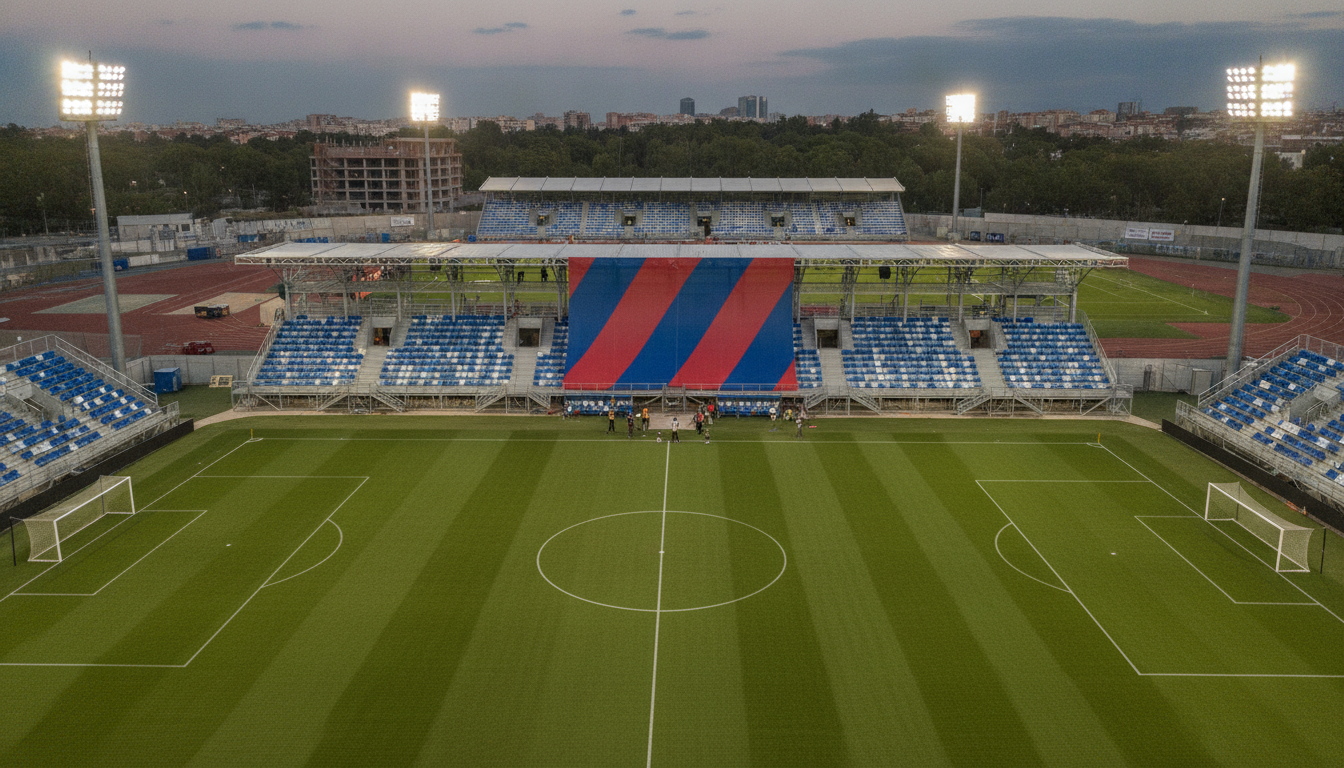
Rayo Vallecano stadium concession suspended as LaLiga confirms alternate venue assigned
Rayo Vallecano stadium concession suspended by Madrid authorities after safety defects; LaLiga president Javier Tebas says the club already has an alternate venue designated. The decision raises immediate logistical and regulatory questions for the club, supporters and league officials.


LaLiga president says alternate venue has been designated
Javier Tebas told reporters that the Rayo Vallecano stadium situation requires the club to consider a temporary relocation while safety issues are addressed. He confirmed that an alternate stadium has been designated for the club, though he declined to reveal which ground has been chosen.
Tebas emphasized that any stadium used by a professional club must meet the conditions established for top-flight football and that it will be the club’s responsibility to ensure compliance. He also said the designation gives Rayo time to respond to the circumstances created by the suspension.
Community of Madrid suspends Vallecas concession over serious safety defects
The regional government’s decision to suspend the concession for Estadio de Vallecas followed an inspection that identified significant safety deficiencies in the facility. Authorities described the intervention as precautionary and announced an urgent program of corrective work to begin this week.
The suspension is administrative and was taken after inspectors flagged problems that, in the government’s view, compromised the stadium’s ability to host professional matches safely. Officials made clear that the move was motivated by public safety concerns rather than sporting considerations.
Rayo Vallecano says it is surprised and plans immediate remediation
Club sources told EFE that Rayo Vallecano was “very surprised” by the suspension and that the organization is working to resolve the issues identified by the Community of Madrid. The club indicated it intends to cooperate with authorities to implement the necessary repairs and to provide any documentation required by regulators.
Rayo also reiterated its intention to keep playing competitive fixtures while the situation is addressed, subject to the outcome of the urgent interventions and the approval of the relevant authorities. The club’s priority, officials said, is ensuring supporter safety while maintaining the team’s sporting calendar.
LaLiga stresses compliance with professional stadium standards
League officials framed the situation as an enforcement of existing stadium standards that govern capacity, safety protocols, and infrastructural integrity for all LaLiga venues. Tebas pointed out that the responsibility for meeting those standards rests with the club and the venue operator, and that temporary relocations are an accepted remedy when problems arise.
LaLiga’s approach is procedural: confirm that whatever stadium is used satisfies regulatory requirements, then allow matches to proceed once inspections and approvals are complete. That framework is intended to limit disruption to the competition while preserving public safety and regulatory oversight.
Potential temporary venues and impact on fixtures and fans
One widely discussed possibility among stakeholders is Butarque in Leganés, but Tebas explicitly refused to confirm whether that ground is the one designated for Rayo. The choice of an alternative venue will carry consequences for travel time, ticket allocations, supporters’ accessibility and matchday logistics.
Moving fixtures away from Vallecas would alter matchday revenues, season-ticket arrangements and the atmosphere that the club’s home crowd provides. Local authorities, the club and LaLiga will need to coordinate ticketing, stewarding and transport to minimize disruption to supporters and ensure crowd safety at any temporary host stadium.
Operational and regulatory hurdles for a relocation
A temporary change of venue requires approval at multiple levels, including municipal or regional authorities, the league’s competition office and match officials. The club must demonstrate that the alternative stadium meets structural, safety and broadcast requirements, and that security and emergency plans are in place.
Transport and policing arrangements must be agreed with local forces, and ticketing allocations often require renegotiation to accommodate visiting supporters and season-ticket holders. The compressed timelines that follow a sudden suspension can force expedited inspections and temporary mitigations before full remedial works are completed.
Immediate repairs and inspections set to begin under Madrid authorities
The Community of Madrid has said it will carry out urgent interventions at Estadio de Vallecas to address the defects that prompted the suspension. Those works are intended to eliminate the immediate risks identified by inspectors and to create conditions that could permit a return to the stadium once independent verification is achieved.
Any timetable for a return will depend on the scope of the repairs, the speed of contractor mobilization and the completion of follow-up inspections. Authorities will need to certify that all safety standards have been restored before allowing competitive fixtures to resume at Vallecas.
Broader implications for stadium oversight in Madrid football
The suspension at Vallecas underscores the regulatory powers regional authorities hold over sporting facilities and highlights the consequences when infrastructure is judged inadequate. The case may prompt other clubs and venue operators in the region to review their own compliance programs to avoid similar interventions.
For fans and local communities, the episode is a reminder that stadium safety is a public responsibility that intersects with sporting calendars and club finances. It also raises questions about long-term investment plans for aging venues and the balance between historic home grounds and modern standards.
The situation remains fluid: Rayo Vallecano has been notified of the suspension and is said to be preparing remedial proposals while liaising with LaLiga and Madrid authorities about the designated alternative stadium and the conditions required for any temporary move.