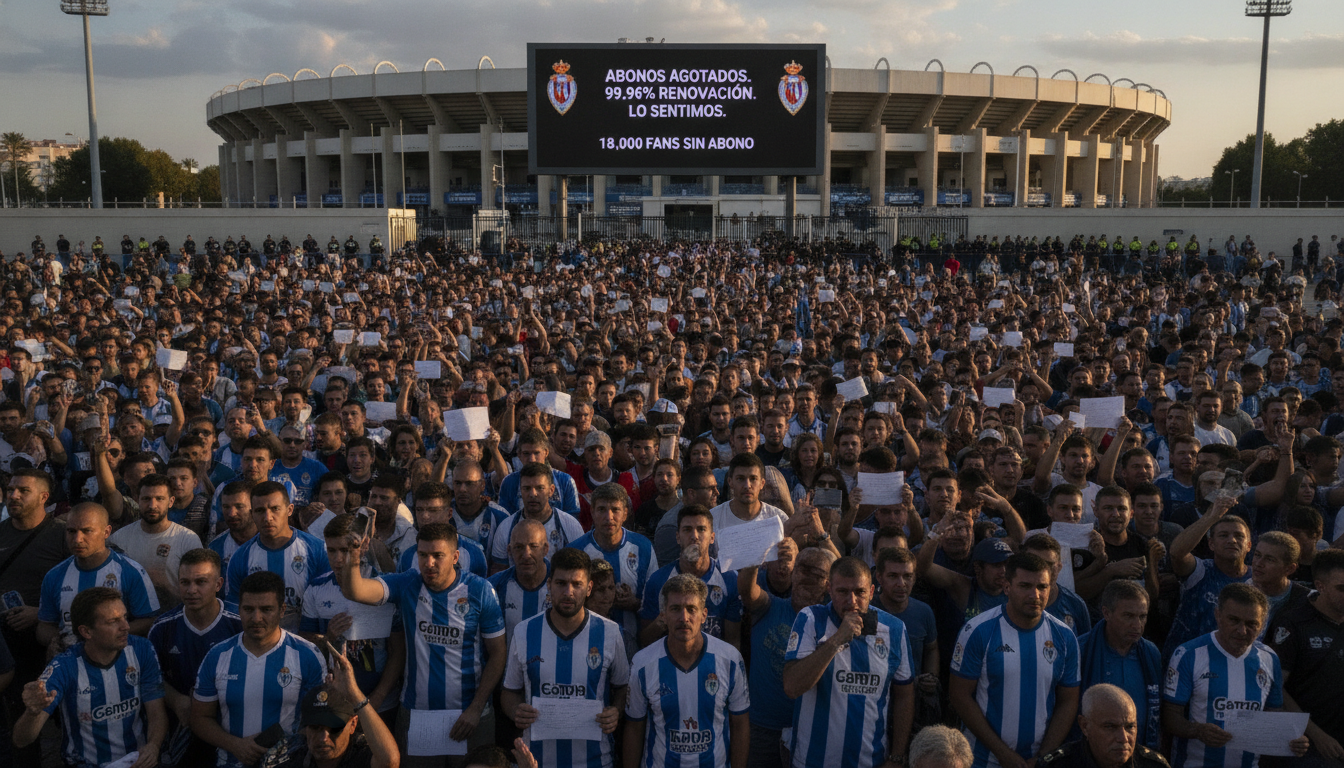
Málaga season ticket renewals hit 99.96% as thousands of fans are left without seats
Málaga season ticket renewals reached an unprecedented 99.96%, leaving demand far outstripping supply at La Rosaleda and an estimated 18,000 supporters without season tickets.


Málaga season ticket renewals set record high
La Rosaleda is witnessing historic demand after Málaga’s return to the Primera, with the club announcing a 99.96% renewal rate for season tickets this campaign. The overwhelming response has produced a record 26,550 registered season-ticket holders, the highest total in the club’s history.
The renewal figure — effectively a sellout among existing subscribers — has crystallized a capacity problem for the club and its ticketing team. With almost every seat tied up by renewals, thousands of applicants who had hoped to join the stands this season have been left on waiting lists or frustrated by the lack of available carnets.
Club confirms 26,550 season-ticket holders and limited vacancies
Málaga has fixed the season-ticket ceiling at 26,550, a number the club says reflects a balance between committed subscribers and match-day commercial requirements. Although La Rosaleda’s physical capacity slightly exceeds that ceiling, the club reserves more than 3,000 seats per match for individual ticket sales and other operational needs.
Those reserved allocations are aimed at accommodating single-game buyers, visiting supporters allocations, hospitality packages and operational contingencies. The practical result is that the pool of new season tickets available each season remains small, even when interest climbs sharply.
Ticketing analysis estimates roughly 18,000 would-be fans without seats
Internal estimates from the club’s ticketing department indicate that roughly 18,000 Málaga supporters were unable to secure season tickets this season. That figure derives from a combination of waiting list positions, direct requests received during the membership campaign and demand seen through online and in-person enquiries.
The club’s assessment underscores the scale of unmet interest: while 26,550 fans hold season subscriptions, a substantially larger community has signalled a willingness to commit to the team if seats were available. The discrepancy reveals a sustained mismatch between fan demand and the current ticketing model.
Return to La Liga and youth engagement fuel demand surge
Málaga’s promotion back to Spain’s top flight is the primary driver behind the spike in season-ticket interest this year. The return to Primera has reignited local enthusiasm, drawing lapsed fans back to the stadium and attracting new, younger followers eager to witness top-tier football at La Rosaleda.
Observers point to a confluence of sporting and social factors behind the surge: a growing presence of homegrown players, stronger ties between the first team and academy prospects, and a more visible match-day atmosphere that has made attending games more attractive. These elements have combined to create momentum the club did not fully anticipate when setting its subscription cap.
Operational constraints keep renewals near 100 percent
High renewal ratios are common at clubs that prioritize season-ticket retention, but Málaga’s near-total renewal this season leaves little room for new subscribers. The club’s policy of preserving a fixed number of seats for single-match sales and other uses limits churn in the season-ticket base, effectively closing the door for many long-term hopefuls.
That dynamic has created a recurring paradox: a vibrant, expanding supporter base confronted by a static allocation model. For fans who have waited years to secure a carnet, the combination of near-universal renewals and a capped number of available seats has been a recurring source of frustration.
Potential club responses and logistical options
Facing the gap between demand and supply, Málaga’s leadership will need to weigh several options to broaden access without undermining match-day revenues. Possible approaches include revisiting the number of seats reserved for individual sales, expanding stadium capacity through refurbishment, or introducing phased season-ticket access tied to tenure or supporter engagement metrics.
Any change will require careful financial and operational analysis. Increasing long-term subscriptions could stabilize income and deepen community ties, but it might also reduce flexibility for hosting visiting fans and commercial ticket buyers who contribute to short-term revenue on key fixtures.
Economic and sporting implications for Málaga CF
The imbalance between demand and supply carries both financial opportunity and strategic risk for the club. A larger season-ticket base would provide predictable, recurring income and strengthen the club’s relationship with its local fan base, while persistent exclusion of thousands of fans risks alienating a generation of potential lifelong supporters.
Sporting performance and stadium atmosphere are closely linked; fuller regular attendance from committed season-ticket holders can lift home advantage and player morale. Conversely, continued underutilization of fan potential could limit revenue growth and frustrate community stakeholders invested in Málaga’s sustained return to the top tier.
Supporter reaction and community impact
Local reaction has been a mix of celebration and disappointment: existing season-ticket holders have welcomed the team’s return to Primera and the electric atmosphere at La Rosaleda, while those left on waiting lists voice concern about long waits and limited transparency around allocation policies. Community groups and supporter associations will likely press the club for clearer pathways to membership.
For many families and younger fans, securing a season ticket is both a practical and symbolic act of belonging. The current shortage has ripple effects beyond match day, affecting local businesses, supporter networks and youth engagement programs that feed into the club’s broader ecosystem.
What to watch next for Málaga and its supporters
In the coming months, attention will focus on whether Málaga undertakes structural changes to ticketing or stadium use to accommodate more season-ticket holders. Any public consultation, policy update or concrete plan to expand access will be closely scrutinized by supporters and local media.
The club’s approach to balancing commercial needs with supporter inclusion will also be a key indicator of its long-term strategy for growth. How Málaga resolves the present mismatch between passionate demand and limited seats may influence its relationship with the city and region for years to come.
Málaga’s record renewal rate underscores the emotional and commercial momentum behind the club’s return to the Primera, but it also raises urgent questions about capacity and access that the board and ticketing department must address to convert short-term excitement into sustained, inclusive growth.