Wouter Burger to assume leadership role at Hoffenheim after signing long-term deal
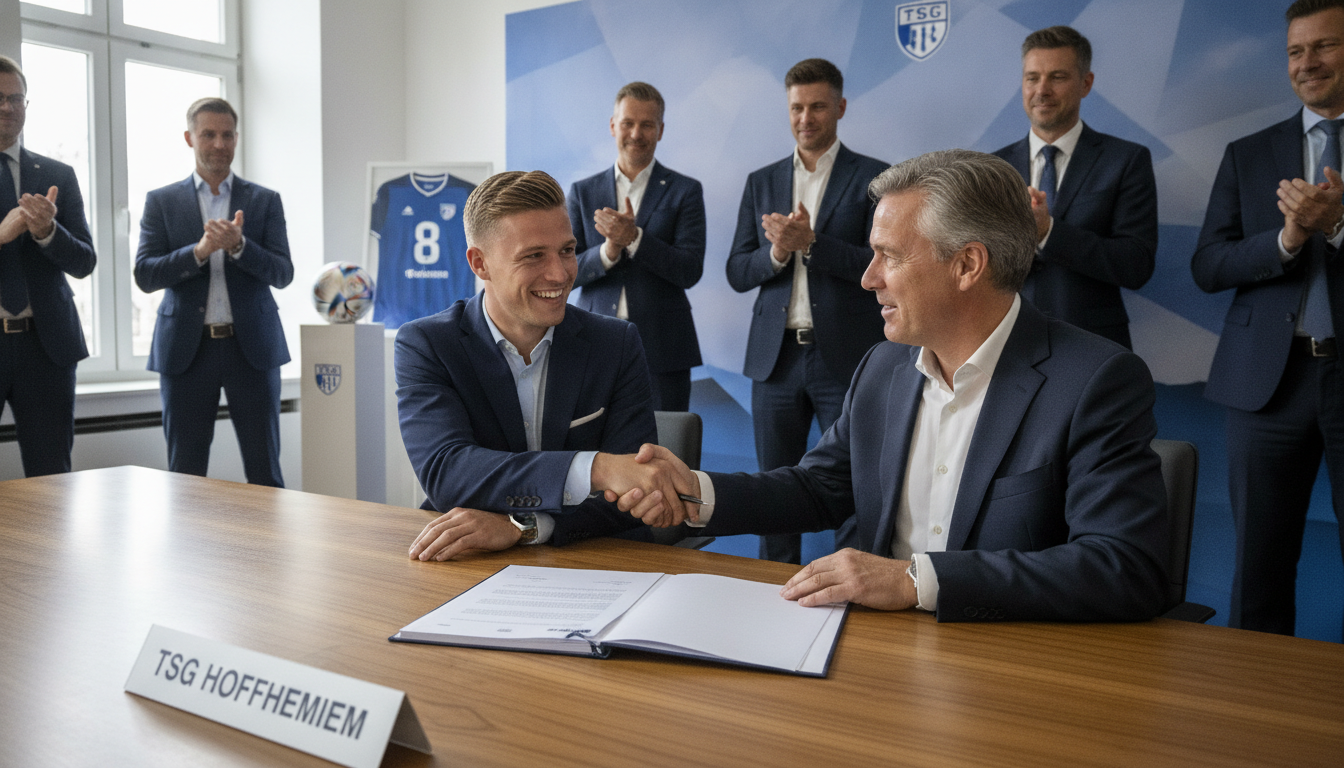
Wouter Burger has signed a long-term contract with Hoffenheim and aims to take on increased leadership responsibilities at the Bundesliga club after a breakthrough season.


Wouter Burger sealed his future at TSG Hoffenheim with a contract extension and has declared his intent to take on a greater leadership role within the squad. The 25-year-old midfielder arrives at the new campaign off the back of an impressive debut season in Sinsheim, where he established himself as a key figure under Christian Ilzer. Burger’s commitment signals both stability for Hoffenheim’s midfield and a shift in the dressing-room hierarchy following recent departures.
Contract extension and season summary
Wouter Burger’s extension formalizes a relationship that grew over a standout 30-start Bundesliga campaign. He finished the season with four goals and eight assists, numbers that underline his influence in transition and chance creation. Those contributions were instrumental in raising his market valuation markedly, reflecting increased recognition across the German top flight.
The new deal is intended to be a long-term investment by Hoffenheim in a player who combined technical ability with adaptability last season. Ilzer’s selection put Burger in the centre of Hoffenheim’s tactical plans, where he frequently linked deep build-up play with forward runs into attacking zones. The club now expects him to convert that on-field consistency into a more formalised leadership role.
From Basel and Stoke to Sinsheim: the career arc
Burger’s ascent to a more prominent role at Hoffenheim follows spells abroad that shaped his professional profile. Previously at Basel and Stoke City, he developed the physical and positional traits that allowed him to acclimatise quickly to the Bundesliga’s demands. Those experiences gave him the foundation to become a regular starter and a stabilising presence in Ilzer’s first-team plans.
His adaptability was evident as he transitioned into a system requiring both defensive coverage and progressive passing. Coaches and analysts observed that Burger’s time overseas sharpened his ability to read the game and manage pressing triggers. That background helps explain why the club has entrusted him with a longer-term future and an expanded remit within the squad.
Leadership opportunity after Grischa Prömel’s exit
Grischa Prömel’s departure this summer opened a leadership vacuum in Hoffenheim’s midfield, sequentially creating the pathway for Burger to step up. With an experienced vice or senior midfielder no longer in the dressing room, the club has identified internal candidates to assume greater responsibility. Burger has been vocal about his willingness to be one of those figures and to help integrate new arrivals.
He told Kicker that “other players now have to step up and try to take the young and new players with them,” a comment illustrating his readiness to guide teammates. That public stance aligns with Hoffenheim’s broader ask of emerging homegrown and recruited players: to combine performance with mentorship. Management will be watching how Burger balances these duties while maintaining his level on the pitch.
Mentoring the Dutch arrivals: Mats Rots and Nathan De Cat
A clear immediate responsibility for Burger is supporting Hoffenheim’s summer midfield recruits, Mats Rots and Nathan De Cat. All three speak Dutch, allowing Burger to act as a linguistic and cultural bridge for the teenagers adapting to life in Germany. He has already described Rots and De Cat in familial terms, saying it “feels as though they are my two little brothers,” underlining a hands-on mentoring approach.
Beyond camaraderie, Burger stressed the practical side of integration: both players must adjust to the greater speed and physicality of German football. He noted their technical quality was evident quickly but emphasised the need for clearly defined roles within Christian Ilzer’s system. Hoffenheim will rely on senior squad members like Burger to accelerate that adaptation process and to offer tactical guidance on the training ground and in match situations.
Tactical fit and expected responsibilities under Ilzer
Under Christian Ilzer, Hoffenheim’s midfield duties demand versatility, pressing discipline and the capacity to link defence with attack. Burger’s profile—capable of stepping into deeper pivots or advancing into offensive zones—fits that template. Coaches expect him to be a primary conduit for progression from defence, to organise pressing triggers, and to help younger midfielders understand their positional tasks.
Ilzer’s approach often requires midfielders to interpret transitions quickly and to maintain positional balance when full-backs commit forward. Burger’s experience and season-long minutes make him a logical candidate to marshal those in-game adjustments. If he can add consistent defensive shielding while continuing to contribute goals and assists, Hoffenheim will have enhanced both its on-field cohesion and its long-term midfield core.
Expectations, market value and club strategy
Burger’s market value rose significantly after his first season at Hoffenheim, a development the club views as both a sign of progress and an asset. The leap from an estimated €4.5 million to roughly €20 million underlines how effective performances in the Bundesliga can reshape a player’s standing. Hoffenheim’s decision to extend his contract reflects a desire to stabilise its core and to ensure continuity amid a busy summer of recruitment and exits.
The club’s broader strategy appears to blend youth investment with the retention of players who can provide immediate impact and mentorship. By committing to Burger, Hoffenheim secures a multi-faceted midfielder whose presence supports both present objectives and future sales value. Sporting directors will hope that Burger’s leadership translates into improved results and smoother integration for the club’s younger acquisitions.
What this means for Hoffenheim’s season outlook
Hoffenheim enters the campaign with an altered midfield dynamic that places additional trust in Burger. His ability to carry the dual burden of performance and mentorship could determine how swiftly new signings contribute. If Burger sustains his creative output while assuming leadership duties, Hoffenheim’s midfield could become a stabilising force amid the rigours of the Bundesliga schedule.
The coming months will test Burger’s capacity to cope with expectations and workload. Teams that lose influential figures often need emergent leaders to make immediate contributions, both in matches and in the dressing room. Hoffenheim’s hierarchy will be monitoring his influence closely as the season unfolds.
Burger has described his personal journey as one that required moving abroad to make a name for himself, and he has said he always believed in his ability to succeed when given trust. That mindset now accompanies a longer-term contract and a clearly defined role at Hoffenheim, where results and development will measure the success of his new responsibilities.
Wouter Burger’s promotion into a leadership role represents a calculated step by Hoffenheim to combine on-field quality with internal mentorship, and the club will be hoping his experience helps accelerate the development of its younger Dutch recruits while delivering consistent performances in the Bundesliga.