Mexico beat South Africa 2-0 as three second‑half red cards swing World Cup opener
Mexico beat South Africa 2-0 in the 2026 World Cup opener, Julián Quiñones scored and referee Wilton Sampaio issued three second-half red cards in Group A.


Mexico beat South Africa 2-0 in the opening match of the 2026 World Cup, securing three points in front of the host nation’s supporters. Julián Quiñones opened the scoring early after a defensive mix-up, and Raúl Jiménez added a second after South Africa were reduced in numbers. The result was overshadowed by an extraordinary disciplinary sequence in the second half when referee Wilton Sampaio issued three straight red cards.
Mexico dominate opening with early lead
Mexico controlled possession and territory from the first whistle, creating the clearer chances throughout the first half. The hosts tested South Africa goalkeeper Ronwen Williams on multiple occasions, with Raúl Jiménez striking early efforts that Williams managed to keep out. That pressure paid off in the ninth minute when Mexico forced an error at the back and converted the opening goal.
The pattern of attack was principally down Mexico’s flanks and through quick transitions that unsettled South Africa’s midfield. Mexico’s passing and forward movement repeatedly opened up space inside the final third, leaving South Africa chasing behind the ball. By half-time the hosts had accumulated the superior opportunities while Bafana Bafana had yet to fashion a meaningful chance.
Julián Quiñones ends two-year wait with opener
Julián Quiñones finished clinically to register the first goal of the tournament, capitalizing on a misunderstanding between Williams and defensive midfielder Yaya Sithole. The strike marked a long-awaited return to the scoresheet for Quiñones on the international stage, ending a two-year drought in national colours. He also struck the post later in the half, underlining how dangerous he was throughout the opening 45 minutes.
Quiñones’ movement and finishing gave Mexico an early platform to dictate the game and forced South Africa to alter their defensive approach. The goal came from a moment of indecision in South Africa’s box rather than a breakdown of tactical discipline, but it exposed the thin margin for error against a proactive host side. Mexico converted that opening to build momentum heading into the second half.
Raúl Jiménez and teenage debutant Gilberto Mora impact match
Raúl Jiménez remained a central threat for Mexico, probing the South African back line and testing Williams with long-range and inside-the-box attempts. He was denied by Williams at both the start and end of the first half, but continued to pose a consistent goal threat. His persistence paid off late in the first moments after the second-half restart when he found the net to double Mexico’s advantage.
Mexico introduced 17-year-old Gilberto Mora, who became the youngest Mexican to appear at a World Cup, and his arrival shifted the dynamic in attack. Mora’s introduction brought fresh energy and directness that unsettled a South African side already struggling to cope with pressure. Jiménez’s quick finish after that substitution underscored Mexico’s capacity to convert momentum into goals.
Wilton Sampaio issues three second-half red cards
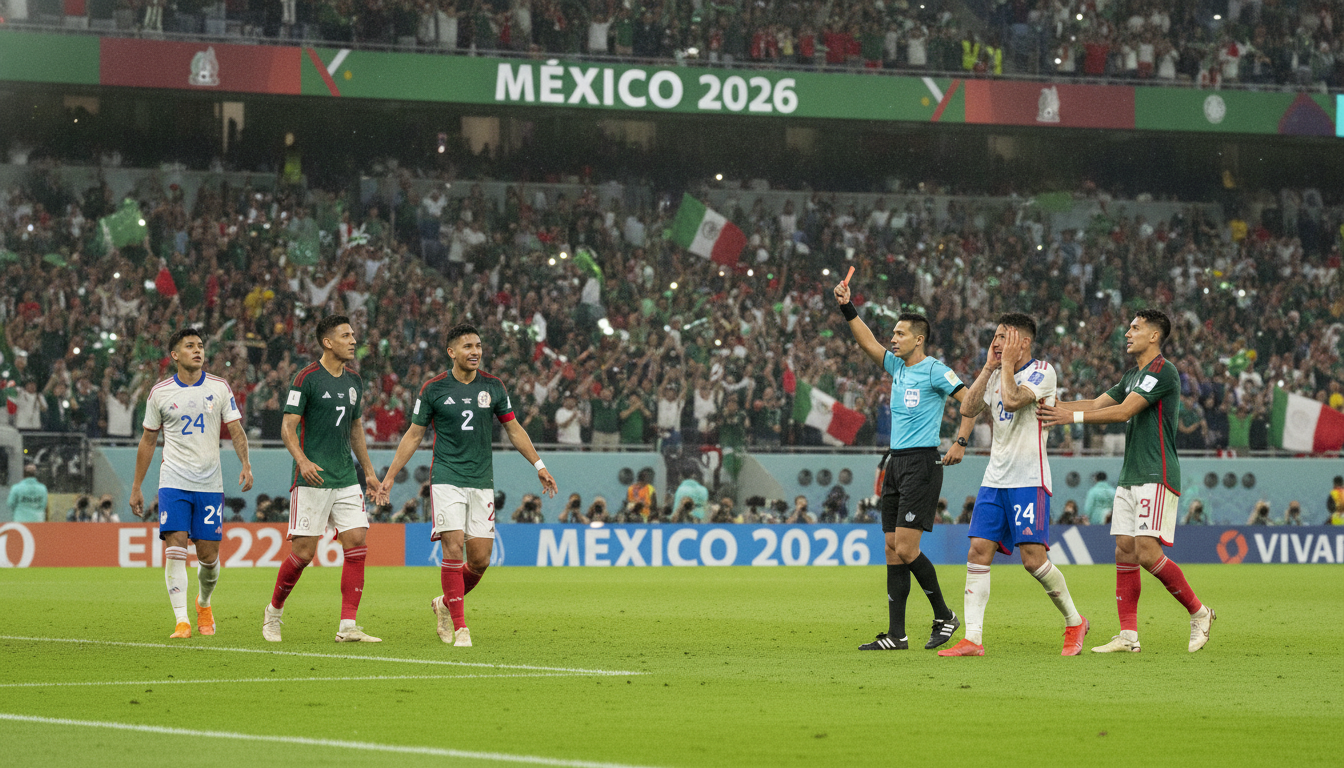
Referee Wilton Sampaio produced a dramatic disciplinary sequence in the second half, issuing three straight red cards that shaped the remainder of the contest. The first dismissal came early after the restart when Yaya Sithole was penalized for a last-man foul, leaving South Africa a man down within minutes of kick-off. That decision immediately altered the tactical balance and opened space for Mexico to exploit.
Later in the second half, VAR intervened and Sampaio sent off 36-year-old Themba Zwane for a dangerous play without the ball, reducing South Africa to nine men. The timing and nature of Zwane’s dismissal suggested a significant suspension could follow given the off-the-ball element cited by officials. In injury time Sampaio issued a straight red to Mexican centre-back César Montes, adding an unexpected finish to an already tense match.
South Africa reduced to nine and discipline issues
South Africa’s game plan collapsed under both Mexico’s pressure and mounting disciplinary problems after the interval. Playing with ten men for the bulk of the second half forced coach Hugo Broos to reshuffle his formation and adopt a more conservative stance. The second red card compounded the difficulty, leaving Bafana Bafana with little positional flexibility and limited attacking threat.
The dismissals will have immediate sporting consequences for South Africa, both in the remainder of this match and in subsequent fixtures where suspensions will affect selection. The team’s inability to manage moments of heightened physicality and off-the-ball incidents proved costly against a host nation keen to establish early momentum. Discipline and composure will now be central topics for the South African camp as they prepare for the remainder of the group stage.
Group A consequences and upcoming fixtures
Mexico’s opening victory gives the hosts an early advantage in Group A and sets a positive tone for their tournament campaign. The result places pressure on the other sides in the section, with Czechia and South Korea scheduled to meet later in the opening round. Mexico will travel to Zapopan to face South Korea on matchday two, while South Africa must regroup ahead of their meeting with Czechia.
The red cards and suspensions that followed this match could influence team selection and tactical plans across the group depending on governing-body rulings. Mexico will need to address the late dismissal of César Montes and ensure defensive cohesion moving forward. Meanwhile, South Africa’s disciplinary record from this game will demand corrective measures in training and selection to salvage their World Cup hopes.
The match offered clear lines of inquiry for both coaching staffs, from Mexico’s finishing and rotation to South Africa’s disciplinary lapse and defensive vulnerabilities. The tournament’s early narrative has been shaped not only by goals but by refereeing decisions that carry ramifications beyond a single three-point haul. As Group A unfolds, both teams will confront the immediate and longer-term impacts arising from this dramatic opener.
Mexico now head into their next match buoyed by a win but mindful of areas that require tightening, particularly at the back. South Africa leaves the opener with significant questions to answer about discipline and match management ahead of their remaining fixtures.