Vozinha’s Mother Flown to U.S. by Chinese Businessman After Goalkeeper’s World Cup Heroics
After Vozinha’s World Cup display vs Spain, a Chinese businessman flew his mother to the U.S., underscoring Cabo Verde’s sudden viral rise and family reaction.


Vozinha — full name Josimar Jose Evora Dias — has seen his profile skyrocket after a dramatic performance that helped Cabo Verde secure a draw with Spain on June 16, 2026. The 40-year-old goalkeeper produced a succession of saves that kept his nation in contention, and the aftermath has produced unexpected cross-border support for his family. A Wenzhou businessman, identified as Lin Jie, traveled to Mindelo and arranged for Vozinha’s mother, Ana Candida Evora, to travel to the United States on June 18, 2026 to attend her son’s next Group H match. The sequence of events has amplified attention on Cabo Verde’s squad and highlighted the personal toll and joy behind a surprise World Cup story.
Chinese Businessman Travels to Mindelo to Visit Family
Lin Jie, a businessman from Wenzhou who has lived in Cabo Verde for 23 years, arrived in Mindelo soon after the match to meet Vozinha’s family. He delivered congratulations in person and publicly shared images and video from the visit on social platforms. Lin’s intervention culminated in securing flight arrangements for Ana Candida Evora to travel to the United States to watch Vozinha’s next game in Group H on June 18, 2026. The gesture illustrates how a single sporting performance can trigger swift acts of support and generosity from both local residents and expatriate networks.
Ana Candida Evora was photographed at home with family members following Lin’s visit, with social media posts showing her sitting beside her daughter and grandson. Those images and short video clips have circulated widely, introducing the goalkeeper’s household to an international audience. Lin told social followers he encountered a humble, tightly knit family who greeted him warmly in a modest home in Mindelo. The personal nature of the visit has become part of the broader narrative surrounding Cabo Verde’s unexpected prominence at this World Cup.
Vozinha’s Performance Against Spain and the Match Context
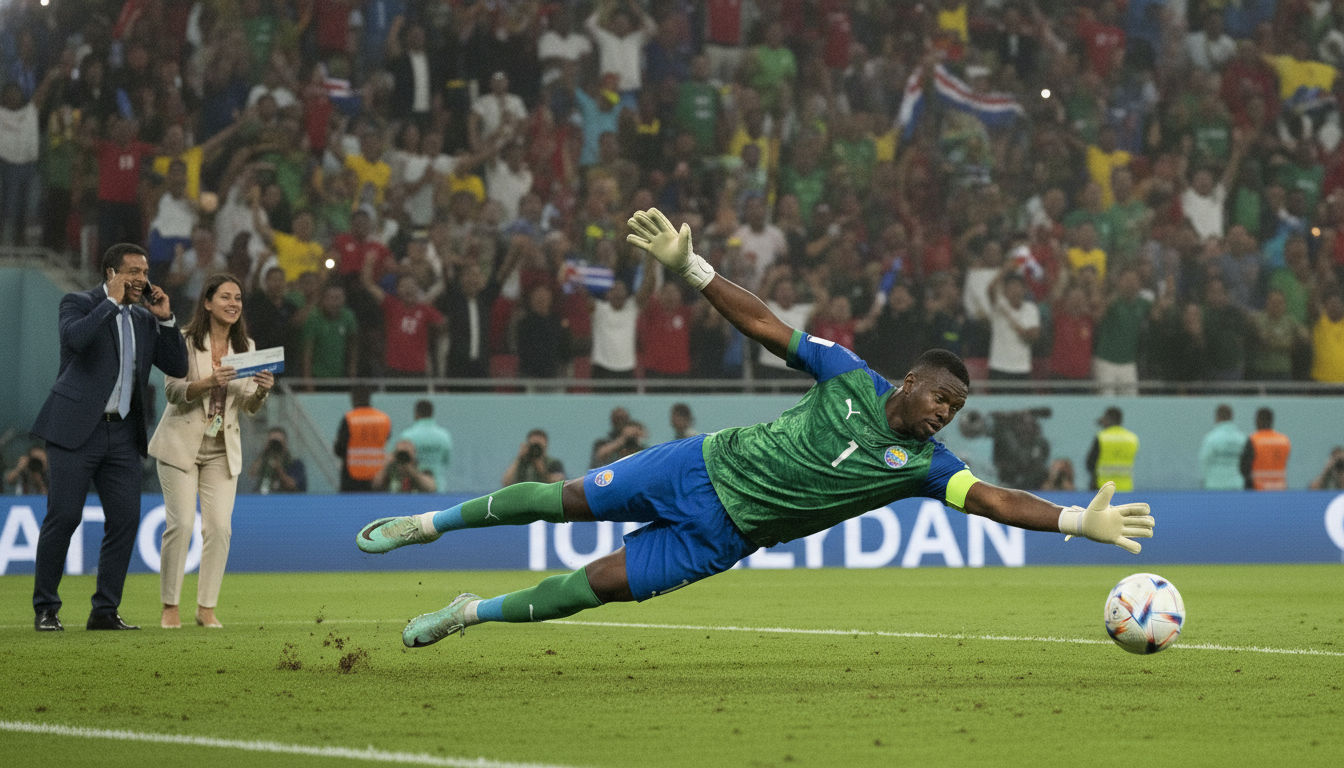
On Tuesday, June 16, 2026, Vozinha produced a string of high-calibre saves that frustrated Spain and preserved a 1-1 draw for Cabo Verde in Group H. The goalkeeper’s reflexes and positioning were repeatedly tested by one of the tournament favourites, and his performance was widely credited with keeping his side competitive until the final whistle. Such an outing against elite opposition is rare for a nation making relatively rare appearances on football’s biggest stage, and it has been described by observers as a defining moment for Vozinha’s career. The result has strengthened Cabo Verde’s standing in a group that includes heavyweight opponents and has increased scrutiny of the team’s tactical approach.
Professional commentators highlighted several interventions in the match where Vozinha denied clear scoring opportunities, forcing Spain to rework chances and often resort to long-range efforts. Those stops not only affected the game’s immediate outcome but also shifted the narrative of the contest, reframing Cabo Verde as a resilient and organized side rather than an easy opponent. For Vozinha personally, the performance represents an apex late in a long career and offers a rare international spotlight that could influence his standing in domestic and continental football circles. The optics of the draw have mobilized fans, media and, as demonstrated, private supporters eager to celebrate the goalkeeper’s role.
Social Media Surge and International Attention
Vozinha’s social media following ballooned in the days after the match, jumping from around 50,000 before the tournament to roughly 13.2 million by June 18, 2026. The surge reflects the global appetite for an underdog story and the viral mechanics of highlight clips and human-interest content. Short-form platforms in particular have amplified the goalkeeper’s saves, reaction shots and family scenes, converting sporting merit into mass engagement almost overnight. That sudden visibility has created logistical and emotional pressures for the player and his relatives as they navigate attention from journalists, fans and curious onlookers.
The phenomenon has produced a mix of offers and intrusions, with expressions of support coming from individuals and groups around the world. While the newfound fame brings potential commercial and philanthropic opportunities, it also raises questions about privacy and the capacity of a small family to absorb intense international scrutiny. The presence of an intermediary — in this case, Lin Jie — who could act quickly to coordinate travel and manage arrangements, helped the family respond to the attention in a structured way. For many in Cabo Verde, the spike in followers and coverage is a validation of national pride and a rare moment of global recognition.
Family Background and Local Response in Sao Vicente
Vozinha hails from a close-knit community in Mindelo on the island of Sao Vicente, where his trajectory from local player to national team goalkeeper is well known. Family members describe a long path of dedication and modest means, and the scenes captured during Lin’s visit emphasized the simple domestic life that laid the foundations for his career. Neighbours and local officials have expressed pride at the international attention, greeting the family with warmth and often treating the moment as a communal accomplishment rather than an individual victory. Community leaders noted that the team’s World Cup presence has spotlighted the island and could boost local tourism and youth interest in the sport.
Local outlets and residents have attempted to balance celebration with privacy, coordinating respectful timings for media visits and encouraging messages of congratulations rather than intrusive demand. For many in Sao Vicente, the story serves as an aspirational example for children who follow local football and dream of international stages. It has also prompted discussion about infrastructure, investment in grassroots coaching and the pathways available to Cape Verdean talent. In short, the reaction on the island has been proud and protective, with many treating Vozinha’s moments of brilliance as proof that small communities can produce world-class performers.
Logistics and Immediate Implications for Cabo Verde’s Tournament Campaign
The logistical move to bring Ana Candida Evora to the United States on June 18, 2026 was timely in ensuring she can attend the next Group H match and support her son in person. Such family presence can offer emotional reinforcement for players, and teams often value that morale boost during compact tournament schedules. Cabo Verde’s coaches and officials have publicly welcomed the attention while underscoring the need to maintain focus on preparation and recovery between fixtures. The federation has been working to manage travel protocols, security and accreditation for family members turned spectators by sudden fame.
Beyond the immediate emotional impact, the event carries practical implications for how smaller football associations handle global media, logistics and player welfare when spotlighted unexpectedly. The federation must now contend with requests for interviews, accommodating fans and managing potential commercial approaches tied to individual players. For a squad with limited resources compared with larger footballing nations, the challenge is to convert goodwill into sustainable support while insulating the team from distractions that could affect performance on the field. The visit by the businessman and the prompt travel arrangements for the goalkeeper’s mother represent one model of how external supporters can assist in that balancing act.
Broader Significance for Cabo Verde’s International Profile
Cabo Verde’s appearance at the World Cup and the human stories that accompany it have elevated the country’s profile in footballing and cultural terms. Vozinha’s performance and the family’s ensuing visibility have cast a global spotlight on an island nation whose players often build careers across multiple continents. The moment has the potential to increase scouting interest, encourage diaspora engagement and draw attention to the development needs of the national footballing structure. International donors, sponsors and clubs often use such inflection points to identify partnerships and investment opportunities, and the federation is likely to receive inquiries as a consequence of the exposure.
At the same time, stakeholders caution against viewing the moment as a short-term spectacle; converting media attention into long-term advancement requires strategic planning, transparent governance and targeted resource allocation. Coaches and federation officials have emphasized sustaining youth programs, enhancing coaching education and creating pathways for players to gain professional experience abroad while preserving ties to the national team. For many in the country, the narrative around the goalkeeper and his family is less about commercial potential and more about national pride — an emblematic story of resilience and achievement that resonates well beyond sport.
The goalkeeper’s immediate future at the tournament, and the reception his family receives, will be tracked closely by fans and commentators around the world. Whether the spotlight translates into concrete benefits for Cabo Verde’s footballing infrastructure remains to be seen, but the sequence of events — a standout match on June 16, 2026, followed by a high-profile visit and travel on June 18, 2026 — has already reshaped public perception. For a nation accustomed to punching above its weight, the episode underscores how a single performance can catalyse disproportionate attention and open doors that previously seemed distant.
Vozinha and his family have become an unlikely global touchpoint, and their story will continue to unfold as Cabo Verde navigates the rest of its World Cup campaign and the aftermath of sudden international fame.