Canada World Cup win sealed by Eustáquio 92nd-minute strike as Davies debuts
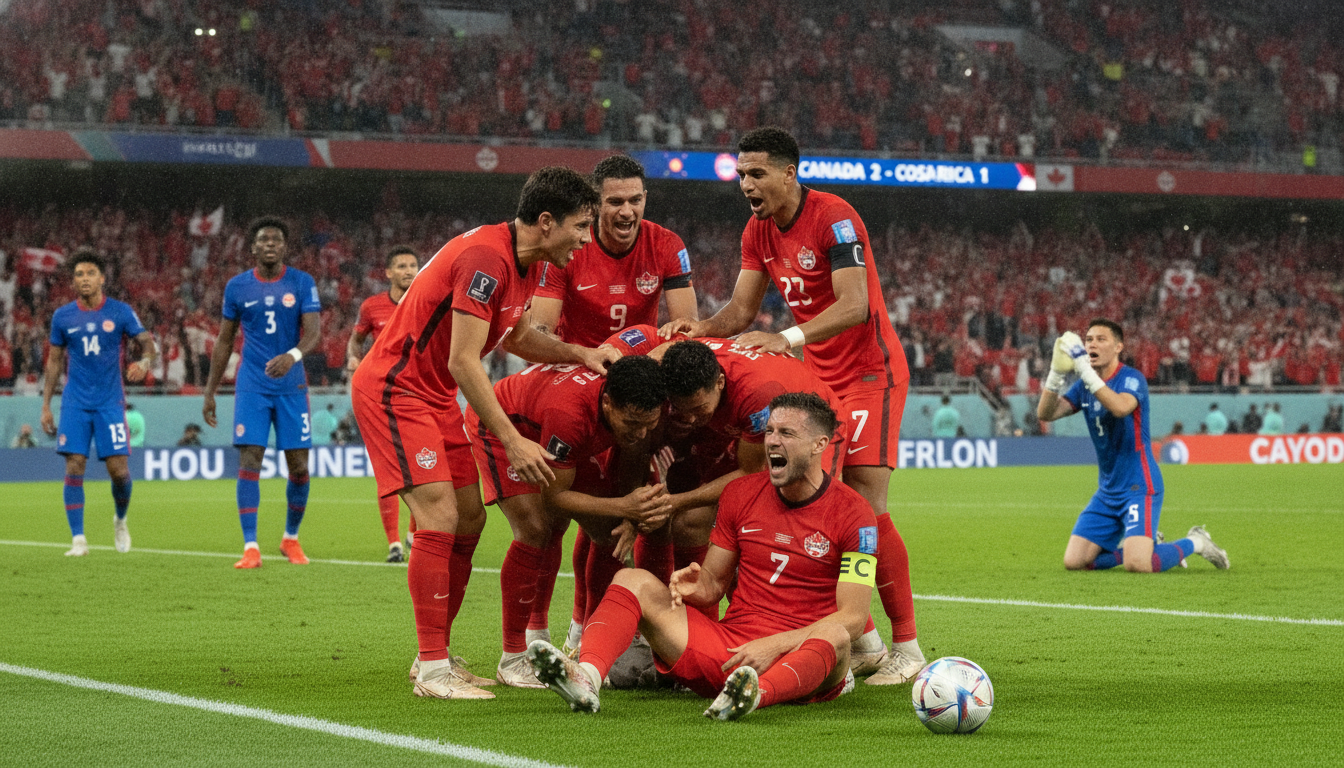
Canada secured a dramatic World Cup win as Stephen Eustáquio’s 92nd-minute strike edged South Africa 1-0 at SoFi Stadium, sending Canada into the Round of 16.


Canada secured progression to the Round of 16 on June 28, 2026, courtesy of a stoppage-time winner by midfielder Stephen Eustáquio in a tightly contested knockout debut at SoFi Stadium. The Canada World Cup win came after a match that produced few clear-cut chances but a dramatic finale, with Alphonso Davies making his tournament debut as a late substitute. The result sends Canada forward to face the winner of the Netherlands versus Morocco match in Houston on July 4, 2026.
Eustáquio nets 92nd-minute winning goal
Stephen Eustáquio produced the decisive moment in the 92nd minute with a long-range strike that found the net and settled a game that had been balanced for 120 minutes. The goal arrived after sustained pressure from Canada late in stoppage time and broke a deadlock that had resisted both teams despite several spells of possession. Eustáquio had been influential throughout the contest, and his late intervention vaulted Canada into the next round. The strike underscored Canada’s ability to find a match-winner in a tight knockout scenario.
Eustáquio had handed the captain’s armband to substitute Alphonso Davies before the winning moment, a small ritual that framed the collective effort on display. The goal gave Canada a victory that felt earned rather than lucky, and it rewarded a squad that had weathered phases of sustained South African defending. For South Africa, the late defeat was a bitter end to their first knockout-stage appearance. For Canada, the result extended a campaign that has surged since the group stage.
Davies makes tournament debut off the bench
Alphonso Davies, the Bayern Munich full-back, had not featured earlier in the tournament but was introduced roughly twenty minutes from time, drawing the loudest cheers of the evening. His arrival immediately lifted Canada’s tempo and brought the team into the attacking half with greater urgency. Davies combined pace, direct dribbling and defensive cover in a cameo that almost produced an assist and helped create the eventual opening. His substitution underlined coach strategy to introduce a high-quality, experienced presence late in a tight fixture.
Davies also received the captain’s armband for a brief spell after Eustáquio handed it over, a symbolic moment that highlighted his standing in the squad despite limited minutes in the tournament to date. The flying full-back’s energy forced South African defenders to adjust and opened pockets that other Canadian players exploited. Davies’ impact will likely inform selection decisions in the Round of 16 as Canada prepare to meet a far stronger opponent. His presence adds a tactical dimension that Canada can deploy from the bench or start with in future matches.
Tactical battle produced few clear chances
The match unfolded as a cautious tactical contest in which both teams prioritized defensive solidity over expansive risk-taking. There were periods of sustained possession for Canada, but South Africa matched them with compact lines and disciplined marking that prevented high-quality chances. Conversely, South Africa tested Canada sporadically on the break and relied on set-piece situations to generate threat. The contest was defined by its intensity and organization rather than by a string of attacking moments.
Both managers adjusted formations and personnel to limit space between lines, which suppressed the kind of open play that produces multiple shot opportunities. Midfield duels were frequent and physical, and either side could claim phases of dominance without converting possessions into clear scoring opportunities. As the match progressed, substitutions and tactical tweaks increased the tempo, setting the stage for a dramatic late resolution. Ultimately, a moment of individual quality was needed to separate the teams.
South Africa’s defensive resilience and Okon’s role
South Africa’s backline, marshalled in large part by center-back Ime Okon, delivered a tournament-long series of dependable performances and played every minute of this knockout match. Okon’s reading of the game and aerial presence limited many of Canada’s forward runs and helped South Africa remain in contention until the final moments. The defensive unit operated with discipline and blocked several attempts that could have changed the scoreboard earlier. Their organization was a core reason the match remained level for so long.
Despite conceding the late goal, South Africa showed the kind of resilience that has characterized their debut World Cup knockout appearance. The team’s ability to stay compact and recover quickly on turnovers frustrated Canada for large stretches. South African supporters and staff will take encouragement from the defensive displays even as they process the narrow exit. Individual names stood out for their commitment, and the group performance will be a foundation for future tournaments.
SoFi Stadium atmosphere and Canadian support
Although Canada finished second in their group and did not receive a home tie earlier in the knockout phase, the environment at SoFi Stadium resonated strongly with Canadian supporters and felt like a home fixture. Canadian fans packed sections of the stadium and created an atmosphere that buoyed the players, particularly in the closing stages. Noise and visual support contributed to the team’s late momentum and amplified every decisive moment. For many players, the crowd’s presence seemed to provide an extra edge in a match that required marginal gains.
Local organizers and the match-day build-up also reinforced the sense of occasion, with national colors prominent across the venue and a vocal traveling contingent. The stadium’s design and acoustics magnified the late celebration, making the winning moment feel especially dramatic. For Canada, the vocal backing underscored the growing support for the national team as it advances further on the world stage. For event planners, the crowd demonstrated how neutral venues can still produce partisan atmospheres when one side attracts a large diaspora.
Road ahead for Canada in the Round of 16
Canada will now prepare to face either the Netherlands or Morocco in the Round of 16 on July 4, 2026, at a Houston venue that will present a step up in opposition quality. The next match will demand tactical flexibility and an ability to manage the ball against technically gifted opponents who control tempo and space. Canada’s coaching staff will evaluate fitness and substitutions, particularly the impact of Alphonso Davies off the bench and how best to balance attack with defensive coverage. The team’s late-match composure in this win will be tested against a more experienced knockout side.
Preparation over the coming days will focus on recovery, video analysis and refining set-piece executions that proved decisive in close encounters. Canada’s squad depth has been important so far, and the medical and coaching teams will have to manage load as the tournament intensity increases. Scouting of the Netherlands or Morocco will determine whether Canada must adopt a more conservative or expansive approach in Houston. Either opponent presents a distinct tactical challenge, and Canada’s ability to adapt will be critical.
Canada delivered a stoppage-time victory at SoFi Stadium on June 28, 2026, securing a Round of 16 place with a memorable goal and a debut cameo from Alphonso Davies. The match was a narrow, hard-fought affair that hinged on late individual brilliance and collective resilience. As Canada turn their attention to Houston and a tougher test on July 4, 2026, the squad will carry momentum and questions in equal measure into the next phase of the World Cup campaign.