France vs Morocco quarter-final: Saibari ruled out, El Khannouss starts as France name strong XI
France vs Morocco quarter-final: Bayern’s Ismael Saibari ruled out with a hamstring injury, El Khannouss starts; Olise faces yellow-card risk at World Cup.


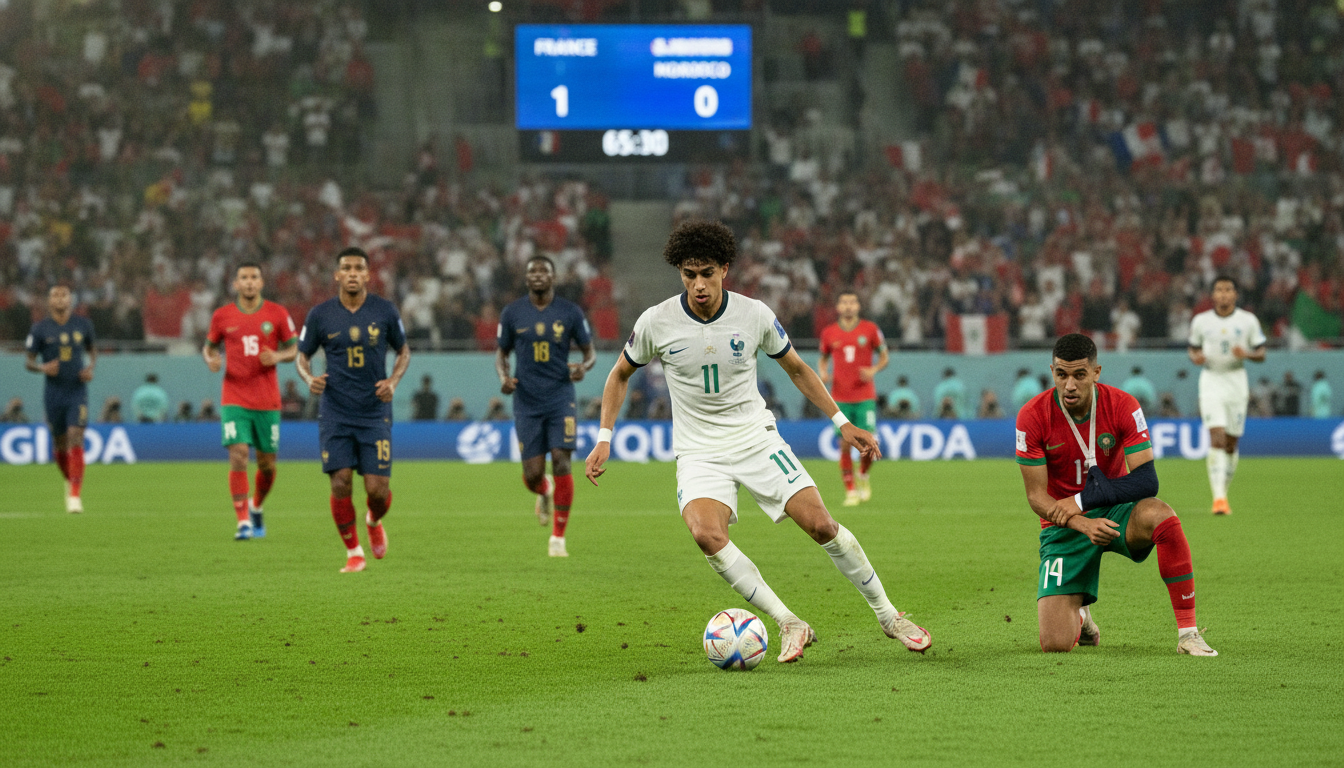
France vs Morocco quarter-final opens the 2026 World Cup quarter-finals with a notable absence as Bayern Munich forward Ismael Saibari is sidelined by a hamstring injury sustained in the Round of 16 victory over Canada. Morocco will still field a strong side with VfB Stuttgart winger Bilal El Khannouss starting and Achraf Hakimi captaining the team. France have named a familiar attacking spine led by Kylian Mbappé, while Michael Olise must manage discipline after a yellow card appeal was rejected by FIFA’s disciplinary committee. The confirmed lineups underline both teams’ ties to German football and set up a high-stakes tactical battle at this stage of the tournament.
Saibari ruled out with hamstring injury
Ismael Saibari’s withdrawal was confirmed after medical scans revealed a hamstring problem that will keep the Bayern attacker out of the quarter-final. Saibari had been one of Morocco’s most influential players through the group stage and knockout game, contributing a team-leading five assists. His absence forces coach Walid Regragui to adjust his attacking options and rely more heavily on in-form wide players and quick combinations through the middle.
The timing of the injury, coming after Morocco’s win over Canada, is a significant blow given Saibari’s role in supplying goal-scoring chances and stretching defenses with his movement. The Atlas Lions now turn to Bilal El Khannouss and creative midfield partners to replicate that creative output. Regragui’s selection will test Morocco’s depth and ability to maintain the intensity that has carried them deep into the tournament.
Confirmed lineups and Bundesliga connections
France coach Didier Deschamps has named Maignan; Digne, Saliba, Upamecano, Kounde; Koné, Rabiot; Doué, Olise, Dembélé; Mbappé as his starting XI. Morocco will begin with Bono; Mazraoui, Salah-Eddine, Diop, Hakimi; El Aynaoui, Bouaddi; Talbi, Ounahi, Diaz; El Khannouss. Both selections reflect a mixture of established internationals and players with significant recent experience in German football.
Several starters have either current or past links to Bundesliga clubs, highlighting the German league’s influence on both squads. Dayot Upamecano, a central figure in France’s backline, and Bilal El Khannouss, who represents VfB Stuttgart, are two of the more prominent Bundesliga names in the lineups. The presence of players with German football backgrounds adds an additional angle to the matchup and offers familiar tactical patterns for coaches to exploit.
Yellow-card concerns ahead of the last-eight
Discipline will be a running subplot in this match, as both teams have players on cautionary notices that could affect availability for later rounds. Morocco’s Bilal El Khannouss will be suspended for a potential semi-final if he collects another yellow card in the quarter-final. For France, Michael Olise must also pick his moments carefully after FIFA’s disciplinary committee declined to rescind the booking he received against Paraguay.
Those caution risks may influence how both wingers and creative midfielders engage defensively and in transition. Managers often instruct such players to curb physical challenges or tactical fouls to avoid accumulation suspensions. That dynamic can change the intensity of duels on the flanks and alter the tactical approaches of both sides, particularly in the closing stages where tactical fouls can be decisive.
Bayern Munich’s presence and tournament statistics
Even with Saibari absent, FC Bayern’s fingerprint on this match is prominent through players like Dayot Upamecano and former Bayern-linked figures in Morocco’s setup. Tournament statistics underline Upamecano’s defensive impact, where he ranks highly across several metrics for interceptions, clearances and aerial duels. On the offensive side, Saibari’s five assists from five appearances were a tournament highlight before his injury curtailed his campaign.
The concentration of Bundesliga and Bayern-linked players in a World Cup quarter-final is notable, reflecting recent trends in player development and transfers. Clubs in Germany have supplied a steady stream of talent to international sides, and that pipeline is visible in today’s lineups. For Bayern, the club’s scouting and recruitment have produced players who are now shaping key moments on the world stage.
Tactical matchups and key battles to watch
At the heart of the tactical chess match will be the contest between France’s front three and Morocco’s full-back structure. Kylian Mbappé remains France’s primary goal threat with his pace and finishing, while Morocco will rely on the overlapping runs of Achraf Hakimi and the defensive coverage of Noussair Mazraoui. That wing interplay could define how Morocco transitions from defense to attack and whether they can unsettle France’s backline.
Midfield control will be another decisive arena. France’s balance of physicality and technical ability through players like Adrien Rabiot and Manu Koné offers control in central zones, while Morocco’s box-to-box runners and creative passers aim to disrupt tempo and launch quick counters. Set pieces and turnovers will present additional opportunities; with Upamecano strong in aerial duels, France may target second-ball scenarios, while Morocco’s agility in space can exploit rapid switches of play.
Potential pathways and what a shock result would mean
A Morocco victory would represent another landmark achievement for North African football and underline the team’s consistency at major tournaments. Advancing past a heavyweight like France would not only be a historic sporting accomplishment but also a narrative-shifting moment for the squad and its domestic leagues. For France, a win would keep their bid for a third World Cup title on track and validate Deschamps’ selection choices and tactical setup.
Beyond prestige, the result would have practical consequences for squad management and tournament planning. Suspension risks, injury recoveries and momentum would all be recalibrated following this fixture. Coaches, medical teams and analysts will immediately project potential semi-final matchups and begin contingency planning based on the outcome, while fans and federations will evaluate performance against pre-tournament expectations.
Match atmosphere and historical context
The quarter-final carries weight both on and off the pitch, with passionate supporters from both nations expected to generate a charged atmosphere. France arrive as traditional contenders with a blend of experience and youthful speed, while Morocco have built momentum through disciplined defending and incisive counter-attacks. That contrast of styles makes the fixture compelling for neutral observers and tactical purists alike.
Historically, meetings between European heavyweights and North African sides have produced memorable confrontations, and this match has the ingredients for another classic. The presence of players who have plied their trade in different top leagues adds to the narrative and ensures there will be multiple subplots to follow beyond the final whistle. For many players, this is an opportunity to elevate their international reputation on the biggest stage.
France vs Morocco quarter-final will be decided by small margins, and each team has clear assets to leverage. France’s attacking depth and experience give them a natural edge in control and moments of individual brilliance. Morocco’s cohesion, counter-attacking threat and set-piece potential make them a dangerous opponent capable of upending pre-match forecasts.
Both coaches will need to weigh the balance between caution and ambition, particularly with disciplinary and injury considerations in mind. Tactical substitutions, management of game tempo and quick adjustments to opponent patterns will play significant roles in the final outcome. The winner will earn more than just a place in the semi-finals; they will carry momentum into the later stages of the competition and a psychological advantage over any future opponents.
The teams have named their starting elevens, discipline and injuries have shaped selection, and the match now falls to the players to determine which narrative endures.