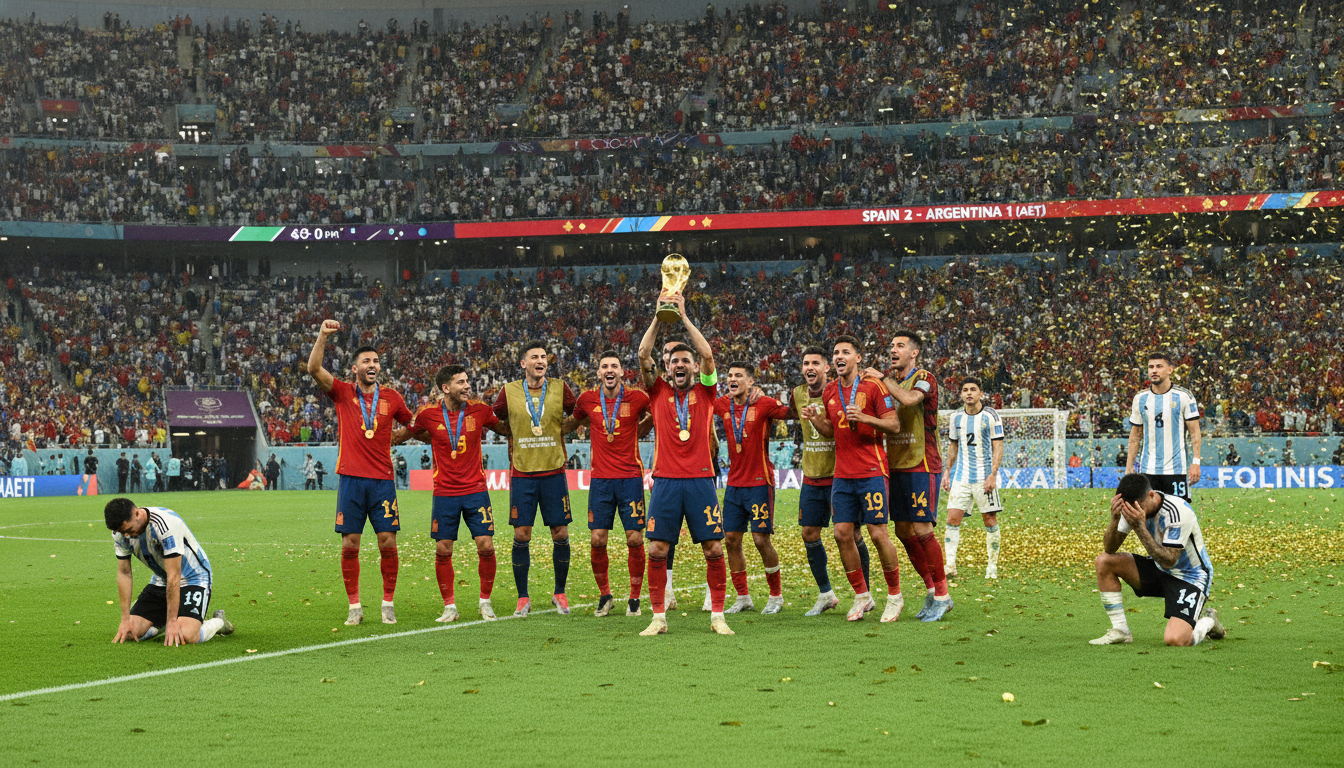
Spain World Cup 2026: Ferran Torres Extra-Time Strike Secures 1-0 Final Win Over 10-Man Argentina
Spain beat 10-man Argentina 1-0 after extra time in New Jersey as Ferran Torres’s header secures Spain’s second World Cup title at World Cup 2026 on Sunday.


Spain clinch World Cup 2026 with extra-time winner
Spain World Cup 2026 ended with La Roja lifting the trophy after a tense 1-0 victory over Argentina in New Jersey. Ferran Torres delivered the decisive moment in the 106th minute, heading home from close range to break a stubborn deadlock. The win marks Spain’s second World Cup triumph and capped a final defined by intensity, fouls and limited attacking openings.
Spain controlled large portions of possession but struggled to convert domination into clear chances during regulation time. Argentina defended with discipline and resilience, forcing the match into extra time where a single moment separated the teams. The narrow scoreline reflected a contest that was often interrupted by stoppages and cautions rather than free-flowing attacking play.
Torres finishes decisive header in second period of extra time
The breakthrough came just one minute into the second half of extra time when Nico Williams flicked a header across goal at the back post. Ferran Torres arrived to meet the cross and fired home from close range, sending Spain’s players and supporters into jubilant celebration. The finish proved clinical and decisive in a match that had been low on high-quality chances.
Spain’s goal arrived after a sustained period of pressure that had failed to produce clear openings earlier in the match. Torres’s strike was the product of persistent wing play and a chaotic defensive scramble from Argentina that left space at the far post. Once the ball hit the net, Argentina had little time to respond before the referee brought the game to a close.
Argentina reduced to 10 men after Enzo Fernández dismissal
The match turned on a late disciplinary moment in stoppage time of the second half, when Argentina midfielder Enzo Fernández received a second yellow card. The dismissal left Argentina with ten men heading into extra time and forced a reshuffling of their defensive structure. Playing a man down, Argentina adopted an increasingly conservative approach, seeking to hold on for penalties rather than chase the winner.
The red card altered the tactical balance and handed Spain a numerical advantage at a crucial moment. Argentina’s coach opted to make defensive substitutions and prioritize containment, but Spain continued to press with patience and purpose. The sending-off became a decisive factor as the extra period unfolded and opportunities grew harder to come by for both sides.
First half shaped by Spanish control and Argentine resistance
The opening 45 minutes contained few clear-cut chances and were notable for Spain’s dominance of possession. La Roja dictated the tempo and probed for openings, while Argentina’s defensive unit remained compact and disciplined. Argentina failed to register a shot on target in the first half, a testament to their deep defensive block and willingness to cede territory.
Spain created pressure through sustained passing sequences and occasional overlaps on the flanks but were unable to find the final pass that would unlock the Albiceleste backline. Turnovers and repeated fouls interrupted momentum and prevented a clear rhythm from emerging in the final third. As a result, the teams went into the interval level and with the outcome still very much in the balance.
Contests of discipline and stoppages defined the second half
The second half continued the physical trend of the first, with the game punctuated by fouls, yellow cards and repeated stoppages. Argentina’s tactical fouling and robust defensive interventions frustrated Spain’s attempts to impose a decisive attacking pattern. Spain retained the clearer possession profile but found themselves repeatedly stifled by set-piece clearances and crowded lanes inside Argentina’s penalty area.
As the match wore on and frustration grew, the refereeing decisions began to shape tactical choices on both sides. Spain pressed for a breakthrough while Argentina sought to disrupt rhythm and preserve structure, particularly as the possibility of extra time loomed. The disciplinary edge ultimately swung in Spain’s favor when Fernández was dismissed, opening the door for the decisive moment in extra time.
VAR intervention rules out Williams opener in extra time
Early in the first period of extra time Spain believed they had taken the lead through Nico Williams, who finished at the back post after a dangerous delivery. However, a VAR review overturned the goal after Mikel Merino was adjudged to have fouled Nicolás Otamendi in the build-up. The decision brought temporary relief for Argentina and intensified the scrutiny on marginal calls in a match where every small action carried outsized consequence.
The overturned goal proved psychologically significant, as it denied Spain an earlier advantage and forced the contest to continue despite their numerical superiority. Both teams adjusted after the check, with Spain remaining patient and determined to find a lawful way through. The VAR intervention underlined how pivotal technology and strict enforcement would be in deciding a final of narrow margins.
Significance for Spanish football and wider implications
The World Cup 2026 title is a milestone for Spain, reaffirming the national team’s place among the elite of international football. The victory offers validation for a generation of players who blended possession-based approach with physical resilience in the tournament’s decisive moments. For Spain’s coaching staff and football hierarchy, the trophy provides both reward and renewed expectations for sustained success at the international level.
Argentina’s campaign ended in frustration and what-ifs, with the defensive display and tactical discipline notable but ultimately insufficient to secure the title. The team will return home having shown character across the competition but also with questions to address about discipline and creative finishing in the biggest matches. For world football, the final underscored the fine margins that determine success on the sport’s largest stage.
Spain’s road to the final and eventual triumph will be analyzed in the weeks ahead by coaches, players and pundits looking to extract lessons from a tournament-winning blueprint. The balance of possession, the timing of substitutions and the management of key moments now form part of a case study for effective tournament play. Ferran Torres’s decisive moment will stand out as an example of seizing opportunity in a tightly contested final.
In the aftermath, supporters and national officials celebrated a long-awaited return to the sport’s pinnacle for Spain, while Argentina will regroup and reflect on a campaign that fell just short. The World Cup 2026 final will be remembered for its intensity, the decisive extra-time strike, and the disciplinary turning points that tipped the balance. Spain leaves New Jersey with the trophy and the status of 2026 world champions.
Spain will now begin preparations to defend their title at future competitions, while Argentina confronts the task of rebuilding and learning from a final that almost escaped them. The result reshapes narratives in international football and provides fresh momentum for Spanish football at all levels.
The match will be dissected for tactical nuance and individual performances in the days ahead, but for now the simple fact remains: Ferran Torres’s header secured Spain’s World Cup 2026 victory and a place in the sport’s history.