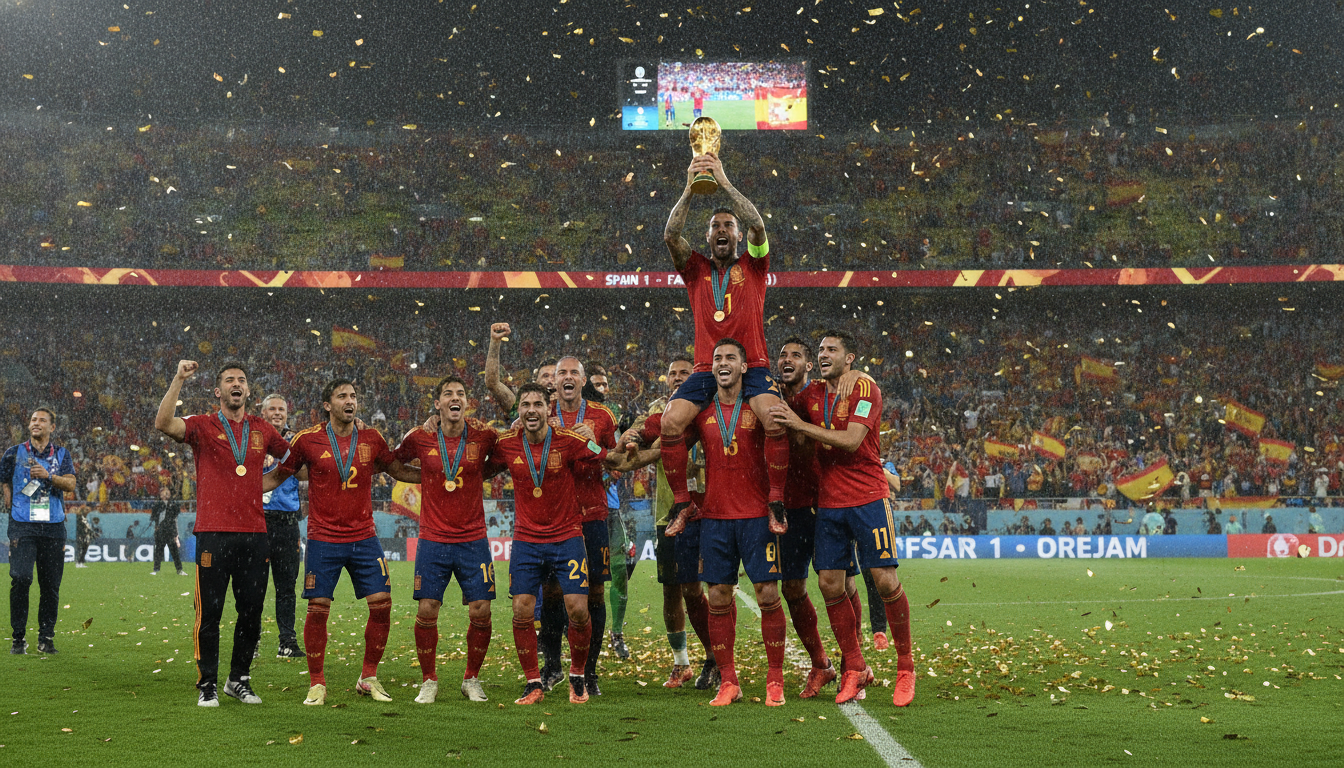
Spain defence praised after Ferran Torres extra-time winner secures Spain’s 1-0 victory over Argentina in 2026 World Cup final
Spain defence anchored 2026 World Cup triumph as substitute Ferran Torres scored in the second period of extra-time to beat 10-man Argentina 1-0 at MetLife Stadium. Spain defence is the primary takeaway from a tournament in which Luis de la Fuente’s side conceded only once across eight matches. Marc Cucurella, who will join Real Madrid from Chelsea, described the defensive effort as “incredible” and urged his teammates to enjoy the victory after nearly 50 days in camp.

Torres delivers decisive blow in extra time
Ferran Torres, introduced from the bench, found the breakthrough in the second half of extra time to settle a tense final and hand Spain their second World Cup title. The goal ended a match defined by few clear chances and disciplined defending from both sides, with Argentina reduced to 10 men at a critical stage. Torres’ intervention underscored Spain’s depth, showing how the team’s substitutes could change the course of the tournament when called upon.
The final at MetLife Stadium featured a protracted period of positional play and mutual caution that only opened up in the extra period. Spain’s willingness to manage the game and probe patiently eventually produced the moment that decided a championship that had seen tight margins throughout. By relying on collective structure rather than individual flashes alone, Spain converted sustained control into the tournament’s ultimate prize.
Cucurella credits collective work for defensive strength
Marc Cucurella singled out the whole squad for the defensive record that underpinned Spain’s campaign, stressing that the achievement belonged to every player on the field. The left-back, who is heading to Real Madrid, emphasized that the team’s identity combined attacking intent with disciplined, shared defensive responsibility. “When you don’t concede, I think it’s much easier to win,” he said, reflecting a belief that defensive solidity fosters offensive freedom.
Cucurella also spoke about the long period of preparation the squad endured, saying the extended camp fostered unity and mutual sacrifice. He suggested the players were ready to switch off and celebrate after nearly 50 days together, arguing that the intensity of the build-up was integral to Spain’s cohesion. The comments highlighted how off-field continuity and on-field roles blended into a successful tournament formula.
Statistical rarity: just one goal conceded across eight matches
Spain allowed only one goal in eight World Cup matches, the smallest total ever recorded by a tournament winner in a single edition. That lone concession came against Belgium in the quarter-finals in Los Angeles, standing out as the only occasion Spain’s defensive line was breached. The record illustrates a campaign built on consistent containment, tactical discipline and minimal defensive lapses.
This defensive statistic takes on added significance given the variety of opponents and venues Spain faced across the competition. Maintaining such a standard required rotations that did not dilute defensive quality and a goalkeeper-cohort comfortable in game management. The result is an empirical confirmation of what coaches and analysts observed: Spain’s foundation in defense was as decisive as its moments of attacking craft.
Luis de la Fuente’s approach and tactical balance
Coach Luis de la Fuente has been credited with blending Spain’s traditional possession principles with pragmatic defensive organization throughout the tournament. His setup demanded coordinated pressing, compact lines and quick transitions from attack to defense, aiming to suffocate opponents’ opportunities without surrendering the initiative. The approach relied on players understanding collective responsibilities rather than policing individual errors.
De la Fuente’s rotation policy and in-game adjustments allowed Spain to remain fresh and responsive over the long tournament schedule. Substitutions like Torres’ introduction in the final exemplified a plan that anticipated decisive moments and prepared personnel accordingly. The coach’s ability to marry philosophical continuity with tactical adaptability was central to Spain’s capacity to both control games and protect leads.
Key moments en route to the final
While the final attracted attention for its defensive narrative, Spain’s path to the trophy included a range of matches that tested different parts of the squad. From group-stage management to knockout-stage intensity, the team negotiated varied tactical puzzles and delivered narrow, controlled victories. The quarter-final against Belgium in Los Angeles was notable as the only instance in which Spain conceded, but the team responded by tightening further as the tournament progressed.
Throughout the knockout rounds Spain combined disciplined defending with timely attacking interventions, often relying on clinical moments from forwards and clever rotations in midfield. The balance between limiting opponents’ chances and creating sufficient openings was sustained even in high-pressure fixtures. That steadiness under pressure was the through-line connecting Spain’s campaign and underpinned their ultimate success.
Reactions and celebrations after the victory
Players, staff and supporters poured onto the pitch and into team areas after the final whistle, marking a long run of preparation with celebration and relief. Cucurella urged his team to enjoy the moment and reflect on the commitment that delivered the trophy after weeks away from home. The sentiment from the dressing room emphasized collective effort, with defenders, midfielders and forwards acknowledged for their shared role in the triumph.
As Madrid-bound signings and established internationals joined the celebrations, the win also prompted conversations about how this squad will be remembered in Spain’s footballing history. Coming 16 years after the country’s first World Cup in 2010, the title adds a new chapter and invites analysis of the structural and cultural factors that produced sustained success. For now, players and staff will accept congratulations and begin planning individual and collective next steps.
Spain’s ability to combine tactical discipline with an adaptable game plan produced a campaign in which defense and attack were interdependent rather than contradictory. The headline statistic — one goal conceded over eight matches — is a clear illustration of how compactness, communication and work-rate can determine outcomes at the highest level. As the team celebrates, coaches and analysts will also be dissecting the processes that created such a resilient unit.
The triumph at MetLife Stadium will be measured not only in the trophy lifted but in the standards the team set for international football, with Spain defence at the heart of that achievement.