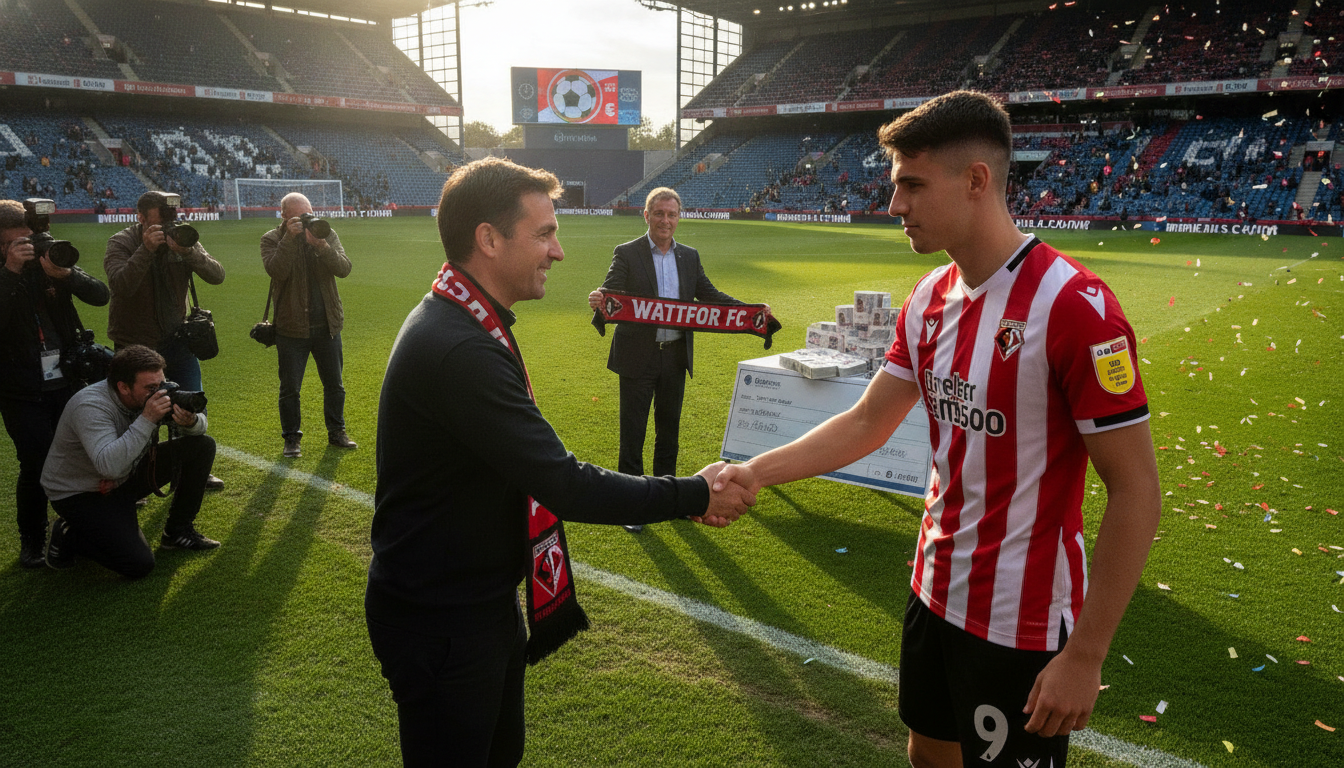
Iker Bravo transfer: Bayer Leverkusen to receive €1.9m as Watford agree fee with Udinese
Bayer Leverkusen will receive roughly €1.9m after Iker Bravo’s transfer from Udinese to Watford, with the 21-year-old signing until summer 2029 and the fee reported at just under €4m.


Bayer Leverkusen are set to benefit from Iker Bravo’s move to English second-tier side Watford after the striker completed a transfer from Serie A club Udinese. The 21-year-old forward has signed a contract with Watford that runs until the summer of 2029, and German outlet Kicker reported a transfer fee coming in at just under €4 million. Because Leverkusen retained a 50 percent sell-on clause when Bravo moved to Udinese, a substantial portion of the payment will be routed back to his former German club.
Leverkusen to receive €1.9m from Iker Bravo sale
Kicker’s report places the transfer fee at just below €4 million, with Udinese set to receive that amount from Watford as part of the completed deal. When Bravo left Leverkusen in 2024, the clubs agreed a 50 percent sell-on clause, entitling the Rhineland club to half of the profit or fee depending on the clause wording. As a consequence, Leverkusen are due close to €1.9 million from the transaction, reflecting the agreed percentage of the incoming payment.
Club accounting and the precise mechanics of sell-on clauses can vary, but in this instance the arithmetic produces a clear short-term inflow for Leverkusen. For a Bundesliga side that invests heavily in youth development and scouting, the payment represents a meaningful return on a player who spent formative years in their system. The cash will arrive to Leverkusen after Udinese processes the transfer payment from the Hornets and the contractual sell-on terms are triggered.
Transfer terms: contract length and fee details
Watford have agreed a deal to bring Bravo to Vicarage Road with a contract that extends to the summer of 2029, offering the club a medium-term commitment to a young forward. The fee reported by Kicker — just under €4m — will be paid to Udinese as the selling club, with subsequent sell-on disbursements made according to the pre-existing agreement with Leverkusen. Club statements from Watford, Udinese or Leverkusen have not published detailed accounting figures, so the public understanding is based on the reporting by reputable outlets.
The structure of the payment and any add-ons or performance-related clauses have not been fully disclosed in media reports. It is common for transfers of this size to include variables such as appearance bonuses, promotion-related payments or sell-on percentage adjustments that can alter the ultimate sums exchanged. For now, the headline figure and the sell-on percentage establish the principal financial outcome for the clubs involved.
Sell-on clause mechanics and financial flow
Sell-on clauses are a standard instrument in transfer negotiations, designed to ensure that a club that nurtured a player benefits from subsequent transfers. In Bravo’s case, Leverkusen negotiated a 50 percent sell-on entitlement when he moved to Udinese, a relatively high share that guarantees a substantial proportion of any later transfer fee. Under the reported terms, that entitlement converts a reported near-€4m sale into nearly €1.9m flowing back to Leverkusen after Udinese receives the initial fee.
The practical effect is that Udinese will retain the remaining portion of the transfer fee, minus any other obligations, while Leverkusen secures the agreed portion without being the intermediary on the move. For Udinese, the immediate income supports their sporting budget, while Leverkusen’s windfall compensates for the earlier departure of a promising talent and underscores the value of negotiating robust sell-on protections.
Bravo’s development: from Leverkusen academy to senior football
Iker Bravo came through youth setups that identified him as a forward with potential, and his time under contract with Bayer Leverkusen between 2021 and 2024 formed a key part of his development. Moving to Udinese offered him first-team exposure in Serie A, where he continued to build his experience against senior opposition. The progression from a Bundesliga academy environment to Italy’s top flight and now to the English Championship traces a pathway common to many young European talents seeking regular minutes and career momentum.
At 21, Bravo carries the profile of a young striker with room to develop and adapt. His move to Watford places him in a highly competitive league where promotion ambitions and physical demands can accelerate a player’s growth. Clubs investing in players like Bravo generally balance immediate squad needs with the potential for future resale, and the transfer embodies that dual-purpose approach.
What Watford gain: tactical fit and expectations
Watford have acquired a young forward who can be molded into their tactical plans, offering depth and upside in attack as the club pursues promotion back to the Premier League. The Championship’s intensity and schedule will test Bravo’s physicality and consistency, but his age and prior experience in Italy suggest a capacity to adapt. Watford’s coaching staff will likely integrate him gradually while assessing how his skill set complements the existing strike options.
The club’s medium-term contract to 2029 indicates Watford see Bravo as more than a short-term stopgap, offering him time to settle and contribute across several seasons. For supporters and analysts, the move will be measured by minutes on the pitch, goal contributions, and how quickly he adjusts to a new league’s tempo. Success in the Championship could increase his value substantially, potentially yielding further financial returns for Watford and the clubs that retained sell-on rights.
Financial implications for Udinese and Leverkusen budgets
Udinese secure an immediate injection of just under €4m from the transfer, a sum that fits within Serie A business models for player trading and resource allocation. The club had previously paid €600,000 when acquiring Bravo, and the sale represents a profitable transaction even after accounting for the sell-on payment to Leverkusen. For clubs like Udinese, that profit can be recycled into scouting, wages, or reinforcements to maintain competitive balance.
For Leverkusen, the near-€1.9m return is a tangible benefit of their earlier investment in Bravo’s development, illustrating how academy and youth transfers can yield financial as well as sporting dividends. While the amount is modest in the context of top-tier football finances, it contributes to operational flexibility and underscores the long-term value of securing meaningful sell-on clauses when transferring young prospects.
Iker Bravo’s move to Watford marks a clear example of modern transfer economics at work, where multi-club deals and contractual protections shape how talent is developed and monetized across Europe. The transfer provides Udinese with immediate funds, offers Watford a future-facing attacking option, and sends a welcome payment back to Leverkusen as a reward for their role in the player’s early career.