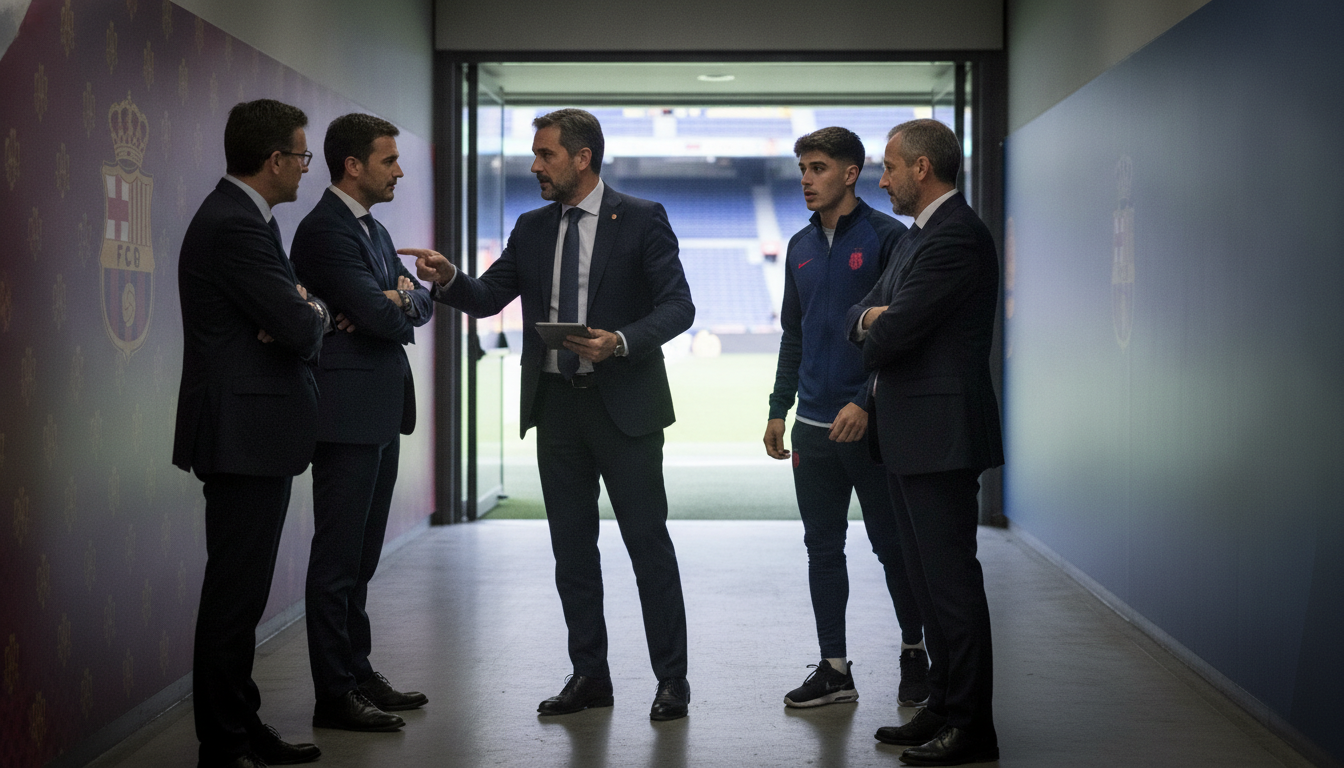
Barcelona disciplinary investigation opened after Atlético complaint over Julián Álvarez approaches
RFEF launches a disciplinary investigation into Barcelona after Atlético Madrid accused the club of improperly approaching Julián Álvarez, who remains contracted to the Metropolitano.


Barcelona’s disciplinary investigation by the Royal Spanish Football Federation (RFEF) was formally opened after Atlético Madrid lodged a complaint accusing the club of approaching Julián Álvarez while he remains under contract. The complaint, filed with the RFEF and copied to FIFA, alleges improper contact and a campaign of pressure surrounding the Argentina forward. Barcelona has been notified and must now prepare a formal defence as the federation assigns a disciplinary instructor to examine the dossier.
RFEF opens case after Atlético complaint
The RFEF confirmed the initiation of extraordinary disciplinary proceedings following Atlético’s submission of evidence and arguments to the federation. Atlético maintains the complaint was necessary to defend its contractual rights and protect the club’s sporting interests. The formal process gives both parties the opportunity to present documentation and witness statements before any ruling is issued.
Atlético’s complaint was lodged at the end of June 2026 and has prompted the federation to begin a fact-finding stage. The complaint was also shared with international authorities to ensure compliance with cross-border transfer and regulatory rules. The instructor appointed by the RFEF will now determine whether the matter proceeds to a formal hearing.
Atlético’s allegations and timeline of events
Atlético’s public accusation alleges a sustained approach by Barcelona to Julián Álvarez despite his contract running until the summer of 2030. Club executives have argued that Barcelona’s actions amounted to pressure and harassment and that the timing and nature of contact contravened transfer regulations. Atlético’s board documented the timeline and published statements through official channels ahead of filing the complaint.
The situation escalated during the 2026 FIFA World Cup when Álvarez told reporters on June 22, 2026, that a move would be in his best interests and that he wished to fulfil a long-held dream. Atlético interpret those comments as evidence that Barcelona’s approach had affected the player. Atlético chief executive Miguel Ángel Gil Marín publicly warned the club would take decisive action, a pledge that culminated in the federation complaint delivered on June 30, 2026.
Potential disciplinary sanctions under RFEF rules
If the RFEF finds Barcelona guilty of illegally inducing a player under contract, the federation code allows a spectrum of penalties. Financial fines and the temporary closure of club facilities for matchdays are among the disciplinary measures available. The code also permits sporting sanctions that would directly affect competitiveness, including the deduction of up to three LaLiga points for serious breaches.
In its most severe application, the RFEF could block Barcelona from registering players during one or more transfer windows, a penalty that would significantly alter the club’s short-term recruiting plans. The federation can also impose individual sanctions on players. Should investigators conclude Álvarez participated in a prohibited approach, he could face a suspension and be ordered to compensate Atlético for the period in which the club could not field him.
Barcelona’s response and legal posture
Barcelona’s legal department has signalled confidence that Atlético’s submission lacks the conclusive evidence required to sustain disciplinary sanctions. Club officials argue that their actions followed accepted procedural steps once Álvarez publicly declared his interest in a move and that a formal offer to Atlético was lodged only thereafter. From Barcelona’s perspective, communications with the player were not illicit because they occurred after the player’s public statements and the club’s offer.
Sources close to the club stress that Barcelona intends to present a detailed defence to the RFEF and to challenge any assertion that the club orchestrated a campaign of harassment. Legal teams on both sides are expected to exchange documentary evidence, messages and witness testimony as the federation compiles its case file.
Key dates that may influence the case
Several dates are likely to shape the disciplinary process and the negotiating dynamic between the clubs. Atlético filed its formal complaint on June 30, 2026, and Álvarez’s public remarks at the World Cup came on June 22, 2026. These two timestamps are central to Atlético’s argument that Barcelona’s contacts predated permissible negotiations under current transfer rules.
Another pivotal date is August 10, 2026, when Álvarez is scheduled to report for Atlético’s pre-season training. Observers expect the player’s actions that day — whether he attends, refuses, or issues public comments — to clarify his stance and could materially affect both the federation’s assessment and the clubs’ bargaining positions. The transfer window remains open through the summer, so developments before that reporting date could determine whether a deal is completed or stalled by the disciplinary process.
Wider implications for Barcelona, Atlético and LaLiga
The outcome of the RFEF investigation could have ramifications beyond the two clubs directly involved. A points deduction or an embargo on registrations would reshape Barcelona’s sporting strategy and potentially alter LaLiga title races and qualification battles. Conversely, a dismissal of the complaint would allow Barcelona to proceed with recruitment plans and reduce uncertainty for Álvarez and his suitors.
Atlético has framed the case as a defence of contractual stability, warning that unchecked approaches to players under contract undermine the integrity of club competition. Other LaLiga clubs are likely watching the process closely, as any precedent set by the federation could influence how clubs conduct negotiations moving forward. The disciplinary code’s application in this case may also prompt debate over the clarity and enforceability of rules governing player approaches.
What to expect from the procedural phase
The immediate phase will centre on evidence gathering and procedural submissions to the disciplinary instructor. Both sides will have the opportunity to file statements, produce supporting documents and request witnesses. The RFEF’s timetable for the investigator’s report is not fixed publicly, and the length of the process will depend on the complexity of the evidence and any requests for extensions or additional information.
Should the instructor determine there is sufficient evidence, the matter will proceed to a formal hearing where sanctions can be applied. If the instructor finds the complaint lacks merit, the case could be dismissed without further consequence for Barcelona. Either outcome may be subject to appeal within the football governance structure, extending the process into the autumn months if necessary.
Barcelona’s disciplinary investigation and the dispute around Julián Álvarez underline the tensions inherent in high-profile transfers, particularly when a player signals a move while still under a multi-year contract. The RFEF’s decision-making process now moves to the centre of a transfer saga that has significant sporting and regulatory stakes for the clubs involved and for Spanish football more broadly.