Schalke transfer setback: Gosens sidelined and Lindstrom loan collapses
Schalke suffer a double transfer setback as Robin Gosens is sidelined with a thigh injury and Jesper Lindstrom’s loan collapses over a purchase-clause disagreement.

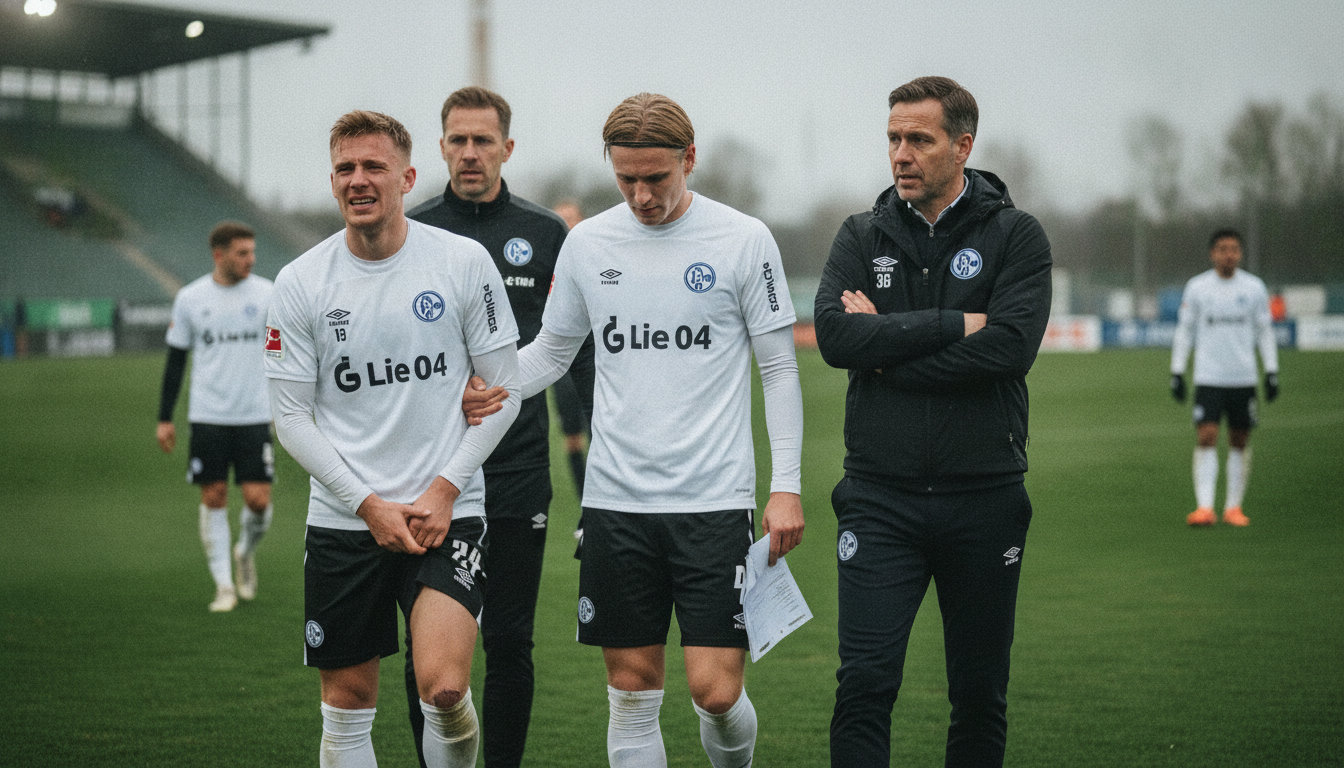
Robin Gosens and Jesper Lindstrom have emerged at the centre of a damaging pre-season turn of events for Schalke, combining injury and a failed deal that will complicate the club’s preparation for the new campaign. Gosens was injured in Saturday’s 5–0 friendly win over Hessen Kassel and will remain sidelined until further notice, while negotiations to secure Lindstrom on loan from Napoli broke down over a proposed purchase clause. The developments represent a tactical and transfer headache for the Royal Blues as they close out preseason and approach competitive fixtures.
Gosens injured in 5–0 friendly; extent of layoff unclear
Reports from Schalke after the 5–0 victory against Hessen Kassel confirmed Robin Gosens sustained a thigh injury during the match and will be unavailable for at least the immediate weeks ahead. The club has not publicly detailed the precise diagnosis, but local reporting indicates the absence is expected to last several weeks rather than months. That timeline suggests Gosens will miss a significant portion of Schalke’s remaining preseason fixtures as he focuses on recovery and rebuilding fitness.
Gosens had only just returned to match action for Schalke, featuring in the opening half of a 3–1 friendly victory over Fagiano Okayama as he worked through minutes following his move. The setback interrupts his early integration with the squad and halts a planned fitness progression designed to bring him to peak condition ahead of competitive duty. Medical staff will monitor his recovery closely with tailored conditioning to avoid further setbacks.
Lindstrom loan collapses amid dispute over purchase clause
Jesper Lindstrom’s expected loan move to Schalke fell apart after the clubs failed to agree terms on a purchase clause built into the temporary deal. Schalke reportedly sought a €5 million option that could convert to an obligation under specific conditions, while Napoli preferred an obligation that would trigger at a lower appearance threshold. Those differing positions and an alleged late attempt to change previously discussed terms led Schalke to withdraw from the negotiation.
Lindstrom had already been at Schalke’s training base and was due to undergo a medical, and the breakdown came as a late blow to supporters who had anticipated his arrival. The forward was informed on Monday that the move would not proceed and is expected to return to Italy to rejoin Napoli or await other offers. The collapse leaves Schalke without a planned short-term reinforcement in the attacking midfield area at a moment when squad depth is being finalised.
Immediate impact on Schalke’s preseason planning
The combined effect of Gosens’ absence and Lindstrom’s failed move forces Schalke to reassess minutes and roles in the remaining warm-up fixtures. Gosens’ injury removes a left-sided option who was expected to anchor overlaps and set-piece delivery, which will require tactical adjustments from the coaching staff. Meanwhile, the lack of Lindstrom’s addition reduces the pool of creative and forward-thinking players available to rotate through preseason games.
Schalke face high-profile friendlies against former club Atalanta and Real Madrid in the coming weeks, fixtures that were to provide crucial minutes for new and returning players. With Gosens likely to miss those matches, the club will need to identify alternatives and manage workloads to ensure competitive readiness. The coaching team must also protect fitness while maintaining intensity, a balancing act complicated by uncertainty around recovery timelines and transfer windows.
Squad management and transfer-market consequences
From a transfer strategy perspective, losing Lindstrom closes one immediate avenue for reinforcing the squad and may prompt Schalke to revisit other targets or internal options. The collapse underscores the fragility of loan dealings with complex conditional purchase clauses and highlights the bargaining dynamics clubs face in late-stage negotiations. Schalke’s board and sporting directors will now have to weigh whether to reopen talks for replacements or push current squad members into expanded roles.
There is also a financial element to consider: a €5 million figure tied to a conditional obligation would have represented a manageable outlay if triggered, whereas Napoli’s counter-proposal would have shifted risk and perhaps increased long-term cost. The club must balance ambition and prudence as the market progresses, ensuring that any late acquisitions fit both the tactical needs and the wage structure. Given the compressed timeframe before the domestic opener, decisions will need to be pragmatic and swift.
Coaching response and tactical adjustments
Schalke’s coaching staff face immediate tactical choices to mitigate Gosens’ absence and the missing depth from Lindstrom’s failed arrival. The left flank will likely be covered by rotated personnel, with the possibility that full-backs or wing-backs adapt their roles to provide width and crossing in Gosens’ stead. Midfield composition may also shift, redistributing creative responsibilities among established players rather than relying on a new loan signing to slot in quickly.
Training plans will be adjusted to simulate game scenarios without Gosens and to provide match minutes for those expected to step up, ensuring rhythm and cohesion are maintained. The coaching team must also manage player fatigue across preseason to prevent further injuries, which could otherwise compound the club’s problems. Clear communication with the squad about roles and expectations will be essential as Schalke finalise matchday squads in the days ahead.
Outlook for the DFB-Pokal opener and the season start
Despite the setbacks, Schalke’s competitive calendar includes a DFB-Pokal first-round tie against Hallescher FC on August 24, and the club has indicated that Gosens’ availability for that fixture is not presently considered to be in jeopardy. That assessment will be contingent on medical progress and the measured return to training, however, and the club will likely maintain conservative protocols to avoid aggravation. The team’s ability to field a competitive lineup for the opener will be a key early indicator of how well the preseason disruption has been managed.
The wider season ahead will test Schalke’s squad depth, particularly if further injuries or market disappointments occur. The failed Lindstrom deal illustrates how fine margins in transfer negotiations can leave a club unexpectedly light in specific areas, and the next weeks may reveal whether internal solutions suffice. Schalke’s response over the coming fortnight — in training, in the market, and in match selection — will shape initial momentum for the campaign.
Robin Gosens and Jesper Lindstrom occupy contrasting positions in the club’s short-term planning, but both developments feed into a single operational challenge for Schalke: preparing a competitive squad under constrained circumstances. The club must now balance rehabilitation, tactical recalibration, and potential market activity as it seeks to enter the new season with clarity and resilience.