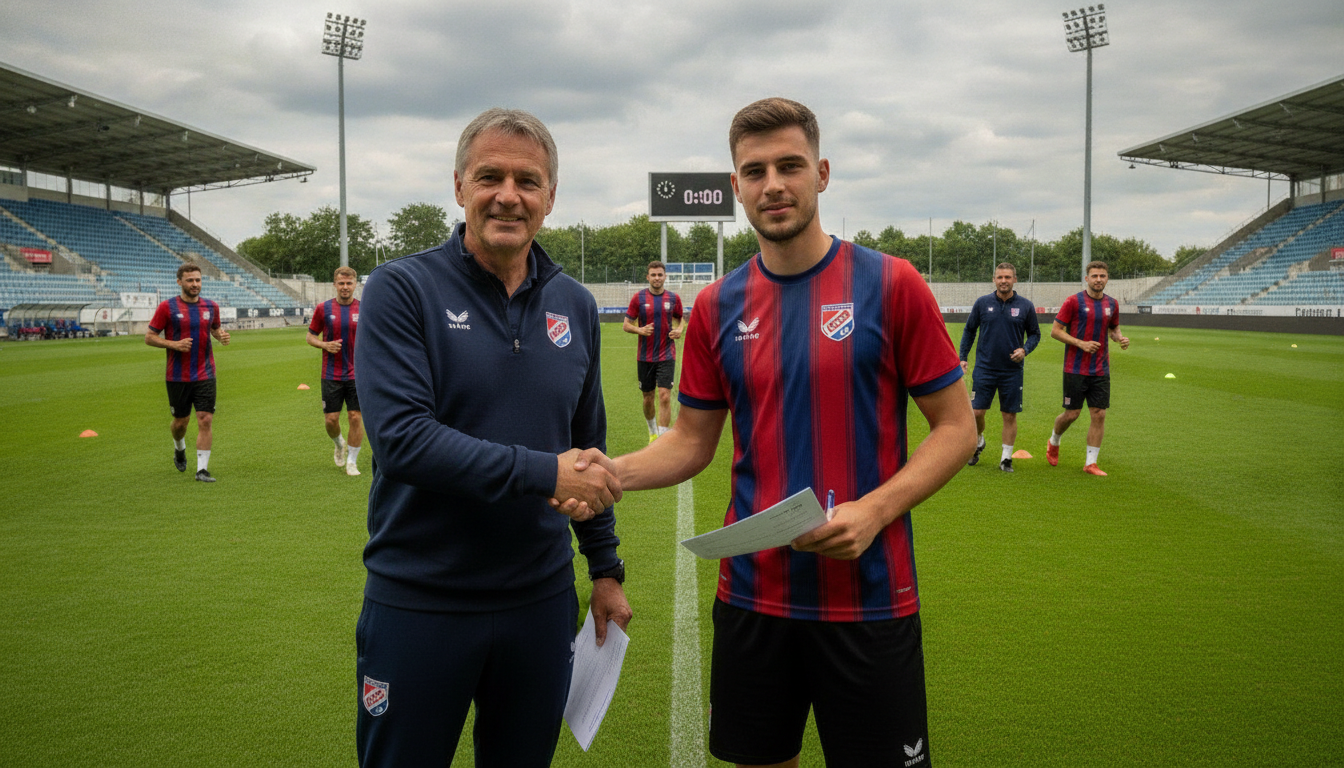
Heidenheim Face Rebuild in 2. Bundesliga After Relegation and Major Summer Exodus
Heidenheim prepare for 2. Bundesliga return after relegation, navigating a summer of departures, targeted signings and promising pre-season with Frank Schmidt.


Heidenheim will begin life in the 2. Bundesliga following a dramatic relegation that ended a three-year stay in the Bundesliga. The club enters the new campaign confronting the loss of several key contributors and the challenge of restructuring a squad that overextended itself during consecutive top-flight and European commitments. Manager Frank Schmidt remains in place to oversee the rebuild and maintain continuity as the club aims to return to the top tier at the first opportunity.
Heidenheim Relegated on Final Day
Heidenheim’s drop back to the second division was confirmed after a 2-0 defeat to Mainz on the last day of the Bundesliga season. The loss capped a campaign in which the club scraped together just 26 points and finished 17th in the standings. A late-season surge, including a 3-3 draw with Bayern Munich and three wins from five matches, produced a nervy finish but ultimately proved insufficient to secure survival.
The end of this spell in the Bundesliga closes a three-year chapter that included Heidenheim qualifying for European competition in their first top-flight season. That initial success proved difficult to sustain amid the demands of domestic and continental fixtures, and the club paid the price as squad depth and sales of key players eroded their competitiveness. Relegation was not a sudden collapse but the culmination of an increasingly strained roster and the toll of an ambitious fixture list.
Summer Transfer Exodus and Incoming Signings
The summer window has seen a notable outflow of talent from Heidenheim, with several important contributors returning to parent clubs or departing permanently. Arijon Ibrahimović and goalkeeper Diant Ramaj have resumed duties with Bayern Munich and Borussia Dortmund respectively after their loan spells, while loanees such as Eren Dinkçi, Hennes Behrens and Leonidas Stergiou have also returned to their parent teams. Other departures include Stefan Schimmer, Omar Traoré and Niklas Dorsch, moves that leave gaps across the pitch.
In response, Heidenheim have targeted value signings primarily from the 3. Liga as they seek low-cost, high-upside additions. The club has brought in veteran goalkeeper Thomas Dähne on a free transfer to bolster the goalkeeping ranks following exits and loan returns. Right-back Oualid Mhamdi was secured from SC Verl after a productive season, while forward Marcel Costly arrives with a strong scoring record at 1. FC Ingolstadt.
The most expensive acquisition to date is 21-year-old winger Paul Hennrich, a €1.5 million signing whose versatility and output at reserve level caught the club’s attention. These additions reflect a pragmatic recruitment strategy: blending experienced hands with promising young players from lower tiers to restore squad balance and contain costs. Management will rely on scouting and development to convert these lower-league profiles into 2. Bundesliga performers.
Pre-season Form Shows Mixed Signals
Heidenheim’s pre-season results have offered both cause for optimism and areas of concern as the squad beds in. The side recorded comfortable wins against lower-league opposition, including heavy victories over TSV Nördlingen and SGM Langenau, and a 4-1 triumph over Ingolstadt that showcased attacking cohesion. Those dominant performances underline the gulf in quality against weaker opposition and have helped build confidence among new arrivals.
Conversely, harder tests exposed lingering defensive frailties and the adjustment period required for a heavily reshaped squad. A 3-1 defeat to Hamburger SV and a 1-1 draw with Bologna highlighted the defensive work still needed and the dependency on sharper, more experienced performers in key moments. The mixed set of results points to a side capable of strong offensive displays but not yet consistent enough to withstand the challenges of the 2. Bundesliga grind.
Tactical Outlook and Predicted XI
Frank Schmidt is likely to retain familiar tactical foundations while adapting personnel to fit the new balance of experience and youth. A 4-2-3-1 setup is the expected base, emphasizing compact midfield lines and support for a lone striker capable of holding play and running in behind. The system provides flexibility, allowing wide players such as Hennrich to interchange and full-backs like Mhamdi to supply width when the team presses forward.
Goalkeeper Frank Feller appears poised to claim more responsibility following Diant Ramaj’s return to Dortmund and Kevin Müller’s departure, giving the club a homegrown option between the posts. The projected eleven reflects the recruitment emphasis: Feller; Mhamdi, Mainka, Gimber, Föhrenbach; Schöppner, Kerber; Hennrich, Beck, Honsak; Zivzivadze. That lineup blends youth and experience while signalling trust in internal development and the new signings to raise the team’s baseline level.
Schmidt’s challenge will be to forge cohesion quickly and to instill defensive resilience that was often lacking in the later stages of last season. Midfield balance will be critical, with two holding players required to shield the backline and allow creative attackers freedom to exploit spaces. The manager’s long tenure offers continuity that could prove decisive in integrating new faces into a coherent tactical identity.
Promotion Chances and Strategic Challenges
Heidenheim’s odds of immediate promotion are tempered by the scale of summer turnover and the strength of opposition in the 2. Bundesliga this season. The loss of several first-team contributors reduces the club’s proven quality, and the reliance on recruits from lower divisions introduces risk as those players adapt to a higher level of physicality and tactical demand. Competing against well-resourced teams and established second-tier sides complicates a straight return to the Bundesliga.
Yet the club’s infrastructure, coaching stability and recent top-flight experience are meaningful advantages if managed carefully. Frank Schmidt’s presence provides institutional knowledge and tactical clarity, and the club’s scouting model aims to uncover undervalued talent that can flourish in a rebuilding environment. If younger players such as Feller, Mhamdi and Hennrich can establish themselves as consistent starters, Heidenheim can realistically challenge for promotion places rather than merely consolidate.
Key strategic areas include shoring up the defense, retaining fitness over a long campaign, and finding dependable goal sources to replace departed scorers. Depth will determine how the team copes with injuries and suspensions, and the effectiveness of new signings in contributing both goals and solidity will shape the season’s trajectory. Expect Heidenheim to prioritize immediate competitiveness while also protecting the club’s financial stability in the transfer market.
Club Leadership and Long-term Planning
Beyond the pitch, Heidenheim’s leadership faces decisions about contract management, academy promotion and transfer-market patience. The departures of loan players and profitable sales were predictable after a run in the Bundesliga and European play, but reinvestment choices will indicate whether the club aims for a fast return or a more measured rebuild. Strategic clarity from the board and coaching staff will be essential to balance ambition with fiscal prudence.
Youth development will likely be emphasized as a sustainable route back to the top flight, with internal prospects given opportunities amid the recent exodus. The club’s scouting network in Germany’s lower leagues has already yielded several signings, suggesting a continued focus on tapping domestic talent pools. If those pathways are nurtured, Heidenheim can construct a squad capable of both short-term success and medium-term stability.
Commercial and fan engagement efforts will also play a role as the club seeks to maintain momentum following relegation. Retaining supporter trust and revenue streams through strong communication, season-ticket campaigns and competitive home performances will be important to underwrite transfer and wage strategies. The collective response from fans, players and management will set the tone for a campaign framed by high expectations.
Heidenheim enter the coming 2. Bundesliga season at a crossroads: the club has the managerial continuity and infrastructure to mount a promotion bid, but it must rapidly replace lost quality and build a squad that can endure a demanding league campaign. How quickly Schmidt’s new-look group can cohere, the impact of summer signings, and the club’s strategic decisions off the field will determine whether this season becomes a launching pad back to the Bundesliga or a longer rebuilding project.