Arsenal vs PSG Tactical Preview: How PSG’s High Press Could Upend Arsenal’s Possession
Arsenal vs PSG tactical preview: PSG’s man-to-man high press and aerially dominant backline could force turnovers and change the rhythm of Arsenal’s possession-led approach.


Arsenal and Paris Saint-Germain head into a high-stakes encounter where tactical nuance may decide the outcome more than raw talent. PSG are expected to employ a high, man-oriented press that aims to disrupt Arsenal’s possession, while Arsenal will seek to engineer space and runners behind a compact PSG backline. Injuries and personnel changes — notably the absence of Mikel Merino and the return to fitness of Kai Havertz — add further tactical variables. This match will hinge on how Arsenal cope with sustained pressure from wide attackers and whether PSG’s defenders can win the crucial aerial battles.
PSG’s High Press: Personnel and Intent
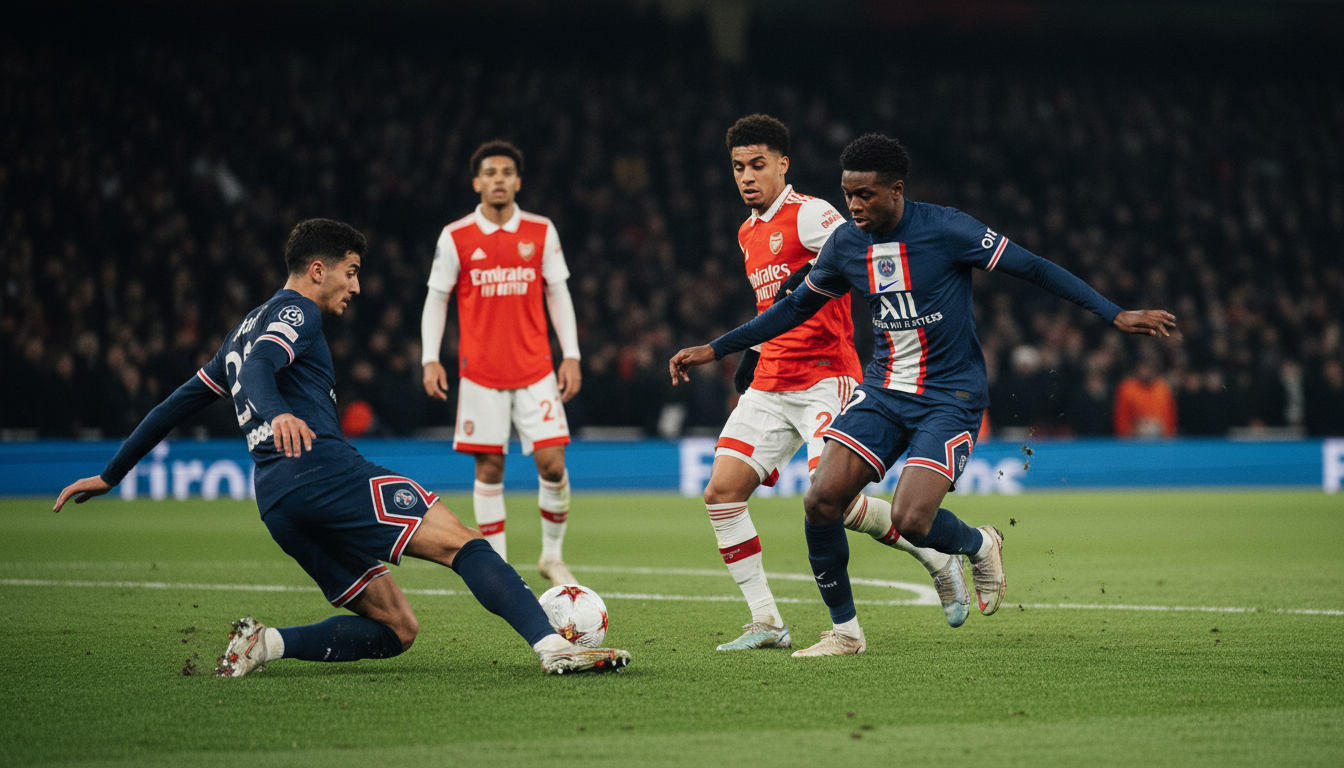
PSG are likely to press Arsenal aggressively from the front, using pace and individual pressure to hunt turnovers. Players such as Ousmane Dembélé, Khvicha Kvaratskhelia and Desire Doue bring directness and intensity, pressing in wide and half-space zones to force rushed passing or long clearances. The intended effect is twofold: create immediate attacking transitions from errors and push Arsenal into clearing long balls that favor PSG’s strongest attributes.
That high, man-to-man approach mirrors setups PSG have used effectively against elite opponents. By assigning attackers to follow Arsenal creators and linking pressure with quick support, PSG aim to turn Arsenal’s patient build-up into a series of hurried passes. Tactical discipline from PSG’s forwards will be essential; if their line can maintain coordination the system can produce turnovers in dangerous areas.
Arsenal’s Possession Game and Tactical Adjustments
Arsenal have built themselves around careful ball circulation, positional rotation and creating penetrating runs from midfield and wide positions. When in full flow they dominate possession and probe patiently for openings, relying on movement to displace defenders and create channels for through balls. That pattern will be tested by PSG’s front three, which are designed to close passing lanes and make on-the-ball comfort costly.
To counteract the press, Arsenal may shorten passing distances and use quicker vertical movements rather than extended horizontal circulation. Expect midfielders to offer constant support for the ball carrier and for wide players to drop in to create numerical superiority in pockets. Arsenal’s coaching staff may also prioritize quick switching of play to exploit space vacated by PSG’s aggressive forward movement.
Midfield and Personnel Questions That Matter
The absence of Mikel Merino removes a physically dominant presence who wins aerial duels and shields the backline on transitions. Without him, Arsenal’s ability to recover second balls and contest set pieces shifts in importance. Kai Havertz returning to full fitness introduces a different dynamic, offering link play and an aerial threat of his own, which could help Arsenal keep the ball in advanced areas and relieve pressure.
If Arsenal select Viktor Gyökeres as the central striker, his hold-up play will be under scrutiny against PSG’s defenders. Gyökeres can be effective at bringing teammates into play, but he is less dominant in contested aerial duels than a more traditional target man would be. Arsenal may therefore adapt by using quicker one-touch combinations or by asking Havertz to occupy central defenders and create space for runners in behind.
Aerial Battles and Defensive Matchups
PSG’s center-back pairing, featuring the experienced Marquinhos and the athletic Willian Pacho, gives them a clear advantage in jump contests and set-piece defending. That superiority invites a specific plan: force Arsenal into long balls where PSG can either win second balls or clear danger. It is a gamble for Arsenal to rely on crosses or aerial flick-ons without a physically dominant striker leading the line.
Arsenal’s coaching team will need to identify how to neutralize Marquinhos’ positional intelligence and Pacho’s physicality. Targeting spaces between the defensive lines, creating overloads on the flanks, and using diagonal runners could lessen the impact of aerial duels. Set-piece routines will also be key; Arsenal must find creative ways to exploit mismatches and avoid conceding cheap headers at the opposite end.
Goalkeeper Comparison and Tactical Consequences
Matvey Safonov’s presence in goal this season changes PSG’s calculus when choosing a defensive posture. Last season Gianluigi Donnarumma produced several match-winning saves that allowed PSG to sit deeper with greater confidence. Safonov, while competent, does not yet carry the same proven record of individual brilliance at the highest level, which could make a deep, compact defensive block a riskier option against a probing Arsenal.
For Arsenal, the goalkeeper difference matters because prolonged possession and patient probing are more likely to produce shots from distance and recurring threats inside the box. If PSG hesitate to drop too deep because of goalkeeping concerns, Arsenal may find more space to operate between the lines. Conversely, PSG might prefer to press higher to create turnover opportunities before Arsenal can build rhythm into their attacks.
Tactical Scenarios: Man-to-Man Press vs. Deep Block
If PSG adopt the man-to-man press seen in matches against top European sides, the battle will revolve around how well Arsenal manipulate movement to lure defenders out of position. Arsenal could exploit those vacated spaces with timed runs and quick vertical passes, especially if they can circulate the ball faster than PSG’s forwards can recover. Success in these moments will depend on precise timing and the mobility of Arsenal’s midfield.
Alternatively, if PSG decide defending deep is preferable, the match may turn into a study of patience for Arsenal. Sustained possession against a compact block requires a mix of patience and unpredictability, combining short combinations, switches of play and late-arriving runs. The defensive line chosen by PSG will dictate whether the match opens into transitions or becomes a chess match of ball retention and half-space probing.
Key Individual Battles to Watch
Several duels could determine the match’s complexion. Watch how Arsenal’s wide creators cope with the athleticism of PSG’s forwards when pressed high. The midfield confrontations — particularly who can win second balls and initiate counter-presses — will be decisive in establishing control. In defense, how Arsenal manage Marquinhos’ positioning and Pacho’s aerial reach will shape set-piece outcomes and long-ball scenarios.
Goalkeeping is another focal point; Safonov’s ability to organize his defense and make crucial saves could alter PSG’s willingness to sit deeper. Kai Havertz’s duel with PSG’s central defenders, whether as a false nine or occupying a wider pocket, will influence Arsenal’s capacity to keep possession in advanced areas. Those micro-battles add up to macro consequences across the 90 minutes.
Match Outlook and Strategic Recommendations
Expect a tactical chess match where each side’s plan counters the other’s strengths. PSG will try to make Arsenal uncomfortable with high-intensity pressure and aerial dominance, while Arsenal will aim to reclaim control through quicker ball circulation, disciplined movement and targeted runs behind the defensive line. Coaches on both sides will likely prepare multiple in-game adjustments to flip momentum.
Arsenal’s best bet is to retain composure under pressure and avoid panicked long clearances that hand PSG the initiative. PSG must maintain pressing cohesion and avoid leaving their defense exposed through reckless forward surges. The team that better manages transitions — both offensive and defensive — will gain the upper hand late in the contest.
Both clubs bring elite players and clear tactical identities to this fixture, but small margins will decide the outcome. Set pieces, turnovers in the final third, and the effectiveness of pressing traps under fatigue are the likely game-defining elements. Expect substitutions to play a major role as each coach searches for fresh legs to tilt physical battles.
The Arsenal vs PSG match promises to be an instructive tactical encounter where pressing intensity, aerial matchups and goalkeeping reliability intersect to shape the result.