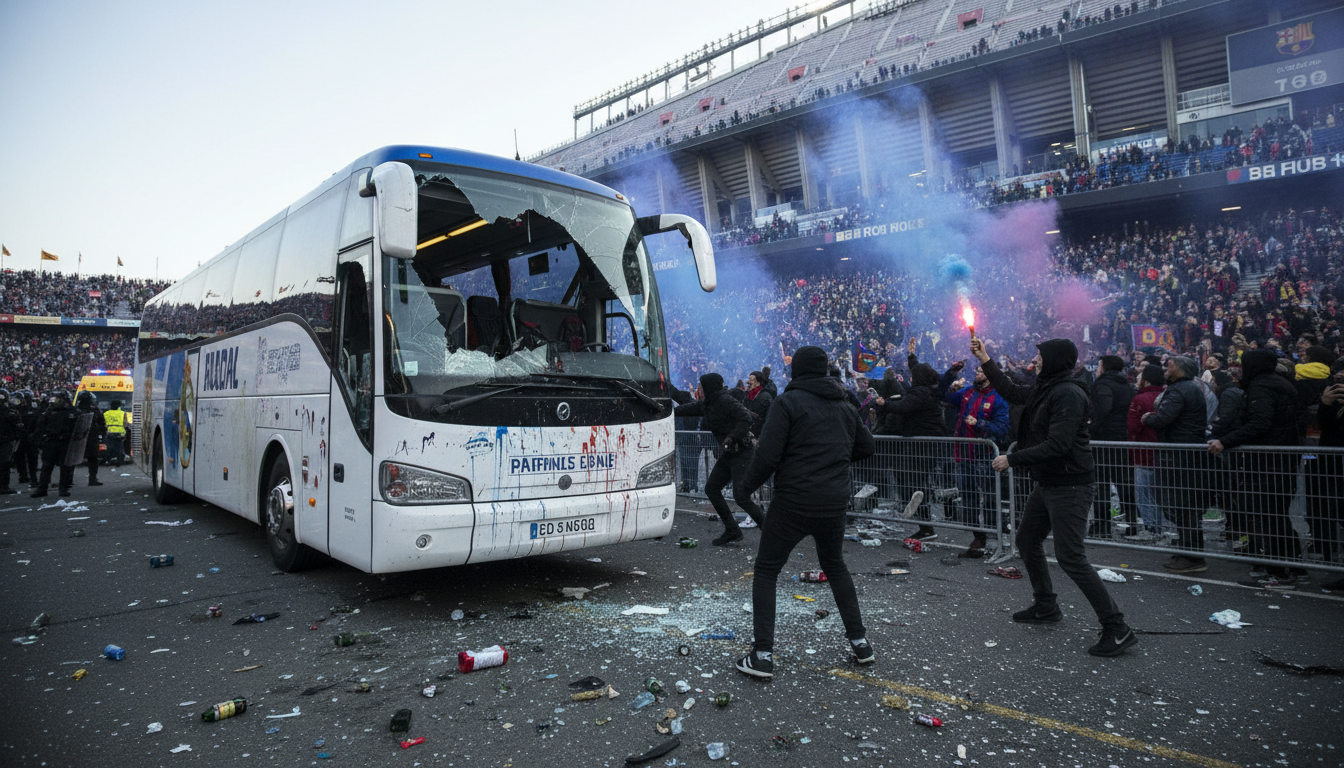
Camp Nou bus attack as Barcelona fans pelt arriving coaches; Real Madrid bus damaged
Camp Nou bus attack: violent scenes unfolded as radical Barcelona supporters threw objects at the arrival of both Barcelona and Real Madrid team buses, leaving a Real Madrid coach with a broken window and videos circulating of the incident.


Violent reception at Camp Nou
A group of radical Barcelona supporters gathered on a street near Camp Nou and launched a barrage of heavy objects at the arriving team buses. Witnesses and footage show the confrontation was physical and sustained, with projectiles striking coach windows and bodywork.
The violence targeted both teams’ vehicles as they approached the stadium entrance, creating a chaotic environment around the drop-off zone. Club staff and police had to manage the scene while the convoys attempted to reach their destinations.
Damage to Real Madrid bus captured on video
Video shared from inside one of the buses shows a window of the Real Madrid coach shattered by a thrown object. The footage, which circulated widely after the event, documents both the moment of impact and the immediate alarm among passengers on board.
Damage to the Real Madrid vehicle is the clearest physical consequence reported so far, with broken glass and visible marks on the exterior. That image drew comparison to previous assaults against visiting team coaches at Camp Nou in recent high-profile fixtures.
Mistaken strikes and deliberate assaults
Accounts of the incident indicate that some attackers first targeted Barcelona’s own coach after a cloud of smoke or tear gas created confusion among the crowd. Supporters reportedly mistook the smoke-cloaked vehicle for the visiting team’s bus and struck it in error.
Separately, the Real Madrid bus was assaulted with full awareness by members of the crowd, according to eyewitness descriptions. That distinction between an apparent mistake and an intentional attack underscores the volatile mix of confusion and hostility present that night.
Context of similar recent incidents
The targeted assault on the Real Madrid coach revived memories of earlier attacks on visiting teams, notably incidents involving Atlético de Madrid during Copa del Rey and Champions League arrivals. Those prior episodes also saw objects thrown and property damaged, contributing to growing concern about coach security.
Repeated episodes of vehicles being pelted at Camp Nou have prompted scrutiny from clubs and observers over stadium perimeter safety. The recurrence of such attacks has increased pressure on clubs and local authorities to reassess matchday procedures for arrivals and departures.
Security protocols and operational gaps
The attack highlights vulnerabilities in the convoy route and the staging area used for team arrivals, where fans can congregate close to approaching buses. Security officials typically coordinate escorts, cordons, and advance clearways, but the incident suggests gaps in maintaining those protective measures on the night in question.
Matchday security must account for both spontaneous crowd behaviour and premeditated gatherings of radical groups, which can overwhelm standard policing plans. Any lapse in communication, timing, or the positioning of stewards and police can permit dangerous proximity between supporters and the coaches.
Responsibility, investigations and possible sanctions
Clubs, competition organizers and local authorities carry overlapping responsibilities for ensuring safe access to stadiums and the protection of visiting teams. Where material damage and public safety are at stake, formal investigations are normally opened and could lead to disciplinary actions or fines against supporter groups or the host club.
Sanctions in comparable cases have included financial penalties, partial stadium closures, and obligations to improve security protocols; those are potential outcomes here if the authorities conclude preventive measures were insufficient. The reputational cost to a club can also be significant when fan violence occurs on its doorstep.
Implications for fixtures and fan access
Incidents of this nature can prompt immediate changes to how teams are escorted to venues, including increased police presence, altered convoy routes, or the use of enclosed arrival zones. Matchday operations may be tightened for upcoming fixtures to prevent repeats and reassure players, staff and visiting delegations.
Broader implications include possible restrictions on fan movement around the stadium, heightened screening, and more robust coordination between clubs and municipal security services. Such measures typically aim to balance safety with the practicalities of supporter access and matchday atmosphere.
The episode at Camp Nou marks a troubling escalation in the risks facing team convoys and stadium operations, and it will likely trigger inquiries by clubs and local authorities to determine responsibility and to prevent similar attacks in the future.