WAFCON 2026 Group C Chaos: Malawi Advance as Zambia Eliminated on CAF Head-to-Head Rule
Malawi stun in WAFCON 2026 Group C as CAF head-to-head tie-breaker eliminates Zambia despite a +6 goal difference, creating bewildering final-day drama.


The final matchday in WAFCON 2026 Group C produced one of the tournament’s most extraordinary outcomes when Malawi advanced to the quarterfinals while Zambia were eliminated. Nigeria’s 6-2 victory over Egypt and Zambia’s 2-1 win over debutants Malawi left three teams level on six points, but the CAF head-to-head rule determined the placings. The result prompted confusion in the stands and jubilation in Malawi after a late goal in Lilongwe’s tie with Zambia became the decisive factor.
Final-day results that created the tie
Nigeria began the evening by overwhelming Egypt with a 6-2 scoreline, a result that on the surface appeared to secure their top spot on goal difference. Zambia then beat Malawi 2-1 in a close contest, while earlier in the group Malawi had shocked Nigeria 3-2, creating the three-way deadlock. When the whistle blew on the last fixtures, Nigeria, Malawi and Zambia all finished level with six points, forcing the application of CAF’s tie-break procedures.
The standings after three rounds showed a striking paradox: Zambia, with an overall +6 goal difference after scoring eight and conceding two, looked by conventional measures like the safest qualifier. Yet the official method used by the Confederation of African Football prioritizes head-to-head results among tied teams, and that shifted the calculus dramatically. The outcome highlighted how a single goal, scored in a seemingly secondary match, can rewrite group narratives overnight.
How CAF’s mini-table rule decided the group
Under CAF regulations, when three teams are tied on points the first tie-breaker is a mini-table formed only from matches between those teams. Overall goal difference across the whole group is not considered until after head-to-head comparisons are exhausted. That meant Nigeria’s heavy win over Egypt — and Zambia’s 6-0 triumph over the same opponent — had no bearing on the three-way tie.
The mini-table comprised the results Nigeria 1-0 Zambia, Zambia 2-1 Malawi, and Malawi 3-2 Nigeria. Each side posted one win and one loss, producing identical points and an identical goal difference within that subsection. The next metric applied was goals scored in the head-to-head games, which ultimately separated the three nations and placed Malawi above the others.
The single goal that changed everything
Malawi’s late strike in their 2-1 loss to Zambia became the tournament’s most consequential goal in Group C. That effort lifted Malawi’s total goals in the head-to-head mini-table to four, edging Nigeria on three and leaving Zambia on two. The extra tally, scored by Tabitha Chawinga, proved to be the slender margin between making the quarterfinals and an early exit.
For Zambia, the math was brutal: despite a superior overall goal difference, their failure to find the net against Nigeria and conceding in the narrow win over Malawi left them behind on the mini-table count. The Chelsean sweep of Egypt in their earlier match — and the cumulative eight goals across the tournament — could not be used to overturn the head-to-head deficit, illustrating the sometimes counterintuitive effects of the competition’s tie-break sequence.
Scenes on the pitch and the human reaction
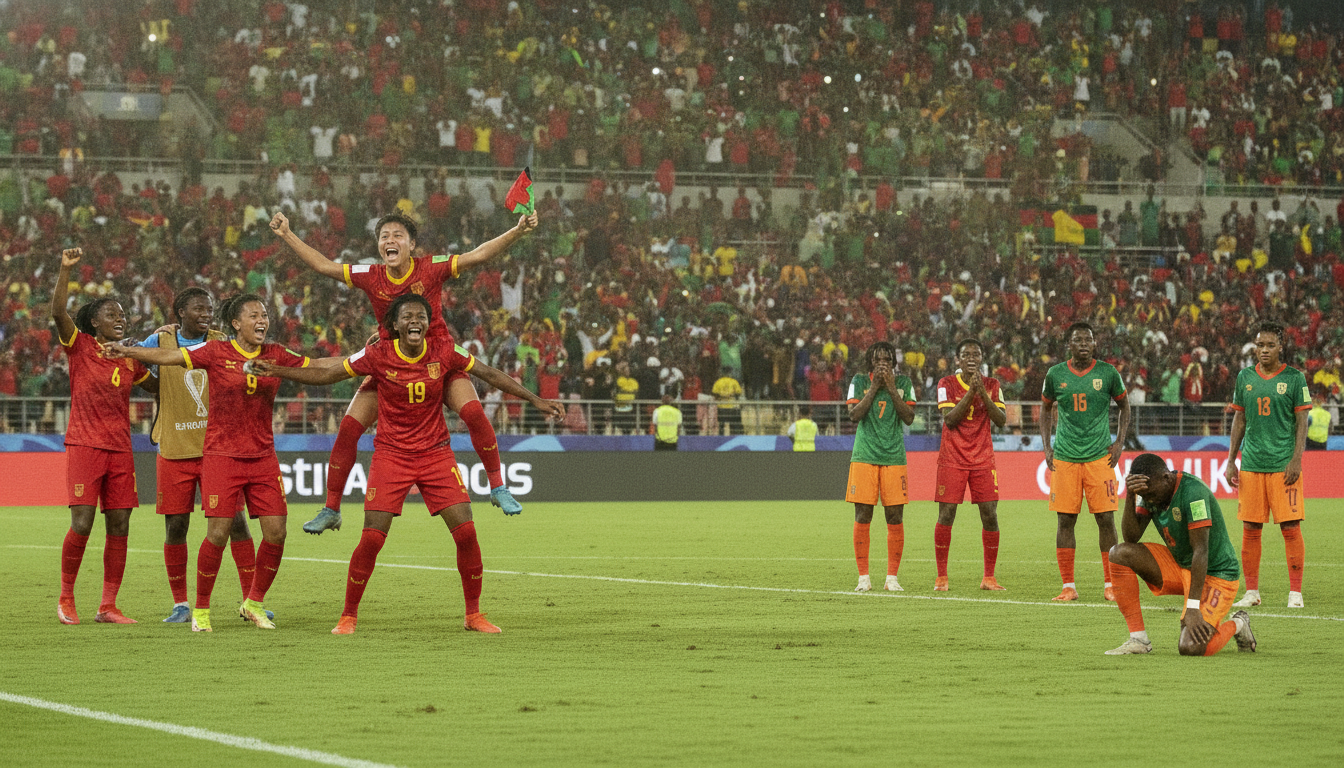
The immediate aftermath on the pitch captured the emotional extremes of football. Malawi players, initially convinced they had been eliminated after their defeat to Zambia, were seen thanking travelling supporters and beginning a lap of appreciation. The jubilant atmosphere shifted into stunned confusion as members of their technical staff rushed onto the field to explain the head-to-head calculations.
Once informed, the Malawian squad erupted in celebration at the realization that they were through to the last eight in their WAFCON debut. Tears, embraces and wild celebrations followed, with players and officials alike struggling to process that a goal scored in defeat had become the moment that launched their nation into history. For Zambia, the departure was muted and reflective, with players left to wrestle with the bitter irony of a strong statistical tournament undermined by a narrow mini-table shortfall.
Questions and debate over fairness of the tie-break rule
The Group C outcome reignited debate across African football about whether CAF’s priority for head-to-head comparisons is the right approach. Critics argue that prioritizing direct encounters can unfairly penalize teams that dominate weaker opponents and excel in overall performance. Supporters counter that head-to-head results reward performance against direct rivals and reduce the incentive to run up scorelines against weaker nations.
This controversy has played out in press rooms and social media since the final whistles, with pundits dissecting alternative systems such as prioritizing overall goal difference first or introducing additional playoff mechanisms. Regardless of opinion, the episode underscored a broader tension in tournament design between mathematical fairness and perceived justice, and it has already prompted calls for clearer fan-facing explanations of tie-break procedures ahead of future competitions.
Immediate implications for the quarterfinals and teams involved
Malawi’s progression ensures a historic quarterfinal appearance and a chance to build on a debut campaign that exceeded expectations. The Scorchers will carry momentum and newfound belief into the knockout stage, while Nigeria, having survived a scare, advance with a commanding final-group victory but perhaps with lingering questions about consistency. Zambia’s exit forces a period of introspection for a side that delivered strong attacking displays yet were undone by the group’s technicalities.
For tournament organizers and national federations, the Group C drama will likely trigger internal reviews of match approaches and contingency planning. Coaches may reassess tactical priorities in round-robin formats where head-to-head metrics loom large, and teams will be reminded that every goal — even in matches that appear settled — can carry decisive weight in complex tie-break scenarios.
Malawi’s qualification will be remembered not only for its dramatic mathematics but for the role of individual performers such as Tabitha Chawinga, whose decisive score became a national landmark. Nigeria’s attacking outburst against Egypt highlighted their firepower heading into the knockouts, while Zambia must now evaluate how to convert overall dominance into the specific results that tournament rules reward.
The WAFCON 2026 Group C saga offered a sharp lesson in tournament arithmetic and the emotional volatility that accompanies football’s fine margins. The head-to-head tie-breaker produced a result that defied casual expectation and provided a dramatic storyline as the tournament moves into its knockout rounds. Fans, coaches and administrators will continue to debate the merits of the rule, but for now Malawi will prepare to write the next chapter of their historic WAFCON journey.