Patrice Motsepe Visits Nairobi to Mediate FKF Leadership Crisis Ahead of AFCON 2027 Co-Hosting
Patrice Motsepe travels to Nairobi to meet Kenyan football leaders amid the Football Kenya Federation (FKF) leadership dispute, seeking to protect AFCON 2027 preparations.


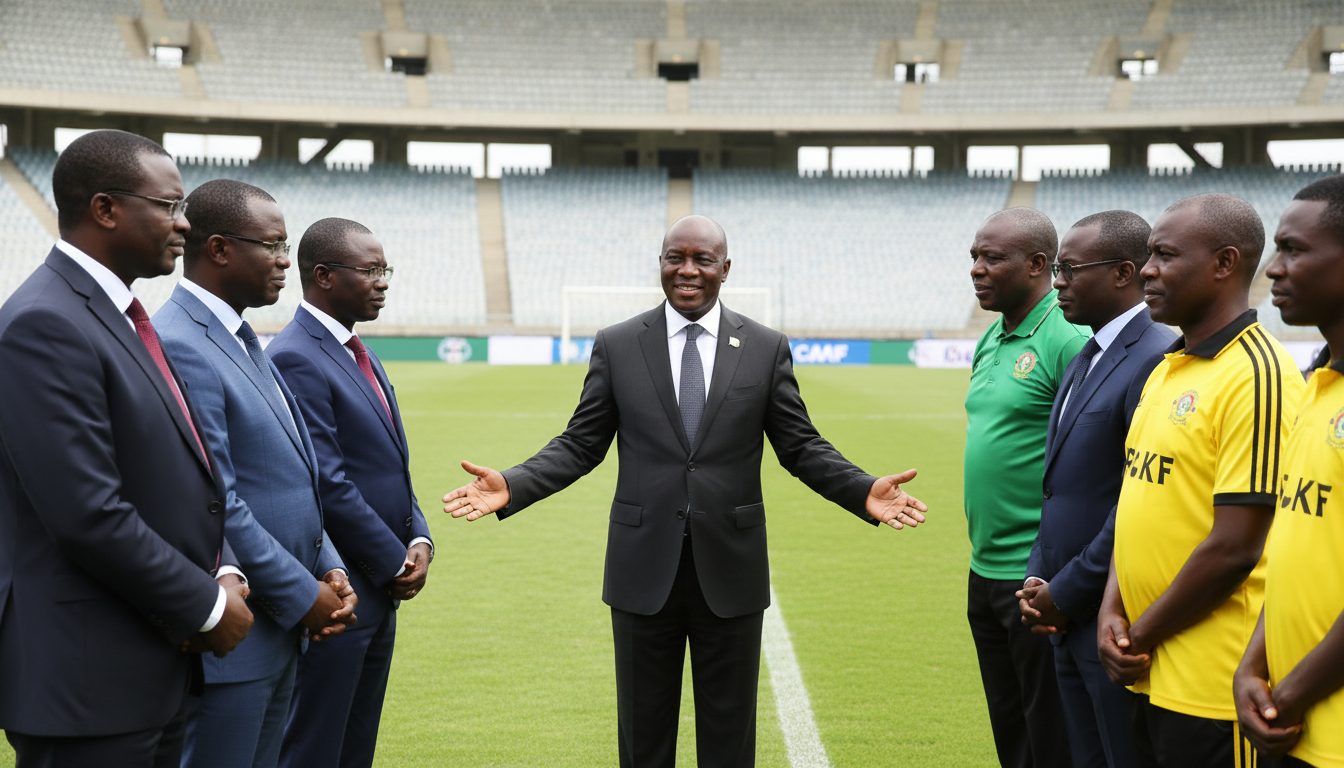
Patrice Motsepe, president of the Confederation of African Football (CAF), arrived in Nairobi on May 10, 2026, ahead of the Africa Forward Summit scheduled for May 11–12.
He is expected to hold a series of high-level meetings with Kenyan officials, FKF representatives and organizers involved in preparations for the 2027 Africa Cup of Nations co-hosted by Kenya, Uganda and Tanzania.
Motsepe’s visit places the spotlight on whether CAF intervention can ease a bitter dispute within the FKF that has raised concerns about the federation’s capacity to deliver on hosting commitments.
Motsepe arrives for Africa Forward Summit in Nairobi
Patrice Motsepe is due to address delegates at the Africa Forward Summit on Monday afternoon, with his schedule including bilateral meetings with national and local football stakeholders.
Organizers say the summit will cover governance, development and event readiness across African football, topics that intersect directly with Kenya’s current federation dispute.
Motsepe’s presence in Nairobi has added urgency to efforts to resolve the FKF impasse before preparatory work for AFCON 2027 accelerates.
Split in FKF leadership fuels governance uncertainty
The Football Kenya Federation has been divided into rival factions after a contested National Executive Committee (NEC) meeting last month.
FKF president Hussein Mohammed was removed in that NEC session, which was chaired by his deputy, former international McDonald Mariga, a move the president has described as unlawful.
Both camps have asserted authority in recent weeks, producing conflicting decisions that have complicated routine federation business and raised questions about internal governance standards.
Allegations of KSh42 million brokerage fees at the center
A central grievance in the dispute relates to allegations that KSh42 million was paid to an unlicensed brokerage firm as part of a licensing arrangement tied to the 2025 African Nations Championship (CHAN).
Opponents of Hussein Mohammed have accused him of complicity in the payment, arguing the transaction lacked proper authorization and oversight.
Mohammed, a former CEO of Extreme Sports, has denied the impropriety and has challenged the legality of the NEC meeting that removed him from office, invoking Article 38 of the FKF constitution to argue only the president can convene such sessions.
Courts and tribunals deliver temporary reprieve and limits
Judicial and quasi-judicial bodies have already intervened in the FKF standoff, issuing rulings that have constrained actions by the Mariga-led faction.
The Sports Disputes Tribunal and a subsequent High Court decision blocked implementation of resolutions taken at the contested NEC meeting, offering Hussein Mohammed a legal reprieve.
Those rulings have not resolved the underlying political confrontation, however, and officials on both sides continue to trade public statements and administrative moves that sustain uncertainty within the federation.
Concerns grow over impact on AFCON 2027 preparations
Kenyan football stakeholders and fans have expressed anxiety that the FKF conflict could spill over into the local organizing committee responsible for AFCON 2027 arrangements.
The Nicholas Musonye-led LOC was reconstituted last month by Sports Cabinet Secretary Salim Mvurya to include NEC members as well as both Mohammed and Mariga, a move intended to broaden oversight and reduce friction.
Despite that adjustment, observers warn that sustained leadership instability could hamper procurement, infrastructure coordination and volunteer mobilization ahead of what will be the largest football event staged on Kenyan soil.
What Motsepe’s meetings could mean for Kenyan football
CAF intervention, led by Patrice Motsepe, is being watched closely for the potential to broker a short-term truce and a pathway to institutional clarity.
Motsepe’s authority as continental president gives him leverage to press for practical remedies, from mediation between the parties to conditional timelines for governance reforms tied to hosting responsibilities.
Sources within the Kenyan football ecosystem say any agreement will need enforceable commitments on financial transparency and a clear division of duties between FKF leadership and the LOC to restore confidence among partners and sponsors.
A successful mediation would aim to ensure that preparations for AFCON 2027 proceed without administrative distraction, preserving Kenya’s reputation as a co-host and safeguarding investment in stadiums, security and event operations.
Kenyan supporters and regional partners are urging restraint from all sides until discussions conclude, noting that the broader interests of national teams, clubs and grassroots programs depend on a functioning federation.
Beyond immediate crisis management, Motsepe’s meetings could prompt CAF to refine oversight mechanisms for federations facing internal disputes, using the Kenya case to develop best-practice interventions that protect tournament readiness across the continent.
For now, attention will remain on the outcome of the May 11–12 Africa Forward Summit and the statements that emerge from Motsepe’s bilateral sessions, with stakeholders hoping for terms that return focus to logistics and football development rather than factional politics.