UEFA Rejects Bayern Munich Spectator Ban Ahead of PSG Champions League Semi-Final
UEFA will not impose a spectator ban on Bayern Munich for the Champions League semi-final second leg vs PSG on May 6, 2026, but fined the club €89,625.


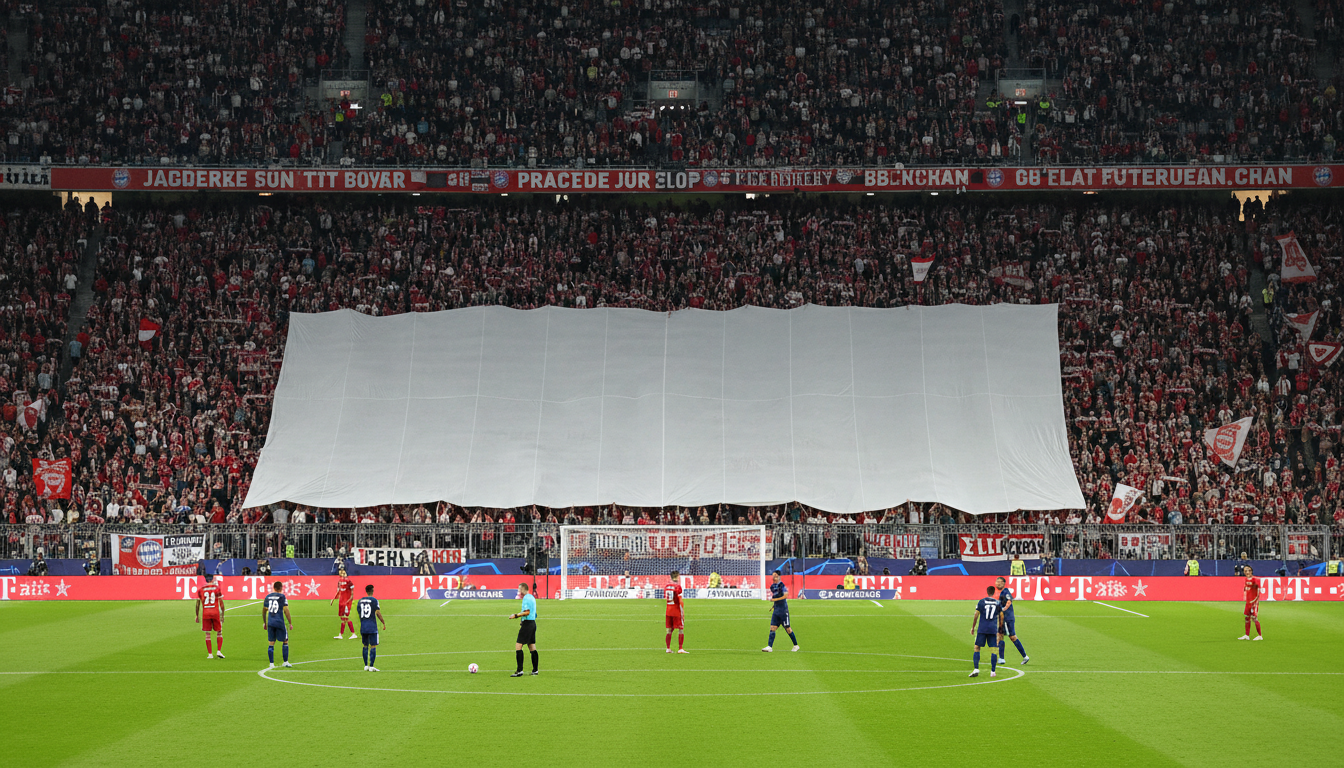
Bayern Munich will be allowed to host supporters in the Südkurve for the second leg of their Champions League semi-final, UEFA confirmed on April 23, 2026.
The decision, reported by Sky Germany, means the Allianz Arena will not be emptied despite the pitch invasions and disorder that followed the club’s dramatic win over Real Madrid.
UEFA instead opted for financial sanctions, levying a combined penalty of €89,625 for multiple breaches of its matchday regulations.
UEFA decision and immediate implications
UEFA announced there would be no blanket ban on spectators for Bayern’s fixture on Wednesday, 6 May 2026, maintaining the scheduled matchday atmosphere.
The ruling removes the prospect of an empty-stadium tie and permits the Südkurve to provide vocal support for the Bavarians in the second leg against Paris Saint-Germain.
Officials made clear the choice was driven by the governing body’s assessment of the incidents and the club’s responsibility to tighten matchday controls rather than by imposing a sporting sanction.
Breakdown of financial sanctions
UEFA’s disciplinary ruling set the total fine at €89,625, with distinct charges accounting for individual breaches.
The largest single component was €40,000 for unauthorized entry into the inner pitch area, reflecting the seriousness with which UEFA treats pitch invasions.
Additional amounts included €14,000 for obstruction of public passageways, €5,625 for throwing objects, and an extra €30,000 for disseminating a message judged unacceptable for a sporting event.
Events that triggered the investigation
The disciplinary process was opened after chaotic scenes in the closing stages of Bayern’s 4-2 Champions League victory over Real Madrid.
Late in that tie, Luis Díaz scored to set up frantic celebrations that saw a number of supporters surge from the Südkurve toward the pitch.
Barriers were breached, photographers were put at risk and several members of the media suffered injuries, prompting UEFA to scrutinize both fan behaviour and the club’s stewarding arrangements.
Club responsibilities and security failings identified
UEFA’s findings underline failures in stewarding and perimeter control that allowed fans to access the field of play.
The citation for blocked public passageways points to inadequate crowd management in concourse areas, which can create dangerous bottlenecks and hamper emergency responses.
The charge for disseminating an “unacceptable” message indicates the governing body also reviewed visual material displayed during celebrations and judged at least one instance unsuitable for a match environment.
Bayern Munich’s response and preparations for May 6
Bayern have acknowledged the incidents and said they will cooperate with authorities to prevent a recurrence ahead of the semi-final second leg.
Club officials are expected to meet with local security teams and municipal police to review steward deployment, barrier integrity and entry controls for the upcoming fixture.
Bayern will also be required to pay the fine imposed by UEFA while implementing any recommended operational changes to avoid future disciplinary measures.
Operational impact on the PSG semi-final
With supporters permitted to attend, matchday organisers face an intensified schedule to reinforce safety protocols before kickoff on May 6, 2026.
Ticketing teams will likely review access routes to the Südkurve and revise stewarding rosters to ensure clearer separations between fans and the playing area.
Local authorities and UEFA delegates will monitor the fixture closely, with matchday performance potentially influencing whether further measures are considered in the event of new incidents.
Wider disciplinary context in European competition
UEFA’s decision to rely on financial punishment rather than a spectator ban reflects a broader approach to similar infractions in continental tournaments.
Sanctions can range from fines to stadium closures depending on the severity, recurrence and the demonstrable steps a club takes to rectify shortcomings.
The ruling in Bayern’s case balances deterrence through monetary penalties with the recognition that empty stadiums carry significant sporting and commercial consequences.
Bayern supporters and neutral observers will now watch how the club translates the disciplinary findings into practical improvements at the Allianz Arena.
The coming weeks will test whether enhanced stewarding and stricter perimeter control can prevent escalations that would trigger harsher penalties in future UEFA proceedings.
For now, the Südkurve’s return to the stands restores the atmosphere for one of the competition’s most consequential matches.
Teams, officials and supporters alike will be under close scrutiny on May 6, and UEFA has made clear that further misconduct could prompt tougher sanctions.