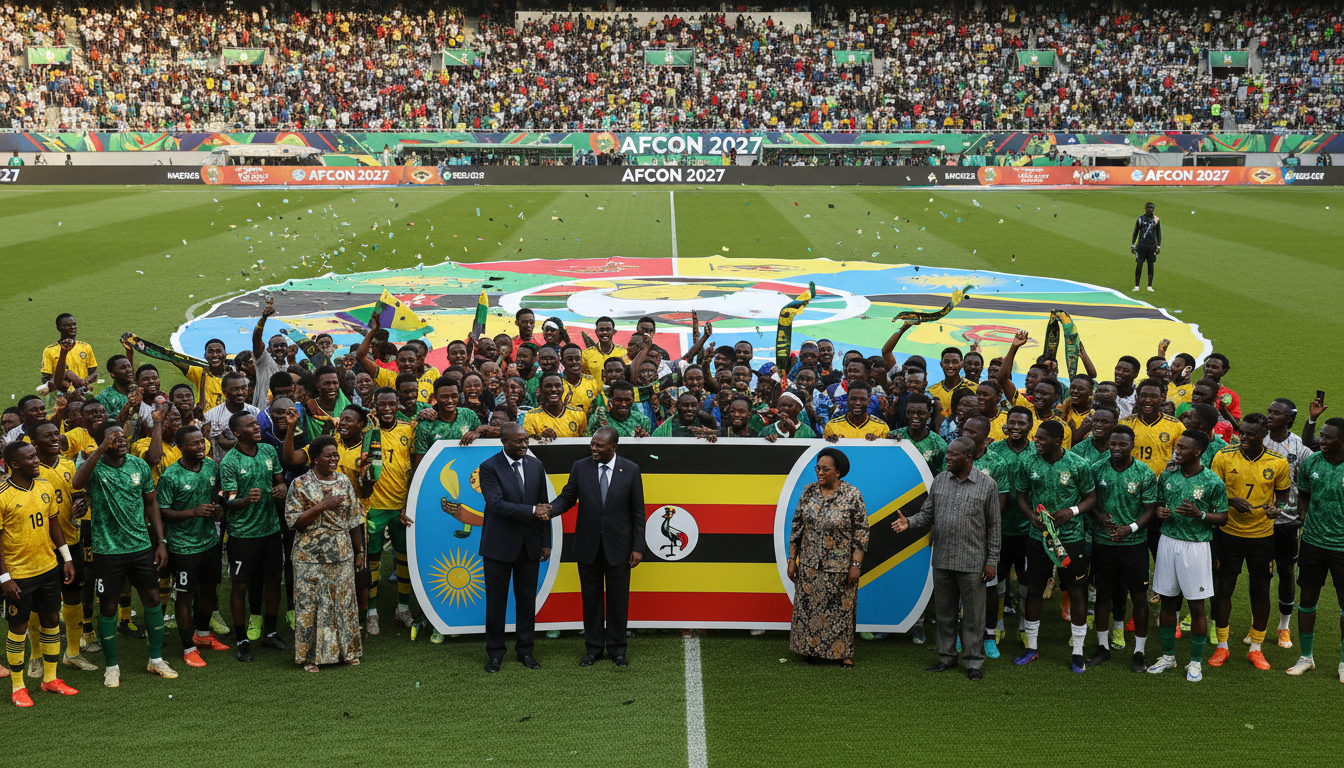
AFCON 2027: East African Governments and CAF Pledge Full Commitment at Kampala Workshop
East African leaders and the Confederation of African Football vowed united support for AFCON 2027 during a PAMOJA coordination workshop in Kampala, with ministers stressing readiness to deliver the tournament. The State Minister for Sports, Peter Ogwang, described the co-hosted Africa Cup of Nations as a defining moment for Uganda, Kenya and Tanzania and urged comprehensive preparations. Officials from the three host countries and CAF gathered to refine logistics, timelines and technical requirements ahead of the continental competition.


Ogwang urges full regional commitment
Peter Ogwang used the opening session to press East African governments and football stakeholders for sustained political and financial backing. He framed AFCON 2027 as a unique opportunity to showcase the region and called for every partner to match words with resources and concrete action. Ogwang thanked CAF for awarding the tournament to the PAMOJA coalition and emphasized that the three nations must remain synchronized through the delivery period.
Ogwang also pointed to past regional successes to underline capability, citing the recent CHAN tournament as evidence that East Africa can host major continental events. He asked participants to view AFCON 2027 not only as a sporting occasion but as a regional project that will require cross-border coordination. His remarks set a tone of urgency and accountability for the workshop.
CAF technical assistance and PAMOJA’s responsibilities
CAF officials attending the Kampala workshop reiterated their technical support and outlined the federation’s role in ensuring competition standards. Delegates noted that CAF will provide expertise on stadium certification, match operations, refereeing, and competition logistics to align local preparations with continental requirements. The presence of CAF representatives was described by hosts as crucial for translating commitments into operational plans.
PAMOJA — the East African co-hosting grouping — was commended for securing the tournament and asked to maintain transparent coordination among ministries, associations and local organizers. Delegates discussed establishing clear lines of communication between national organizing committees and CAF technical teams. There was also a pledge from PAMOJA representatives to adhere to CAF deadlines and to present progress reports at regular intervals.
Co-hosting logistics across Uganda, Kenya and Tanzania
Officials acknowledged the complexity inherent in co-hosting across three sovereign states, and the workshop prioritized harmonizing operational standards. Topics covered included match venue readiness, transport corridors for teams and fans, visa facilitation, and synchronized broadcasting arrangements. Delegates emphasized that joint planning is essential to minimize travel burdens on teams and to ensure consistent fan experiences across host cities.
Transport and accommodation logistics received special attention, with planners examining rail, road and air connectivity that will support team movements and spectator flows. The need for interoperable ticketing systems and coordinated match scheduling was also highlighted to avoid clashes and to maximize stadium utilization. Cross-border contingency plans for medical emergencies and equipment transfers were proposed as immediate next steps.
Infrastructure upgrades and legacy objectives
Preparations for AFCON 2027 were linked to broader infrastructure and legacy ambitions, with ministers framing the tournament as a catalyst for sustained investment. Speakers suggested that stadium refurbishments, training facility upgrades, and urban improvements could generate long-term benefits for local leagues and communities. The workshop encouraged host governments to align stadium projects with national infrastructure plans to ensure sustainable use after the tournament.
Environmental and urban planning considerations were also discussed, including crowd-management designs and transport systems that could be repurposed for future sporting and public events. Officials emphasized that legacy planning must prioritize youth development and community access to upgraded sporting facilities. Delegates called for transparent procurement and project monitoring to maximize public value from infrastructure spending.
Financing, timelines and government assurances
Each of the three governments reiterated their financial commitment and signalled readiness to allocate necessary resources to meet CAF requirements. Ogwang and other ministers assured delegates that budgetary provisions and intergovernmental agreements would be finalized in line with agreed timelines. The workshop underscored the importance of timely disbursements to avoid delays in stadium works and operational planning.
Delegates also discussed potential private-sector partnerships and sponsorship models to supplement government funding. A framework for financial oversight and periodic audits was proposed to bolster confidence among stakeholders and potential investors. Clear milestones tied to disbursement schedules were identified as a priority to keep preparations on track.
Security, fan experience and operational readiness
Security planning was placed high on the agenda, with national security agencies invited to coordinate protective measures and emergency response frameworks. Delegates agreed that harmonized security protocols, personnel training and information-sharing mechanisms are critical for ensuring safe matches across borders. Organizers also highlighted the need for robust health and medical plans, particularly for mass casualty scenarios and rapid medical evacuations.
Fan experience measures — from wayfinding in host cities to accessible services for disabled supporters — were discussed as integral to the tournament’s success. Authorities committed to working with local authorities and private operators to improve signage, public transport schedules, and hospitality services. Operational readiness exercises and simulation drills were proposed to validate plans well before the tournament begins.
Workshop deliverables and next steps
The Kampala workshop concluded with a set of deliverables designed to maintain momentum through 2027, including a calendar of milestones and joint working groups. Organizers agreed to submit a consolidated plan covering infrastructure, operations, security and commercial arrangements to CAF for review. Regular progress reviews and technical sessions were scheduled to ensure alignment with CAF certification processes.
Participants left the workshop with a shared understanding that momentum must be sustained and that timely action is essential. The PAMOJA hosts committed to producing detailed reports and to convening follow-up meetings that include wider stakeholder participation from league officials, broadcasters and travel partners. CAF will continue to provide technical guidance and to monitor progress against established benchmarks.
The State Minister for Sports reaffirmed the region’s ambition to deliver an AFCON that meets or surpasses continental expectations, and he urged all partners to maintain the same level of resolve demonstrated at the Kampala meeting. He expressed confidence that with coordinated planning, resources and CAF support, East Africa can stage a historic edition of the tournament that boosts regional pride and leaves enduring benefits for football and infrastructure.