Eddie Howe’s future at Newcastle questioned after home defeat to Bournemouth
Eddie Howe under pressure after Bournemouth loss as Newcastle’s home form collapses, prompting scrutiny over management, defensive frailties and the club’s plan before end-of-season review


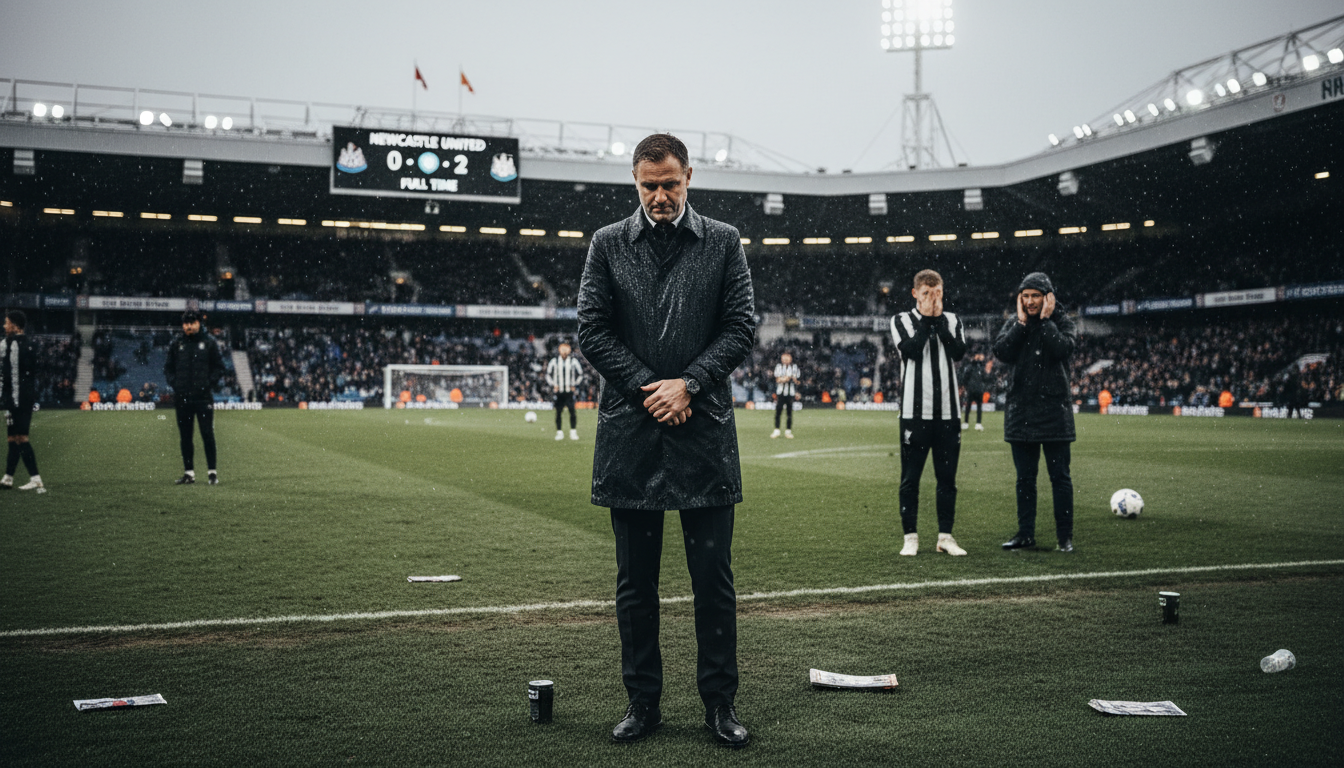
Newcastle United’s recent home defeat to Bournemouth has intensified scrutiny on Eddie Howe and his ability to arrest a worrying slump that now threatens the club’s season and ambitions. The manager’s name featured prominently among the crowd as supporters sought to galvanise the team, but five home defeats in six matches and eight losses in eleven league games have left questions about direction and leadership. With European qualification fading and a handful of fixtures left, the result has sharpened debate over whether Howe remains the right figure to lead Newcastle forward.
Howe’s Post‑Match Hesitation
Eddie Howe accepted responsibility after the game and spoke candidly about recurring problems that have blighted Newcastle all season. His admission that matchdays had become “repetitive and painful” captured a wider sense of frustration within the club and among supporters. More telling was a long pause when asked if the players shared his urgency, a hesitation that fueled speculation about alignment between manager and squad.
Howe’s public candour is rare in modern football, but honesty alone will not change outcomes on the pitch. The manager has reiterated his commitment to the club and indicated he wants to oversee any necessary rebuild. Still, the suggestion that his position will be formally reviewed at season’s end has become a backdrop to every match and press conference.
Internal dynamics are under the microscope as much as tactics, with some observers noting a mismatch between Howe’s standards and the team’s current temperament. That gap — perceived or real — has allowed critics to frame recent results as evidence that a change may be required to restore momentum.
Run of Home Results Deepens Concern
Newcastle’s sequence of five home defeats in six Premier League matches has been central to the narrative of decline this season. St James’ Park, once a fortress under this regime, has yielded worrying patterns of sloppy goals conceded and second‑half collapses. Home form has historically underpinned the club’s progress; its erosion presents a serious tactical and psychological problem.
The defeat to Bournemouth followed the now-familiar script: early uncertainty, intermittent pressure, and a late goal conceded amid defensive disarray. Fans responded with boos at full‑time even as some continued to voice support for the manager. Those mixed reactions reflect a fanbase divided between patience and urgency as the window for salvaging the season narrows.
Statistically, Newcastle sit perilously close to the relegation battleground rather than the European places once assumed attainable. The slip in league standing — eight losses in eleven — is more than a run of poor results; it illustrates a trend that requires a clear corrective plan, whether tactical, personnel-based, or strategic.
Player Performances and Selection Questions
Individual displays at St James’ Park offered few positives and several worrying indicators about confidence and decision‑making. Anthony Elanga’s afternoon was emblematic of the broader malaise as he repeatedly lost possession and missed a clear opening in the second half. The crowd’s call for his substitution felt less like impatience and more like inevitability given the lack of control on the flanks.
Harvey Barnes did not provide the attacking spark expected of him, while Jacob Ramsey’s influence in midfield was muted. Both full‑backs, Lewis Hall and Tino Livramento, showed worrying body language and positional frailties, with Hall substituted at half‑time after being outplayed in the lead‑up to Bournemouth’s opener. Those individual lapses have compounded to create a collective underperformance.
Omissions and fitness concerns have added to the uncertainty, with Anthony Gordon absent from the squad after a training‑ground issue and his longer‑term status unclear. William Osula’s equaliser briefly offered a lift, but Newcastle lacked the composure and structure to build on that momentum and seize control.
Defensive Chaos and Goalkeeping Instability
Defensive errors have been a recurring theme and the manner of Bournemouth’s winner was depressingly familiar: a late breakdown in marking, a knockdown that went unchallenged and questionable goalkeeper positioning. Adrien Truffert’s untracked run and Evanilson’s knockdown exposed coordination problems at the back. Those moments underline both systemic defensive weaknesses and lapses in concentration at critical stages.
Goalkeeping has been another unsettled area, with Aaron Ramsdale’s positioning again called into question and Nick Pope already having been dropped earlier in the campaign. The lack of steady, assured performances between the posts has amplified defensive uncertainty and eroded confidence across the backline. Coaches and analysts will note that clean sheets are no longer a foundation Newcastle can rely upon.
Patterns of concession — often avoidable and arising from poor communication — suggest the problem is not limited to personnel but extends to organisation and mentality. Fixing defensive cohesion will be essential if the club is to halt its slide and restore a baseline of resilience.
Tactical Trends and Repetition of Errors
Howe has repeatedly identified the same tactical shortcomings in recent press conferences and training ground reports, yet matches continue to produce similar failings. Opponents have exploited the same channels, and Newcastle’s response has frequently lacked the necessary adjustments during games. That repetition has fed the narrative of stagnation around the manager and his staff.
Midfield control has been inconsistent, and transitions both in possession and out of it have left the team exposed. When games are in the balance, Newcastle have struggled to impose a rhythm or protect leads, instead inviting pressure and making unforced errors. The tactical plan appears to be under strain when intensity and precision are required.
When managers talk about “belief” and “urgency,” supporters expect to see tangible shifts in approach or personnel. Without those changes, explanations sound repetitive, and evidence of progress remains thin.
Boardroom Choices and the Season‑End Review
Newcastle’s hierarchy now faces a clear decision point as the season moves into its closing fixtures. Reports that the manager’s position will be assessed at the end of the campaign place an onus on both results and visible improvement in performance. The board must weigh Howe’s past achievements and standing at the club against the immediate reality of declining form.
There are trade-offs to consider: continuity might offer long‑term stability, but continued poor results risk damaging the club’s brand, revenue and recruitment prospects. Conversely, a managerial change late in the season carries disruption and uncertainty and would require a swift and decisive replacement plan. The balance of these factors will influence any final determination.
Club executives will also need to factor in squad dynamics, recruitment options and the financial and reputational consequences of either retaining or relieving Howe. As the calendar advances, the window for making a change that benefits next season narrows, making timing as important as the ultimate verdict.
The immediate schedule leaves little margin for error; a small run of positive results could alter perception, while further setbacks would crystallise criticism and make change more likely. The manager has the opportunity to demonstrate corrective measures in the remaining fixtures, but time is short and expectations are high.
Newcastle’s supporters remain invested and vocal, but patience is finite and will be measured against the team’s response over the closing weeks. The outcomes of those matches will influence both the club’s competitive standing and the strategic choices its leadership must make about Eddie Howe and the path forward.