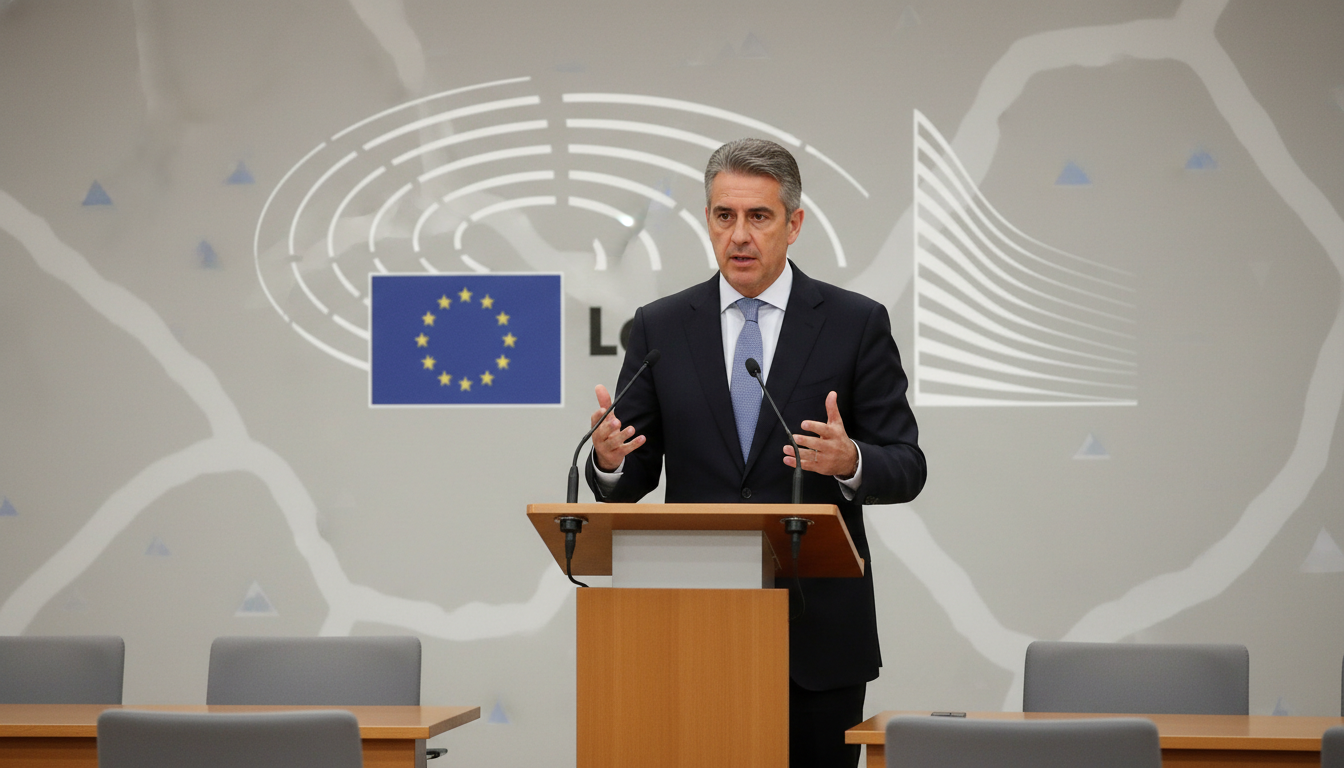
Javier Tebas demands transparency after Al-Khelaifi defends UEFA-EFC agreement
LaLiga president Javier Tebas blasts UEFA and EFC secrecy over their new agreement, demanding public disclosure and stronger respect for domestic leagues.


Javier Tebas has publicly challenged Nasser Al-Khelaifi and the handling of the recent UEFA-EFC agreement, accusing organisers of operating behind closed doors and withholding key details from domestic competitions. Tebas used social media to counter Al-Khelaifi’s assertion that the pact respects national leagues, saying that transparency — not secrecy — is vital for the health of European football. The dispute follows comments made at The Forum in Madrid and highlights growing tensions between LaLiga and club-led European bodies over governance and accountability.
Tebas responds directly on social media
Tebas posted a direct rebuttal after Al-Khelaifi said the agreement did not ignore domestic leagues and that any suggestion otherwise was incorrect. In his message, the LaLiga president argued that opacity weakens football and that the content of the deal cannot legitimately be called beneficial if national leagues are not permitted to review it. The social-media exchange crystallises a deeper institutional friction about who gets a seat at the table when big structural decisions are taken.
The intervention was notable for its firmness and public tone, reflecting LaLiga’s longstanding insistence on defending the role of national competitions. Tebas framed his objection around basic governance principles: agreements that affect broad constituencies should be open to scrutiny. He also warned that loyalty from leagues should not be mistaken for unconditional submission to decisions reached in private.
Exchange at The Forum in Madrid
The spat traces back to comments made earlier at The Forum, an industry event held at Atlético Madrid’s Metropolitano Stadium, where both men appeared. Al-Khelaifi, who also chairs EFC Football, defended the agreement and described the negotiation as an effort to find what was "best for football," acknowledging the difficulty of reconciling multiple stakeholders. He thanked individuals and clubs — including Miguel Ángel, Behdad Eghbali, Chelsea, Real Madrid and Barcelona — for their work in assembling the pact and said the aim was to stabilise the sport following the Super League episode.
Tebas had already made remarks at The Forum suggesting the Paris club faced commercial and brand challenges at home, and he urged a balanced approach that considered the impact of any new arrangements on national competitions. The exchange between the two men at the event was cordial in tone but underscored substantive disagreement over process and the distribution of power within European football structures.
Concerns about secrecy and unknown terms
A central complaint from Tebas is that the agreement remains confidential and known in detail to only a small circle of officials and club executives. He maintained that no serious observer can claim the deal benefits domestic leagues when those leagues have not been given the opportunity to see or evaluate its provisions. That lack of disclosure, Tebas argued, prevents meaningful analysis and undermines trust.
LaLiga has framed transparency as a safeguarding mechanism: public or at least widely accessible documentation allows national competitions to assess financial, calendar and governance implications. Tebas has asked for the pact’s content to be published so that leagues can determine whether the arrangement genuinely serves the wider ecosystem and not just a subset of influential clubs.
LaLiga’s legal and institutional stance
Tebas also pointed out LaLiga’s active legal role in the matter, emphasising that the league is participating in judicial processes while the EFC has not been similarly visible. He said LaLiga had not been asked for its input on the agreement and criticised what he described as exclusionary decision-making. The league’s position, he insisted, is consistent with defending the statutory and commercial interests of national competitions and their members.
By stressing its participation in legal channels, LaLiga is signalling it will use institutional avenues to challenge outcomes it perceives as harmful. That posture elevates the dispute from a media exchange to one with potential procedural and judicial consequences, particularly if domestic competitions pursue remedies or demand formal consultations under existing governance frameworks.
Implications for PSG and club branding
Tebas referenced the commercial trajectory of Paris Saint-Germain during his remarks at The Forum, suggesting that the club’s domestic brand has weakened and that this context complicates broader proposals. Observers see those comments as part of a broader critique of how club and commercial interests are being balanced against the integrity of national competitions. For PSG, the dispute could sharpen questions about how club-level strategies interact with collective agreements negotiated among elite operators.
Al-Khelaifi’s defence emphasised collaborative effort and reciprocity among major stakeholders, yet Tebas’s counterpoint underlines the risk that club-centric bargains may prioritise individual brands over systemic stability. The debate therefore extends beyond personalities and touches on long-term brand management, revenue sharing, and the competitive foundations of domestic leagues.
Governance, next steps and potential outcomes
The disagreement has reopened discussions about governance reform in European football, including how power is shared among UEFA, club associations, and national leagues. Advocates for transparency say public documentation would reduce suspicion and enable national competitions to negotiate safeguards. Critics of secrecy warn that opaque agreements can distort competitive balance and concentrate decision-making among a narrow set of actors.
Next steps are likely to include further public statements from the parties involved and potential requests from national leagues for formal disclosure or consultation. If disclosure is denied, LaLiga could escalate through regulatory or judicial channels, seeking to secure either access to the agreement’s terms or legal rulings on the process by which it was reached. The outcome may set a precedent for how future cross-border accords are negotiated and validated.
Final paragraph
The clash between Javier Tebas and Nasser Al-Khelaifi illuminates a wider governance dilemma: how to reconcile club influence, UEFA’s regulatory role and the integrity of national leagues. As debates continue in public forums and possibly in courts, the demand for clarity and wider participation in decision-making will shape the next phase of European football reform.