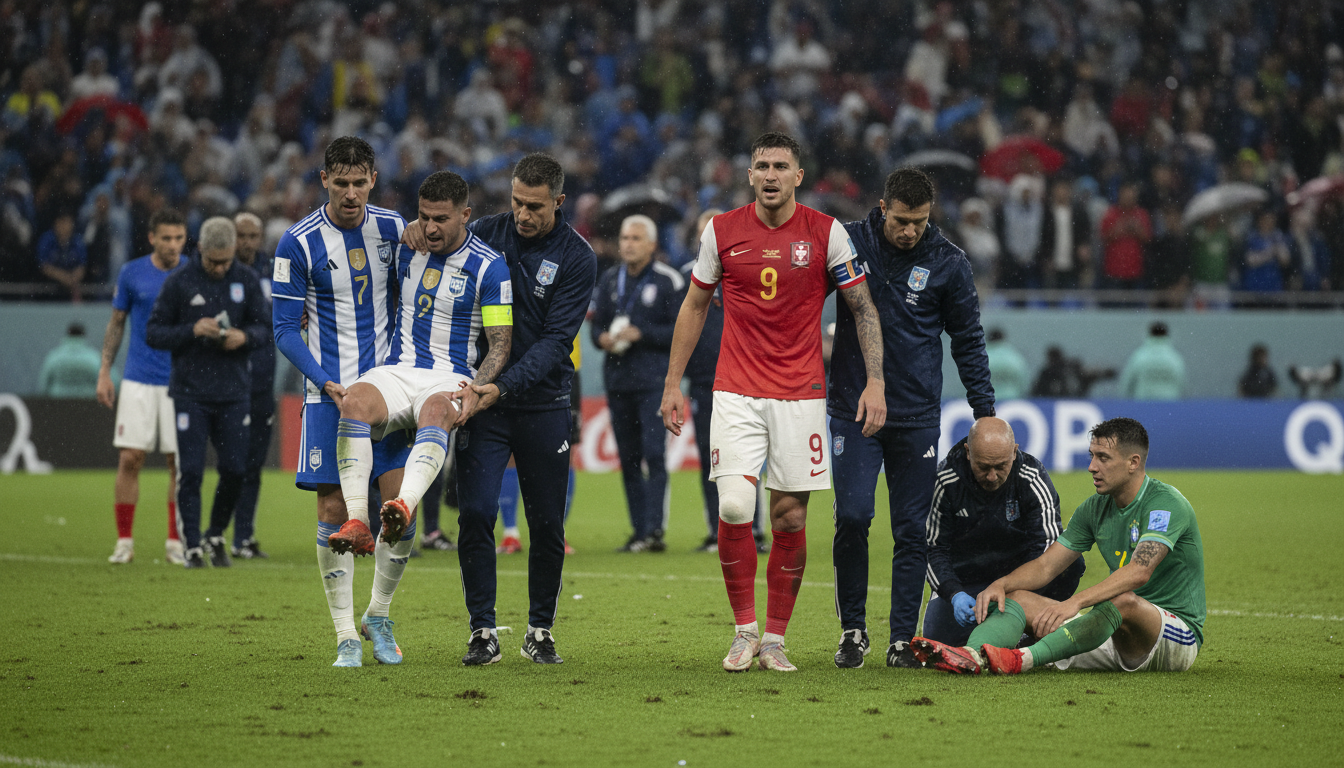
Injury cloud deepens over 2026 World Cup as several stars ruled out and others race to recover
Several high-profile 2026 World Cup injuries have surfaced ahead of the June 11 kickoff, with a handful of players confirmed out and others facing tight recovery timelines before the tournament in the United States, Mexico and Canada.


The build-up to the 2026 World Cup has been dominated by fitness concerns as national teams finalize squads and medical teams push to restore players to full strength. A small but significant group of players will miss the tournament because of long-term injuries, while numerous others remain in contention but are racing the clock. The unfolding injury picture is already shaping selection decisions, tactical plans and the competitive balance among contenders.
Confirmed absences from national squads
A number of nations have publicly confirmed that key players will not travel to North America due to injuries sustained in recent months. Those absences are not limited to fringe squad members; several would have been likely starters had they been fit.
Federations and clubs have released official statements in some cases, citing long-term rehabilitation and medical advice as the reasons for exclusion. For many teams this has forced managers to reconsider leadership roles and on-field responsibilities in the final 23–26-man selections.
The loss of established internationals has immediate consequences for team chemistry and match planning. Managers must now evaluate replacements who can adapt quickly to the system and provide stability under tournament pressure.
Recovery timelines and medical assessments
Medical teams are providing daily updates on players who remain in contention, balancing optimism with realistic recovery windows. Typical rehabilitation for muscle, ligament and tendon injuries varies widely; even minor setbacks in late May can derail a World Cup bid.
Clubs, national federations and independent specialists are coordinating scans, second opinions and tailored rehab programs aimed at maximizing availability. Many teams are reluctant to commit publicly to categorical return dates, preferring assessments based on progressive fitness tests.
For players with clearer timelines, the next four to six weeks will be decisive. Those showing consistent improvement in controlled training have a pathway to full clearance, while setbacks often trigger conservative approaches to protect long-term careers.
Selection dilemmas for national coaches
Coaches face difficult calls as the World Cup selection window narrows, weighing the risk of naming injured stars against the need for fit, match-ready personnel. Some managers prefer to include an injured marquee player in early provisional lists, safeguarding tactical continuity if recovery proceeds well.
Others are moving toward firm decisions to pick ready-made alternatives, prioritizing uninterrupted preparation and cohesive team training. These choices reflect different philosophies: gamble on an individual’s return or invest in collective readiness and tactical drilling.
The ripple effect extends to squad roles, with vice-captains and set-piece specialists suddenly elevated into central responsibilities. Teams that manage these transitions smoothly will likely be better prepared to absorb absences during the tournament.
Tactical and competitive implications for favourites
Injury-induced changes alter not only personnel but also tactical approaches among the tournament favourites. Absences on the wings, in midfield control positions, or among defensive leaders can force a team to shift formation or play a more conservative style.
Tournament favorites must balance ambition with prudence; a high-pressing plan without fit, physically resilient personnel invites vulnerabilities over a seven-match campaign. Conversely, some coaches may adapt by emphasizing depth and rotation, leveraging squad versatility to maintain intensity across group and knockout stages.
Underdog nations may see openings if opponents lack their best personnel, and contingency planning will be essential in knockout scenarios where in-game adjustments and fresh legs determine outcomes.
Opportunities for fringe players and newcomers
While injuries are setbacks for those affected, they open doors for younger or fringe internationals to stake their claim on the world stage. National teams will rely on scouting reports and club form to identify replacements who can integrate quickly.
For many call-ups, the World Cup presents a once-in-a-career chance to establish themselves at the highest level. Coaches often look for mental resilience and tactical intelligence in these late inclusions, favoring players accustomed to pressure and adaptable roles.
A handful of surprise selections have already emerged in provisional rosters, reflecting managers’ willingness to reward form and fitness over reputation. Those players who seize the moment can become key assets and alter narratives about their national teams.
Logistics, training camps and final fitness checks
In the final weeks before June 11, federations will intensify fitness monitoring through structured camps and closed training sessions. GPS tracking, repeated functional tests and simulated match minutes will inform last-minute decisions about squad membership and starting lineups.
Travel, acclimatization and load management are additional variables in a tournament hosted across three countries and multiple time zones. Teams arriving early to specific venues will benefit from controlled schedules that prioritize recovery and tactical rehearsals.
Organizers and medical staff will also coordinate to ensure transparent concussion protocols, heat policies and injury-reporting standards, given the tournament’s scale and varied climates across host cities.
Managers and medical teams will continue to reassess the situation daily, with some final decisions deferred until federations must submit their official squads. The dynamic nature of late-career rehab means surprises are still possible, but the margin for error is shrinking rapidly.
The injury landscape ahead of the 2026 World Cup highlights how physical setbacks can shift planning and open unexpected opportunities. As recovery timelines shorten and teams finalize selections, the next weeks will reveal whether recovered players can return to the field or whether replacements will step up to define their nations’ campaigns. The tournament’s competitive tapestry is already being rewoven by fitness fortunes and the decisions of coaches and medical staff alike.