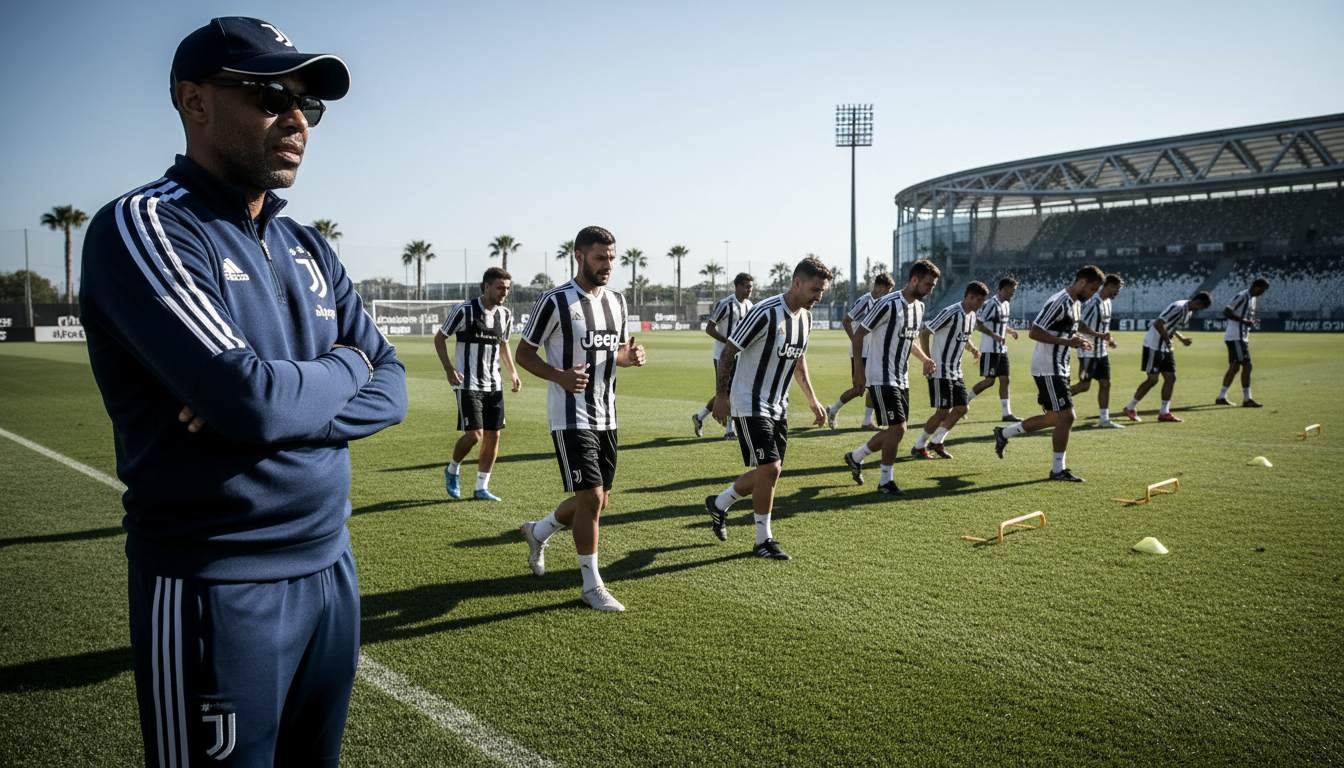
Juventus summer pre-season tour sparks commercial opportunity and workload concerns
Edgar Davids warns Juventus summer pre-season tour offers commercial gains but risks player fatigue as the Bianconeri prepare for a pivotal season this summer


Juventus’s decision to undertake a long-haul summer pre-season tour across Asia and Australia has drawn praise for its commercial reach and scrutiny for its physical demands on players. The club will open the program in Hong Kong before heading to Australia for high-profile friendlies, a schedule that veteran midfielder Edgar Davids characterises as a “double-edged sword.” With the keyword Juventus summer pre-season at the centre of discussion, the timing and intensity of the itinerary raise questions about squad preparation ahead of a congested nine-month competitive campaign.
Juventus set for Asia-Pacific summer tour
Juventus will begin their summer schedule with a fixture against Chelsea at Kai Tak Stadium in Hong Kong on August 5, according to the announced itinerary. The tour then moves to Australia, where the Bianconeri are slated to face Inter Milan in Perth on August 8, followed by a match with Palermo three days later.
The routing reflects a clear commercial strategy to engage fans across multiple time zones while providing the squad with high-calibre opposition in their pre-season build-up. The broad travel footprint, however, increases logistical complexity and compresses recovery windows between intensive fixtures.
Edgar Davids cautions on player workload
Edgar Davids, speaking at the launch of the 2026 Hong Kong Football Festival, described the tour as beneficial for exposure but warned about the toll on players. He highlighted the contrast between the need to “sell” the club to new markets and the imperative to “manage expectations around the matches” to protect athletes’ health.
Davids emphasised that early-season friendlies against top opponents demand high intensity from players even when the squad is not yet in peak condition. He questioned how Juventus would balance competitive desire with sensible load management during the extended travel and busy match schedule.
Match schedule, venues and travel demands
The confirmed fixtures place Juventus in three major football markets within a seven-day window, presenting significant travel distances and time-zone shifts. Hong Kong’s Kai Tak Stadium will host the Chelsea match, while Perth offers a large expatriate and local fan base for the Inter Milan fixture, with the Palermo game scheduled soon after to round out the tour.
Such a schedule typically involves long-haul flights, condensed training sessions, and limited recovery periods, all of which require precise planning by the club’s sporting and medical staff. The tight turnaround between matches raises practical challenges for managing training loads and reducing the risk of soft-tissue injuries.
Commercial rationale and Serie A’s international challenge
Juventus’s itinerary underlines the commercial logic driving many modern pre-season tours: growing the club’s brand, attracting new sponsors, and expanding television and merchandising opportunities. For Serie A sides, these tours are often essential to regain market share lost to leagues such as the English Premier League in recent years.
The matches in Hong Kong and Australia are as much about cultivating new supporters and broadcast deals as they are about on-field preparation. For clubs with Champions League ambitions or qualification to protect, the financial returns of overseas trips must be weighed against potential sporting costs back home.
Sporting risks ahead of a nine-month campaign
From a sporting perspective, extended travel and early competitive fixtures can accelerate fatigue accumulation and complicate conditioning programs. Juventus currently occupy the fourth spot in Serie A, the final Champions League qualifying position, making optimal preparation a priority for their objectives next season.
High-intensity friendlies against elite teams can replicate competitive stress but may also trigger micro-injuries or leave players short on freshness when the domestic campaign begins. The absence of a carefully calibrated rotation and recovery strategy could impede form across the demanding nine-month calendar.
Squad management, medical strategy and contingency planning
To mitigate risks, Juventus will need to rely on a coordinated approach involving coaching, sports-science, and medical departments. Incremental minutes for key players, targeted recovery protocols, and judicious selection for each match will be essential to preserve fitness ahead of competitive fixtures.
Clubs commonly employ data-driven load monitoring, scheduled rest periods, and bespoke training to manage travel-induced strain. For Juventus, balancing commercial obligations with the imperative to protect core players will require transparent communication with fans about the tour’s objectives and the squad’s readiness.
The touring schedule provides both a platform to sharpen tactical ideas against elite opposition and an opportunity to evaluate fringe players under pressure. Effective rotation could allow Juventus to maximize the preparation benefits while reducing exposure to avoidable physical setbacks.
As Juventus embarks on this extensive summer program, club officials must reconcile the immediate commercial payoff with the long-term sporting mission. The matches in Hong Kong and Australia are high-visibility events that will test the club’s logistical capabilities and medical prudence in equal measure.
If Juventus can implement a coherent load-management plan and employ rotation where appropriate, the tour could serve as a constructive ramp-up to the competitive season. Failure to do so, however, risks leaving the squad vulnerable to fatigue-related dips in performance when the Serie A and European campaigns intensify.