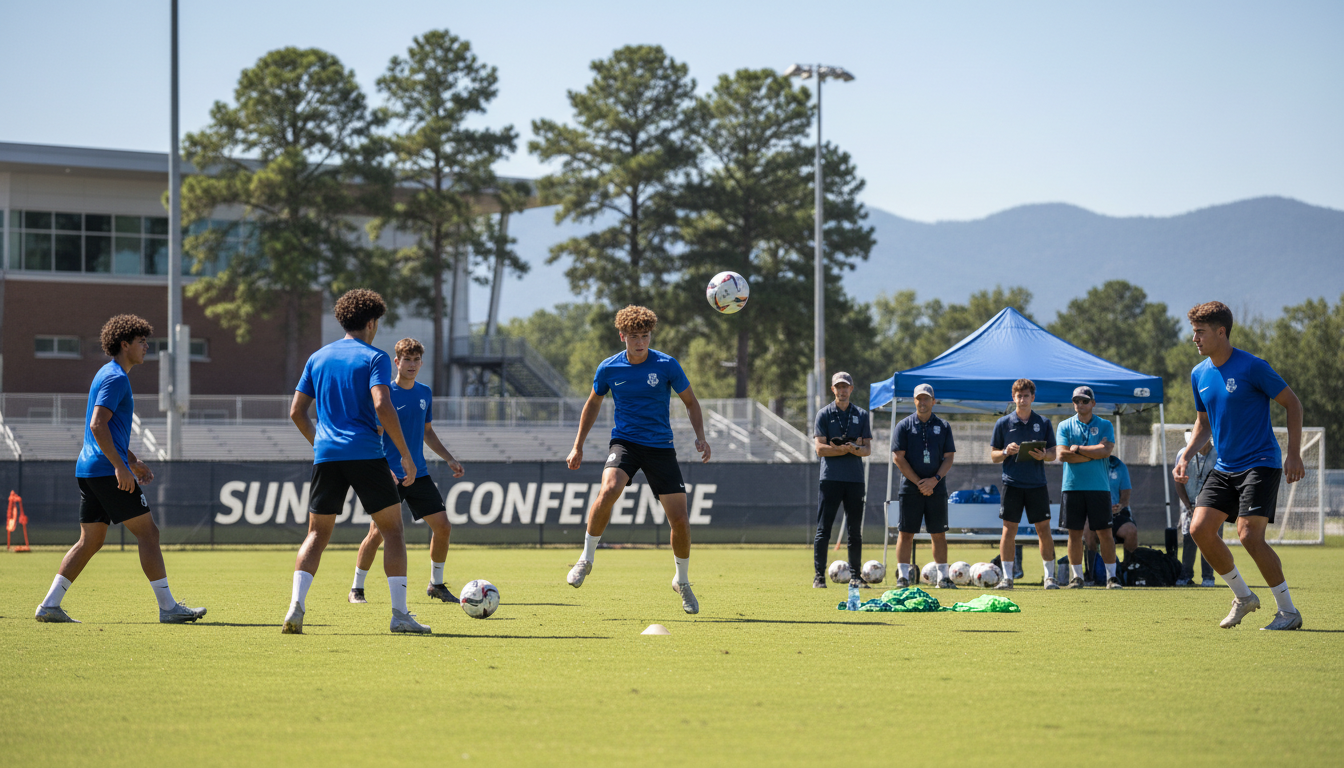
Sun Belt Produces Consistent Stream of MLS Draft Picks as New Collegiate Stars Emerge
Sun Belt soccer’s steady output of professional talent is reshaping scouting priorities as the conference has produced at least five MLS draft picks in each of the last five drafts, positioning the Sun Belt as a reliable pro factory for Major League Soccer clubs. The trend has intensified attention on the conference’s programs and individual prospects ahead of the coming collegiate season. This article examines the factors driving the Sun Belt’s draft success, highlights the types of players most likely to make the jump, and explains what the pipeline means for MLS scouting, college recruiting, and player development.


Sun Belt’s Draft Production and National Profile
The Sun Belt’s consistent string of MLS draft selections has elevated the conference profile nationally and altered how professional clubs allocate scouting resources. Year after year, teams have found ready-made contributors with college experience and physical readiness, which has validated the conference as a dependable source for talent.
That steady production has not only helped individual players reach the professional level but also boosted the national perception of Sun Belt programs. Conference coaches and athletic departments point to improved facilities, coaching continuity, and stronger nonconference scheduling as key drivers behind the results.
Types of Prospects Emerging from the Sun Belt
Prospects coming out of the Sun Belt tend to share common attributes valued by professional teams, including physicality, tactical discipline, and experience against varied competition. Central defenders and midfielders who can win duels and maintain structure have been frequent draft targets in recent years.
Attacking players who combine directness with the ability to press and contribute defensively also draw attention, while goalkeepers with consistent command of the penalty area and distribution skills have increasingly featured on MLS club radars. Overall, the conference produces well-rounded athletes who translate to the faster, more physical professional game.
How Coaching and Development Fuel the Pipeline
Coaching stability and a focus on pro-ready training methods have been central to the Sun Belt’s output. Several programs emphasize individualized development plans, modern strength and conditioning, and tactical systems that mirror professional approaches, giving players a smoother transition to the MLS environment.
Recruiting strategies that prioritize players with the physical and mental traits suited to the pro game have reinforced these development initiatives. Staffs have also expanded use of analytics and video analysis, enabling coaches to prepare players for specific scouting criteria used by professional clubs.
MLS Scouting Patterns and Why Clubs Target the Sun Belt
MLS clubs increasingly favor conferences that consistently produce finished college players, and the Sun Belt fits that profile. Scouts cite the conference’s blend of competitive matches, travel intensity, and exposure to diverse playing styles as reasons to invest resources there.
The draft market values players who require less seasoning, and Sun Belt standouts often arrive with established minutes, leadership experience, and adaptability. That reduces risk for MLS clubs, which face roster pressures and immediate performance needs, especially under domestic roster rules and allocation mechanisms.
Statistical Signals Recruiters and Scouts Watch
Teams and scouts look beyond raw numbers to interpret a player’s readiness; minutes played, consistency of starts, duel win percentages, and progressive passing metrics are increasingly influential. Strong defensive metrics and the ability to contribute to transitions are singled out as indicators that a college player can adapt to professional tempo.
Combine and showcase performances remain important, but sustained competitive production across seasons in the Sun Belt often outweighs a single standout workout. That season-long sample gives professional evaluators a clearer picture of durability, resilience, and tactical reliability.
Impact on Recruiting, NIL, and the Transfer Market
The Sun Belt’s reputation for producing pros is reshaping recruiting conversations, with coaches using professional placement as a selling point to attract higher-caliber recruits. Prospects and their advisors increasingly weigh the pathway to MLS when choosing programs, and programs that demonstrate repeatable pro outcomes gain leverage in the market.
Name, image and likeness (NIL) opportunities have also expanded in response, with regional sponsors and alumni groups more willing to invest in players likely to reach the next level. Meanwhile, the transfer portal has created secondary pathways: players can move into Sun Belt programs seeking greater exposure and a clearer professional trajectory.
The cumulative effect is a competitive recruitment environment where development plans, playing time guarantees, and exposure to MLS scouts matter as much as immediate team success. Conference programs that align those elements are likely to reinforce the Sun Belt’s status as a production hub.
The Sun Belt’s growing profile has practical implications for MLS clubs, college programs, and players aiming for the professional ranks. For Major League Soccer, the conference represents a concentrated scouting ground where the combination of physical readiness and tactical maturity meets league needs. For coaches and recruits, the repeated draft outcomes serve as validation of development models and a selling point in recruiting battles.
As the collegiate season approaches, attention will turn to which Sun Belt players convert potential into measurable production and how coaches balance team objectives with showcasing individual talents. The interplay between conference performance, showcase events, and MLS scouting calendars will determine who emerges as the next generation of Sun Belt alumni in the professional ranks.
Looking ahead, the Sun Belt’s sustained run of draft picks signals that the conference is more than a temporary pipeline; it is maturing into a consistent producer of professional-ready players and reshaping the landscape of college-to-pro transitions.