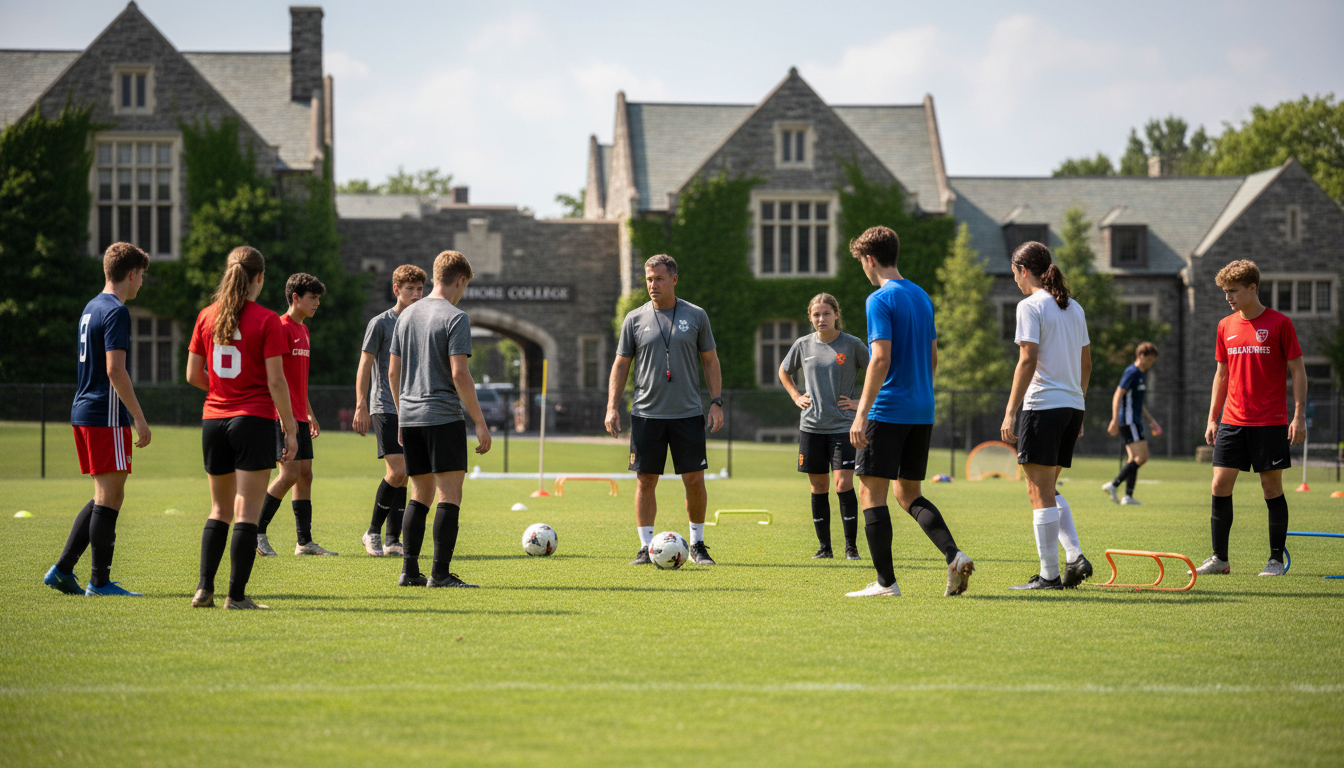
Elite 300 Soccer Academy gives high-school players a collegiate training edge
Elite 300 Soccer Academy readies aspiring college players with collegiate-style coaching, recruiting education, and on-campus immersion to accelerate development and exposure.


The Elite 300 Soccer Academy is positioning itself as a premier pathway for high-school players aiming to play at the collegiate level. The weeklong sessions combine coaching from college and professional staff with current NCAA players serving as counselors, giving participants a close approximation of life on a college team. The program emphasizes technical development, tactical understanding, and the academic-athletic balance necessary to succeed at university programs.
Elite 300 Soccer Academy offers collegiate-style training
The camp’s curriculum is designed around the daily routines and standards of college programs, with practices, team meetings, and competitive scrimmages that mirror NCAA expectations. Coaches use session plans and evaluation metrics similar to those they apply with their own collegiate squads, helping campers translate camp experiences into realistic benchmarks for recruitment. That collegiate cadence gives participants insight into the physical and mental demands they will face if recruited.
The academy runs multiple weeklong sessions each summer at a residential campus, replicating a college environment for the duration of the camp. Living, training, and learning on a college campus during the session allows players to gauge academic life alongside athletic expectations. This immersive format is intended to help players and families assess fit with college culture, facilities, and the level of commitment required.
Coaching staff blends college, MLS and current NCAA experience
Elite 300’s coaching roster includes college head coaches, assistants, and coaches with Major League Soccer experience, providing a wide range of tactical perspectives. Sessions are also supported by current NCAA players who act as counselors and on-field mentors, offering peer-level guidance and firsthand insight into the day-to-day life of a college athlete. That combination of experienced staff and active players creates a mentoring environment where technical instruction is reinforced by practical examples.
Coaches at the camp take on active evaluation roles, conducting position-specific training and delivering direct feedback on individual performance. They are tasked with treating their groups as if they were their own squads, which encourages accountability and a professional coaching standard throughout the week. This approach gives campers actionable recommendations that can be incorporated into their long-term development plans.
Camp structure mirrors college team environment
Upon arrival, participants are divided into teams and placed under the direction of two primary coaches to simulate a collegiate coaching structure. Each team follows a daily routine of practice, tactical sessions, and competitive games, with coaches implementing systems that promote cohesion and tactical awareness. The dual-coach model ensures consistent instruction and creates opportunities for more individualized attention during training and film review.
In addition to training, counselors and coaches emphasize the balance between athletic commitments and academic responsibilities, reflecting expectations in NCAA programs. Players attend classroom-style talks and meetings that focus on time management, study habits, and the logistics of college life. These sessions are designed to prepare recruits for the dual demands they will face, both on the field and in the classroom.
Top college programs and campus setting enhance exposure
The Elite 300 rosters regularly include coaching representation from a broad cross-section of NCAA programs across Division I and Division III. Recent staff lists have included coaches from nationally competitive Division I teams and respected Division III programs, offering campers exposure to varied program philosophies and recruiting criteria. That breadth helps players compare academic-athletic combinations and identify programs aligned with their ambitions and academic profiles.
Sessions take place on a liberal arts college campus in the greater Philadelphia region, giving campers a tangible experience of college facilities and campus life. The location provides convenient travel access by car, rail, and air for families across the Northeast and beyond. Staying and training on a functioning campus helps players evaluate such factors as dorm life, field quality, and support services that influence long-term collegiate fit.
Recruiting education and sports psychology sessions
Each session features an informational panel on NCAA recruiting rules and timelines led by college coaches and staff, providing clarity on registration windows, contact periods, and eligibility considerations. These panels are intended to demystify the recruiting process for players and parents, offering practical guidance on how to communicate with coaches and how to present academic and athletic credentials. Campers also receive feedback on how to leverage game film, resumes, and academic records when approaching programs.
A scheduled sports psychology lecture adds another layer to the camp’s curriculum, focused on performance optimization and mental preparation. Sessions with a sports psychologist introduce tools for concentration, resilience, and stress management that are critical during high-pressure matches and college admissions. This mental skills component works alongside technical and tactical training to create a more complete athlete.
Juniors program expands pathway for younger players
Recognizing the value of early exposure, the Elite 300 Juniors Program invites players entering sixth through eighth grade to participate alongside older campers. The juniors track delivers age-appropriate coaching while allowing younger players to observe the training standards and expectations of high-school-aged prospects. Coaches use this closer developmental window to identify technical priorities and advise families on long-term training, academic preparation, and appropriate timelines for recruitment.
Integrating middle-school players into the broader camp environment also fosters mentorship opportunities, with older campers and college counselors providing examples of work ethic and study routines. This structure helps promising youngsters build foundational habits that can accelerate their progression through high school and into college-level programs. For many families, the juniors option offers a cost-effective way to begin the recruiting education process without the immediate pressure of college recruitment.
Elite 300’s sustained staff continuity and program design have produced a track record of players who gained not only technical improvement but tangible recruiting gains. Former campers report that the camp’s format clarified program differences, helped them better target schools that matched their athletic and academic goals, and improved their ability to communicate with collegiate coaches. The accessibility of coaching staff and the professional atmosphere during sessions are cited by alumni as distinguishing features compared with other summer options.
The program also affords practical visibility for players seeking to draw interest from college coaches who attend with the dual purpose of evaluating talent and advising prospective recruits. While camps are not a substitute for high-school competition and club showcases, they operate as an important supplement where players can be seen in a concentrated, coach-led environment. Evaluations conducted during camp often lead to follow-up contacts, recommendations, or invitations to further trials.
Parents and guardians frequently cite the campus immersion and the emphasis on academic standards as decisive factors when comparing summer programs. By placing equal weight on collegiate expectations off the field, Elite 300 enables families to assess whether a program’s academic profile aligns with a student-athlete’s educational aspirations. That balance is especially relevant for players considering Division III or academically selective Division I programs.
The Elite 300 Soccer Academy also commits to continual refinement of its curriculum, updating training methodologies and educational sessions in response to coach feedback and evolving NCAA policies. Program directors emphasize measurable development, asking coaches to document player progress and offer individualized plans for post-camp improvement. This documentation is intended to give players a clear roadmap to follow during club seasons and the academic year.
Families evaluating summer options should consider the camp’s location, staffing mix, and the breadth of educational offerings when choosing a program. The Elite 300 model aims to compress the college soccer experience into a single week, allowing players to leave with improved technical skills, a clearer recruiting strategy, and a better understanding of college life. For many participants, that concentrated exposure makes subsequent recruitment conversations more focused and productive.
The Elite 300 Soccer Academy continues to market itself to players seeking serious collegiate preparation, highlighting its combination of experienced coaches, current NCAA-counselors, and a structured week that replicates the college rhythm. Its programming is designed to suit players at different stages of development, from advanced high-school prospects to motivated middle-schoolers in the juniors track. The academy’s longstanding presence and consistent staff are presented as evidence of a program capable of delivering meaningful development and credible exposure.
For players and families weighing the next steps toward college soccer, Elite 300 positions its weeklong immersion as both a developmental camp and an educational forum for recruitment. Participants emerge with actionable coaching feedback, an enhanced understanding of NCAA processes, and direct insight into the lifestyle and expectations that come with playing soccer at the collegiate level. This combination of on-field training and off-field guidance is the core promise of the Elite 300 Soccer Academy.