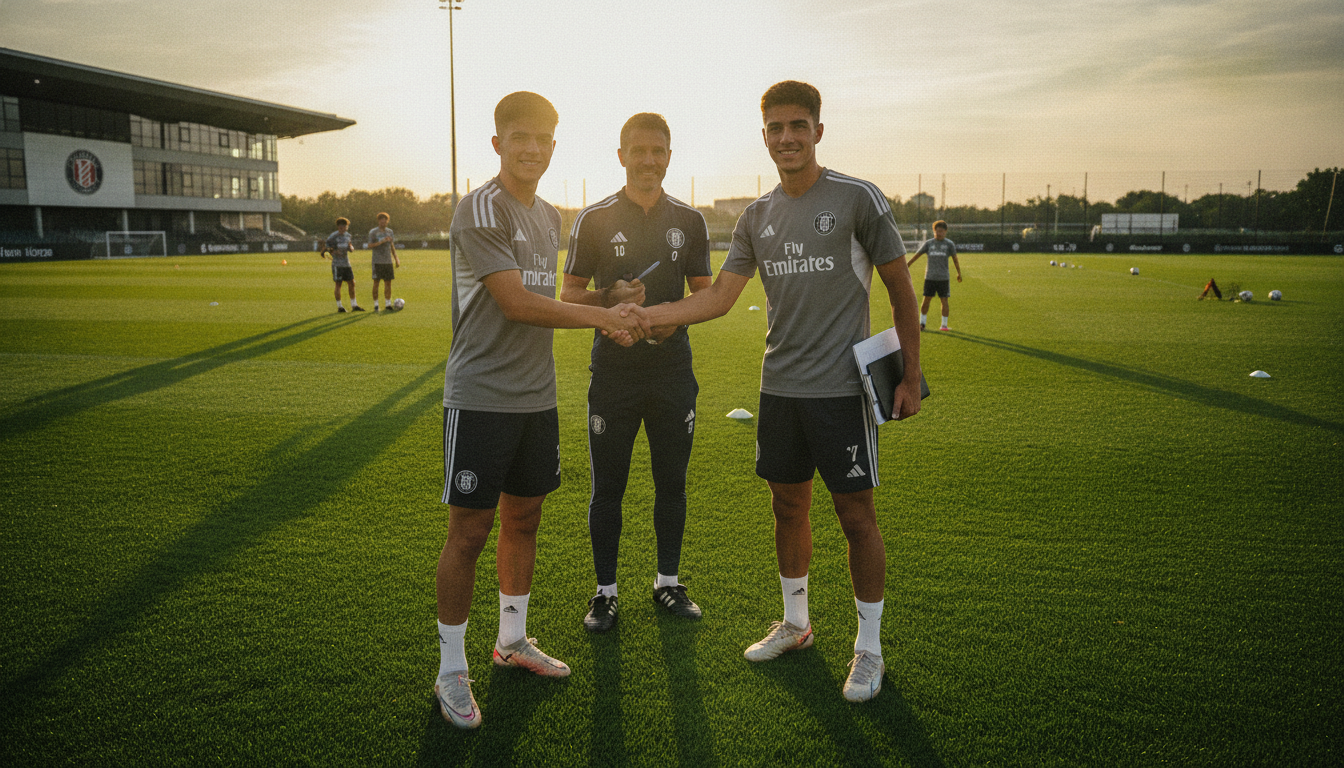
Real Madrid academy departures highlight as Gonzalo and Palacios join Fulham in fresh wave of La Fábrica exports
Real Madrid academy departures explained as Gonzalo and Palacios join Fulham, recalling La Fábrica graduates who left, returned or thrived across Europe.


The signings of Gonzalo and Palacios by Fulham mark the latest chapter in a long pattern of Real Madrid academy departures that reshuffle careers rather than end them. Both players arrive at Craven Cottage seeking regular top‑flight minutes after developing in La Fábrica, and their moves follow a well‑trodden path taken by dozens of Castilla graduates. This transfer window again raises familiar questions about whether leaving Madrid is a setback or a new opportunity for young professionals.
Gonzalo and Palacios complete Fulham move
Gonzalo and Palacios have committed to Fulham with the immediate objective of establishing themselves in the Premier League. Both players arrive having come through Real Madrid’s youth system and face the common challenge of breaking into a first team congested with international stars. Fulham’s project under Álvaro Arbeloa offers them consistent playing time and a coaching staff that understands the culture of La Fábrica. Their transitions underscore how many academy products opt for moves abroad to accelerate development.
Álvaro Arbeloa’s pathway informs Fulham’s approach
Álvaro Arbeloa’s presence at Fulham provides an unmistakable example for new arrivals who left Real Madrid and returned to forge successful careers. Arbeloa himself departed Madrid in 2006 to join Deportivo and then Liverpool before being re‑signed in 2009 to aid a squad rebuild, demonstrating how leaving can form part of a longer professional arc. His experience is precisely the blueprint Fulham can present to Gonzalo and Palacios: temporary exits, varied challenges and eventual consolidation. As a coach, Arbeloa can translate personal lessons into training routines, tactical expectations and player support.
Wingers and attackers who found fame elsewhere
History is full of quick wide players and forwards who left La Fábrica and became first‑team regulars at other clubs. Víctor Muñoz’s explosive season in the Spanish top flight attracted interest across the continent and serves as a reminder that a standout loan or transfer can change a player’s trajectory. Miguel Pardeza moved away when internal competition blocked his route to the senior side and proceeded to cement legendary status at Zaragoza. Roberto Soldado and Álvaro Negredo also built substantial careers after leaving Madrid, turning early setbacks into decades of professional achievement.
Midfielders who matured outside the Bernabéu
The midfield has perhaps the most visible examples of academy graduates who prospered after moving on. Dani Parejo’s path took him through Getafe and Valencia, where he developed into a consistent leader and playmaker. Marcos Llorente left Castilla, matured on loan and then reinvented himself into a versatile option at Atlético Madrid, occupying roles from fullback to forward with notable impact. These cases show that for midfielders particularly, consistent match minutes elsewhere provide tactical refinement and leadership skills not always available in a star‑studded first team.
Fullbacks who returned stronger to Madrid
Some fullbacks who left La Fábrica returned to Real Madrid as established internationals, underlining the value of temporary exits. Dani Carvajal’s one‑season move to Bayer Leverkusen was brief but decisive; it validated his readiness for elite competition and preceded a long run as a first‑team mainstay. Lucas Vázquez’s spell away prepared him for a multi‑role utility role on his return, adapting from winger to fullback as team needs demanded. Conversely, Achraf Hakimi illustrates a different outcome: abundant talent, limited opportunities at Madrid and a path to global stardom after spells at Dortmund, Inter and Paris Saint‑Germain.
Defenders and veterans who prospered after leaving
Centre‑backs and defensive players have also benefited from moves away from the Bernabéu’s crowded pecking order. Diego Llorente built his professional resume with loans and permanent transfers that exposed him to different leagues and tactical systems, a route that led to consistent appearances across Spain and abroad. Alfonso and other 1990s graduates found stability and fan adoration after departing, demonstrating how a change of scenery can unlock careers that stalled under Madrid’s depth chart. These patterns reinforce that defensive roles often require match environments where players can assume responsibility regularly.
Career pivots that reshaped reputations
Numerous academy products reinvented themselves beyond their original positions or expectations. Marcos Alonso, for example, left Madrid early and underwent several club stops before reaching peak performance at Chelsea and later Barcelona. Pablo Sarabia’s technical skill translated into prolonged spells in La Liga and abroad after leaving the second team. Raúl de Tomás, denied a clear role in a frontline crowded with established stars, translated his goalscoring into success at clubs across Spain and Portugal. The broader lesson is that tactical flexibility and persistence can convert perceived setbacks into sustained careers.
La Fábrica’s enduring export market
Real Madrid’s youth system remains one of the game’s most productive talent pipelines, but its sheer strength means many promising players must shop for opportunity elsewhere. The list of academy alumni who have flourished outside the club is long and diverse, ranging from goalkeepers like Santi Cañizares to midfield facilitators such as Santi Aragón and attackers like Ismael Urzáiz. Transfers and loans become the marketplace through which young players accumulate minutes, experience different coaching philosophies and prove readiness for high‑pressure competitions. Clubs across La Liga and Europe frequently capitalize on this supply of technically trained, tactically schooled professionals.
The modern exodus and future prospects
The contemporary wave of departures is shaped by global market dynamics, agent networks and the Premier League’s financial pull, which makes moves like Gonzalo and Palacios to Fulham more common. Young players and their advisors now weigh playing time, development trajectory and exposure to top competitions when choosing destinations. For some, the path leads back to Madrid after successful spells; for others, a career is built entirely beyond the club they once trained for. In every instance, match minutes and clear role definitions are decisive for long‑term progress.
The history of La Fábrica shows that leaving Real Madrid is rarely a permanent career defeat and often a strategic step toward maturity. Gonzalo and Palacios will add to a long list of graduates who found opportunity and recognition away from the Bernabéu, and their seasons at Fulham will be watched closely as indicators of whether their departures become launching pads or merely pit stops.