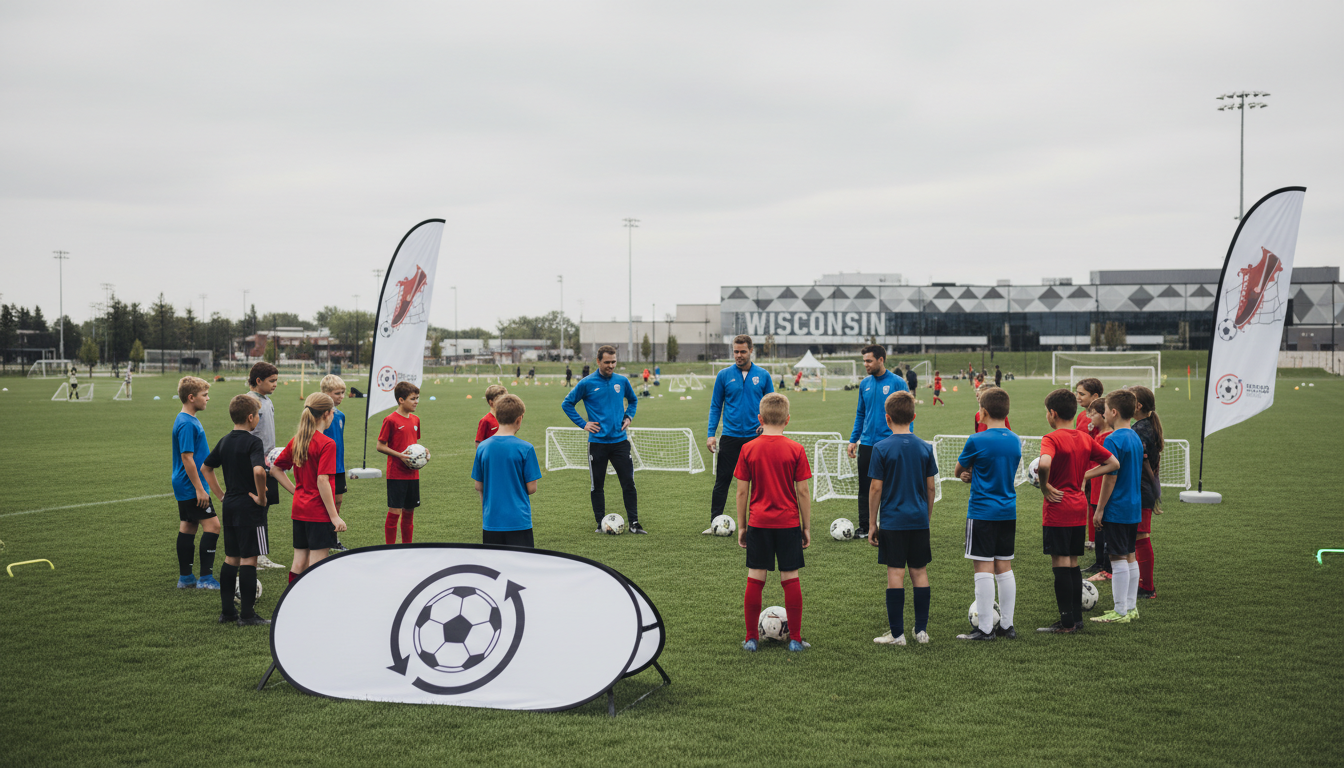
Wisconsin Soccer Camp Expands Elite Summer Programs at University of Wisconsin
Wisconsin Soccer Camp at the University of Wisconsin offers elite coaching, striker and goalkeeper academies, plus college recruitment exposure for youth.


The Wisconsin Soccer Camp this summer will bring a concentrated program of technical coaching, position-specific academies and broad college exposure to players at the University of Wisconsin campus. The camp, organized under the direction of men’s head coach John Trask, emphasizes skill development that prepares players for collegiate and higher-level competition. Registration and session details are being promoted to youth players and families seeking a high-caliber overnight camp experience.
Camp Leadership and Coaching Pedigree
John Trask leads the Wisconsin Soccer Camp coaching staff, drawing on years of professional and international experience to shape the curriculum. Trask’s background includes work in Major League Soccer environments and exposure to international club training methods, giving the camp a blend of American and global coaching perspectives.
The staff also features assistants and guest coaches who have coached or scouted at elite levels, enhancing the instructional depth available to campers. That mix of veteran leadership and active collegiate coaching staff creates a learning environment intended to mirror the expectations players will encounter at university and beyond.
Coaching sessions combine modern training practices with a focus on fundamentals, and coaches use game-like scenarios to test technique under pressure. This approach aims to translate technical improvement into decision-making and match performance for developing players.
Holistic Player Development Model
The Wisconsin Soccer Camp adopts a holistic approach that stresses all-around development rather than early positional specialization. Camp directors argue that concentrating solely on positional tactics for young players can limit long-term growth, and instead the curriculum prioritizes ball mastery, spatial awareness and technical consistency.
Training modules are structured to build players’ individual capabilities before layering tactical responsibilities, allowing teenagers to discover optimal roles on the field as their skills mature. Drills emphasize first touch, passing accuracy, dribbling under pressure and finishing technique as foundational elements.
Physical conditioning and mental preparation are also integrated into daily work, with coaches coaching resiliency and competitive habits alongside soccer skills. The goal is to produce adaptable players who can perform across multiple positions if needed and who possess the technical base to succeed in higher-level systems.
College Exposure and Recruitment Opportunities
A notable feature of the Wisconsin Soccer Camp is the presence of college coaches from a wide range of programs, from NCAA Division I schools to junior colleges. That representation gives attending players direct access to coaches who evaluate talent and potential for collegiate rosters.
Camp staffworkshops and talent identification sessions are designed to facilitate contact between players and recruiting coaches, offering candidates the chance to showcase abilities in small-sided games and targeted trials. While a camp setting does not guarantee scholarship offers, it serves as a practical platform for visibility and initial recruitment conversations.
Camp organizers emphasize that families should view the exposure as one piece of a broader recruiting strategy that includes school performance, club seasons and highlight materials. Still, for many players, the opportunity to perform in front of college staff at a single event is a meaningful step toward their next level.
Daily Structure and Overnight Experience
Overnight programming at the Wisconsin Soccer Camp compresses a competitive training week into an immersive learning environment. Mornings are typically devoted to individual technical work, focusing on ball control, passing patterns and striking mechanics.
Afternoons shift to tactical sessions, where teams and small groups work on applying morning skills within formations, pressing schemes and transition play. Evenings often include controlled scrimmages and staff-led matches that give players practical repetition in competitive settings.
Beyond the training pitch, the overnight model fosters team cohesion, leadership development and personal responsibility. Living and training on a university campus provides a taste of collegiate life for younger players, while the schedule balances intensive coaching with recovery and structured downtime.
Total Striking Academy and Camp Shutout for Goalkeepers
This season the camp has added a two-day Total Striking Academy tailored to forwards and attacking players seeking specialized finishing and movement training. The academy focuses on final-third decision-making, varied finishing techniques and patterns of play that create scoring opportunities in modern attacking systems.
Running concurrently, Camp Shutout provides goalkeepers concentrated work on shot-stopping, distribution and positional command. That parallel scheduling ensures players at both ends of the field can receive position-specific attention without compromising overall camp participation.
Both academies use video review, targeted repetition and situational drills to accelerate progress over a short timeframe. Coaches say the concentrated format is effective for refining position-specific nuances that are harder to address in broader team sessions.
Alumni Results and Player Testimonials
Former campers and program alumni point to tangible benefits in technical growth and readiness for higher competition after attending the Wisconsin Soccer Camp. AJ Cochran, a University of Wisconsin alumnus and 2014 MLS SuperDraft pick, has credited time in the program with helping prepare him for college and professional environments.
Alumni success stories are used to illustrate the developmental pathway: many graduates move on to collegiate roster spots or earn additional opportunities with club and academy teams. Camp organizers highlight these trajectories as evidence of the program’s capacity to identify and nurture promising talent.
Testimonials from parents and players frequently reference the quality of instruction and the intensity of the overnight format, noting improvements in confidence, tactical understanding and game speed. Coaches emphasize, however, that consistent post-camp training and competitive play remain critical to sustaining gains.
Safety, Facilities, and Operational Details
All sessions take place on the University of Wisconsin campus, utilizing training fields and facilities that mirror collegiate standards. The campus setting provides controlled environments for training, lodging and medical oversight during overnight sessions.
Camp operations follow standard safety protocols, including athletic training support, daily check-ins and supervised housing for minor participants. Nutrition and recovery guidance are incorporated into daily routines to support performance and well-being across training days.
Organizers also maintain communication with families regarding scheduling, travel logistics and camper expectations, aiming to provide a transparent and professional experience. Parents are encouraged to review session offerings and age brackets to choose the best fit for their child’s development stage.
This summer’s programming seeks to balance high-intensity skill work with safeguards that preserve player health and readiness, while exposing participants to the routines common at the collegiate level.
The Wisconsin Soccer Camp combines experienced leadership, a player-centered development model and opportunities for college exposure in a concentrated overnight format that appeals to families and players aiming to advance their soccer careers. Prospective attendees should review session dates, age groups and registration requirements on the camp’s official site and consider which academy offerings align with their development goals.