Liam Rosenior Under Intense Scrutiny After Chelsea’s 3-0 Defeat at Brighton
Liam Rosenior’s future at Chelsea is in doubt after a 3-0 defeat to Brighton on April 22, 2026. Pressure rises ahead of the FA Cup semi-final as fans react.


Liam Rosenior’s tenure at Chelsea entered a fresh crisis on April 22, 2026, when his side were beaten 3-0 at Brighton, a result that intensified calls for change from supporters and pundits alike. The loss extended a run of poor league results and left questions over whether Rosenior can steady a club in visible decline. With a major domestic cup tie and only a handful of Premier League fixtures remaining, Stamford Bridge faces a decisive fortnight.
Rosenior’s position under fire after Amex capitulation
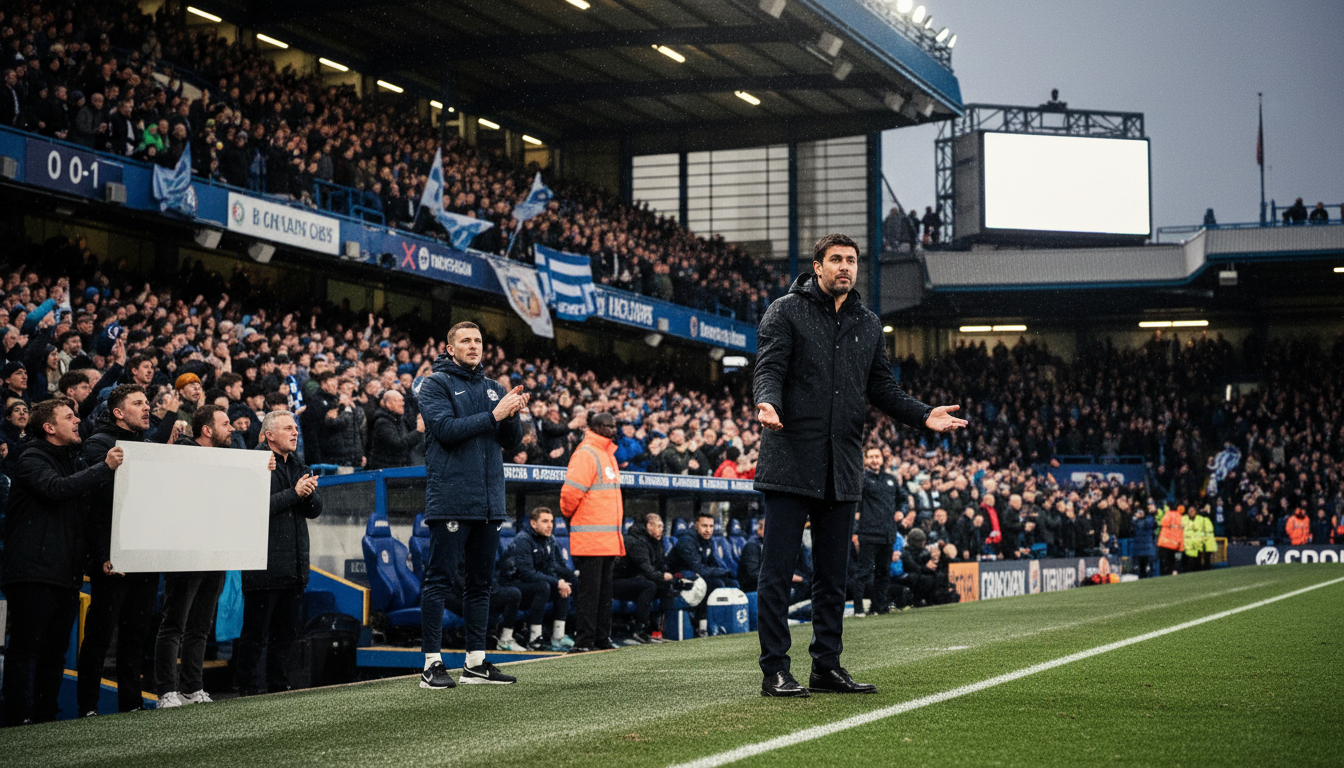
The defeat at the Amex left Chelsea supporters audible and demonstrative, putting fresh strain on Rosenior’s leadership. The head coach, who took over in January, conceded the performance was unacceptable and acknowledged the scale of the task ahead. Fan unrest has grown as the team slips down the table and high expectations have been replaced by vocal dissatisfaction.
Public criticism intensified partly because the loss followed a pattern of heavy defeats and defensive lapses that have become regular under Rosenior. The performance in Brighton was described by the manager in stark terms and suggested frustration inside the dressing room. Club officials are now confronted with a decision on whether to back Rosenior through the season run-in or to act sooner.
Form collapse: results and defensive concerns
Chelsea’s form has deteriorated sharply after an encouraging start to Rosenior’s tenure that included early cup success and progress in Europe. The side opened his spell with a 5-1 win in the FA Cup at Charlton on January 10, 2026, and later sealed a Champions League knockout place with a dramatic 3-2 win at Napoli in the group stage. Those initial sparks have been extinguished by a sequence of poor league performances.
Since that promising first month, Chelsea have lost five consecutive Premier League fixtures and have managed just one clean sheet since Rosenior arrived. The run has included heavy 3-0 defeats and a stretch in which the club have lost seven of their last eight matches across all competitions. Defensive fragility and a lack of consistent attacking output have combined to expose structural problems that have yet to be resolved.
Wembley date increases stakes for Chelsea hierarchy
An FA Cup semi-final against Leeds at Wembley looms large on the calendar and adds urgency to the club’s decision-making. Rosenior’s position will be evaluated not only on league form but also on his ability to inspire a positive result at a neutral venue where silverware is still attainable. For a club in transition, a domestic cup run can act as both a safety valve and a proving ground for managerial credibility.
The timing complicates matters because any move before the semi-final would be disruptive, while waiting until season’s end risks further decline in results and atmosphere. The board must balance short-term stability against the desire to arrest the slide, and that calculus will be shaped by internal assessments of player buy-in and tactical coherence.
Iraola emerges as a credible replacement
Reports and speculation have quickly focused on potential successors, with Andoni Iraola frequently mentioned as a leading candidate. Iraola confirmed this month that he will leave Bournemouth at the end of the 2025/26 campaign, making him available for major clubs seeking a fresh appointment. His stock has risen markedly since taking charge on the south coast in 2023.
Iraola’s work at Bournemouth has drawn praise for a clear playing identity and steady progress in the league, prompting supporters at bigger clubs to see him as a natural fit. Chelsea’s hierarchy will weigh his tactical profile, man-management style, and readiness to step into a high-pressure environment that prizes immediate results and long-term rebuilding in equal measure.
What Iraola has delivered at Bournemouth
Since replacing Gary O’Neil in the summer of 2023, Iraola has guided Bournemouth to stronger league finishes and the club’s first taste of European qualification. Last season the Cherries recorded a club-best points haul, and this campaign they have maintained momentum to push into contention for continental slots. Recent away wins at Newcastle and Arsenal underlined Bournemouth’s resilience and attacking intent after the March international break.
Iraola’s side have been celebrated for their fluid approach and organization, features that have won admiration around the Premier League. Finishing ninth with 56 points last season and currently sitting within touching distance of the Europa League places him among Europe’s most in-demand coaches. That résumé makes him an attractive short-term solution for clubs seeking a modern tactical blueprint and steady progress.
Potential timeline and Chelsea’s options for the short term
Chelsea’s decision-makers face a narrow window to act if they believe a change is necessary before the summer. One option is to retain Rosenior through the FA Cup semi-final and reassess after that match, thereby avoiding mid-week disruption and preserving continuity for a crucial fixture. Alternatively, the club could move quickly to secure a replacement and install new leadership in time for the final league matches.
Any appointment before the summer carries recruitment challenges, including negotiating with clubs for preferred candidates and meeting ambitious salary expectations. If Iraola is the priority, Bournemouth’s agreement and his contractual status will be key factors. Interim solutions may be considered to steady the ship while the board conducts a thorough search.
Chelsea must also consider the long-term project when evaluating candidates, balancing immediate stabilisation with the need for a manager capable of implementing a coherent recruitment and development plan. The club’s financial muscle and profile will attract high-calibre applicants, but the pressure and expectations at Stamford Bridge remain unusually intense.
The coming weeks will test the club’s appetite for decisive action and willingness to accept short-term pain for longer-term gain.
Fan sentiment, on-pitch performance and boardroom judgment will determine whether Rosenior remains in charge for the final fixtures or whether Chelsea pivot to a new direction ahead of the summer transfer period. The outcome of the FA Cup semi-final and the results in the remaining Premier League matches will heavily influence the club’s next steps.