


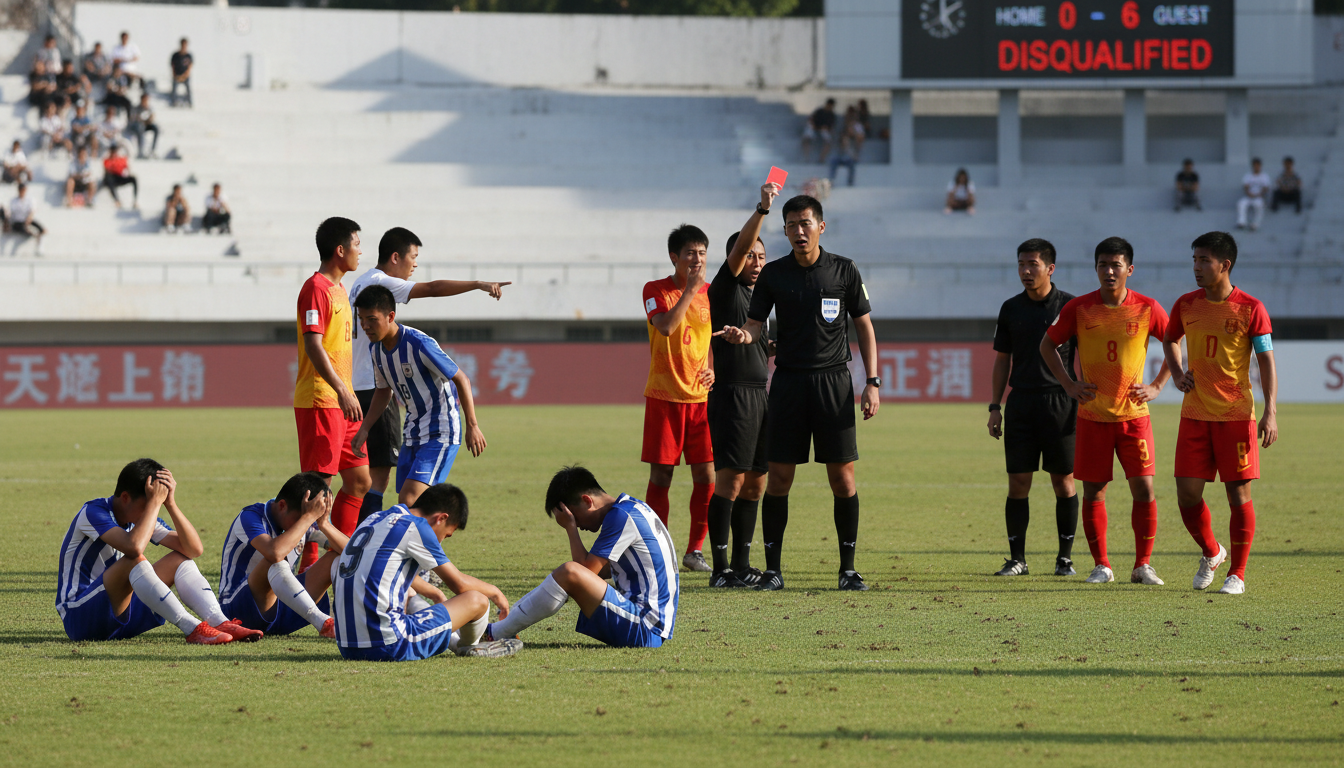
Chinese youth football match-fixing scandal: Beijing under-10 teams disqualified after six own goals in staged 3-3 draw
Beijing under-10 sides were disqualified after six own goals in an apparent Chinese youth football match-fixing scandal; the CFA has opened an investigation.


Match at Xiaojiahe field ends in six own goals
A China Youth Football League under-10 fixture in Beijing ended in extraordinary fashion, with two teams combining to score six own goals and finish 3-3.
The match involved Dongcheng Sports School 16 Orange and Kickers Lan and took place at Xiaojiahe Lvdong Tiandi Football Field during the group stage of the tournament.
Video of the closing stages showed repeated deliberate errors as both sides attempted to manipulate the final scoreline to avoid topping their group.
Tournament organizers and fans were left stunned by the apparent coordination to secure an advantageous knockout draw.
Teams disqualified and city-level bans issued
Beijing Football Association officials moved quickly, disqualifying both Dongcheng Sports School 16 Orange and Kickers Lan from the competition.
The BFA also announced permanent bans on several individuals from participating in football-related activities within the city while the matter is probed.
The national governing body for the sport in China said it would cooperate with local authorities to examine management and disciplinary failures.
The Chinese Football Association emphasized its opposition to any fabricated results or conduct that undermines the healthy development of youth football.
How the final score appeared to be engineered
Match footage circulating online showed a sequence of own goals late in the game that suggested both sides were desperate to avoid victory.
Observers noted that the way players positioned themselves and the timing of the mistakes were inconsistent with ordinary play, prompting widespread suspicion of intentional manipulation.
Coaches and team staff stood near the touchline as the incidents unfolded, raising questions about who directed the actions and what incentives were in place.
Competition formats that reward specific group positions can create perverse incentives, and critics say this episode illustrates how vulnerable youth tournaments are to tactical manipulation.
Public reaction and social media fallout
The video spread rapidly across Chinese social platforms, drawing sharp criticism from parents, pundits, and former players.
Many commenters expressed anger that children were used to enact a contrived result and demanded swift accountability from football authorities.
Some commentators called for greater transparency in youth competition structures and harsher penalties to deter similar conduct in future tournaments.
Others warned that incidents like this could damage public trust in grassroots programs and discourage parental support for youth participation.
Governance failures and tournament design under scrutiny
Officials and analysts have pointed to tournament rules and scheduling as possible contributors to the incident, noting that knockout draw mechanisms can inadvertently reward teams for engineering specific outcomes.
When teams perceive a strategic advantage to finishing second or avoiding first place, the integrity of matches can be compromised unless safeguards are in place.
Youth competitions require clear rules, robust oversight, and education for coaches and parents about sportsmanship and the consequences of manipulation.
The current case has prompted calls for independent monitoring of youth fixtures and for organizers to review tie-break procedures that may incentivize counterproductive behavior.
Potential consequences and the scope of the investigation
The Chinese Football Association has pledged an in‑depth investigation into both the event itself and the management failures surrounding it, signaling possible nationwide repercussions.
Investigators are expected to review match reports, video, coaching staff conduct, and any communications that could show premeditation or direction from adults involved.
Penalties could range from expanded bans and fines to qualifications being stripped and coaching licenses revoked, depending on the findings.
Authorities may also recommend structural reforms for youth tournaments to reduce the chance that teams benefit from avoiding victory.
Impact on youth development and trust in grassroots programs
Beyond sanctions, the incident threatens to unsettle efforts to build a robust youth football pipeline in China, where administrators have invested heavily in grassroots development.
Parents may grow wary of enrolling children in organized programs if they perceive competitions to be manipulated or poorly supervised.
Sponsors and community partners could reassess support if the sport’s image suffers further reputational damage.
Restoring confidence will require concrete reforms, public reporting on the investigation’s outcomes, and visible enforcement of accountability measures.
The Beijing under-10 match has become a flashpoint for debate about how youth competitions are run and policed, underscoring the need for clearer rules and stronger oversight to protect the integrity of Chinese youth football.