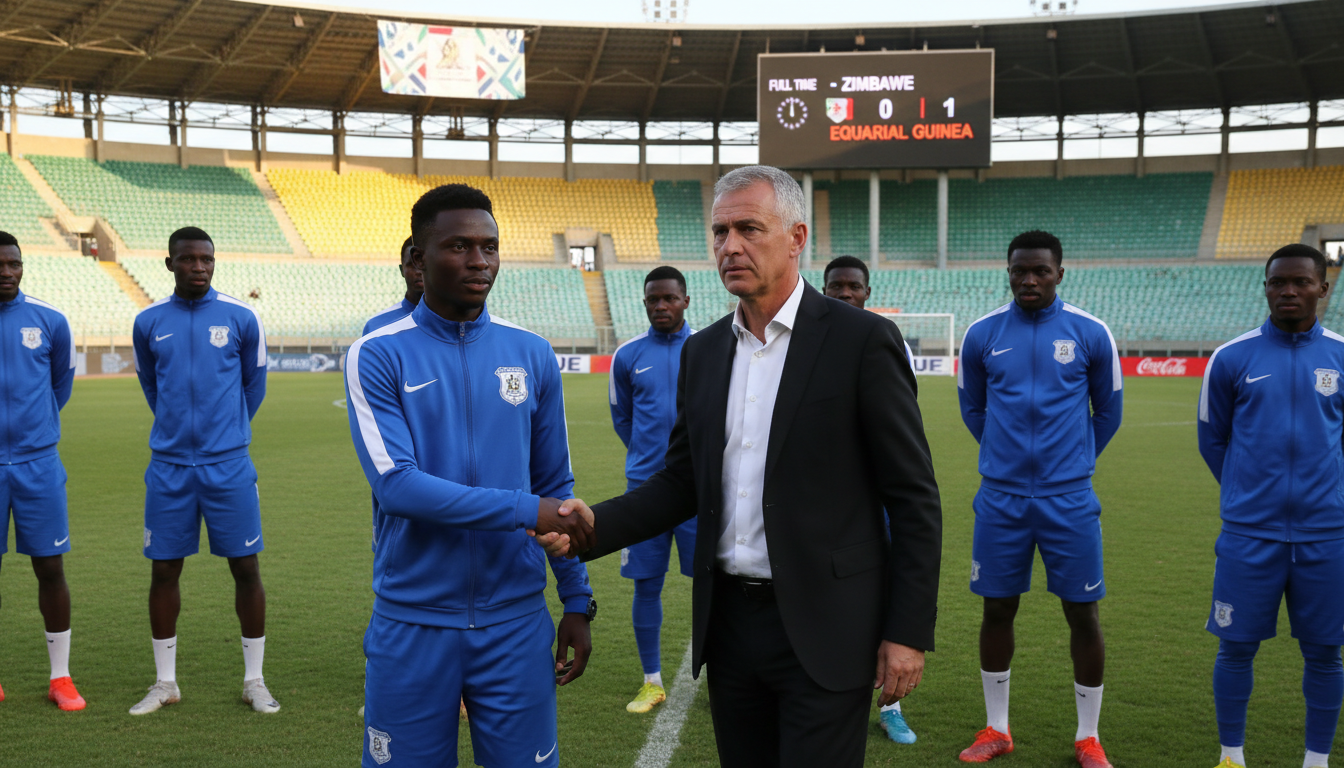
Marian Marinica resignation: Zimbabwe coach quits five months after appointment
Zimbabwe coach Marian Marinica has resigned five months after his November 2025 appointment, ZIFA confirmed; Kaitano Tembo will lead the squad for the Unity Cup in May 2026.


Zimbabwe coach Marian Marinica has formally resigned from his role as head coach of the senior men’s national team, the Zimbabwe Football Association (ZIFA) announced on April 28, 2026. The news marks the end of a brief and turbulent five‑month spell that began with his appointment in November 2025 and continued through the 2025 Africa Cup of Nations finals. ZIFA said Marinica’s resignation has been accepted and thanked him for his contribution to the Warriors.
Marinica’s short tenure and AFCON campaign
Marian Marinica’s tenure was dominated by a single major assignment: leading Zimbabwe at the 2025 Africa Cup of Nations finals. The Romanian coach failed to secure a win as the Warriors were eliminated in the group stage, leaving his AFCON record without a victory. That result proved a central element in evaluations of his time in charge and fed into wider scrutiny of his methods and selection decisions.
The AFCON tournament exposed tactical and personnel questions that followed Marinica back to domestic preparations and public assessments. Observers pointed to a lack of cohesion in attack and inconsistencies in defensive organization during the group games. Those on‑field issues were compounded by off‑field tensions that developed between the coach, players and parts of the association during his brief spell.
ZIFA statement and interim appointments
ZIFA issued a formal release confirming the acceptance of Marinica’s resignation and expressing appreciation for his work with the Warriors. The association named former national team coach Kaitano Tembo as Interim Head Coach to lead Zimbabwe at the Unity Cup tournament in the United Kingdom in May 2026. ZIFA also announced that Takesure Chiragwi, the current coach of CAPS United, has been appointed as Assistant Coach for the Unity Cup assignment.
The statement acknowledged Marinica’s contribution and wished him well in future endeavors, while presenting Tembo’s appointment as a short‑term solution to ensure continuity ahead of the scheduled international engagement. ZIFA framed the changes as necessary to stabilise preparations for the upcoming fixtures and to manage the team through the Unity Cup next month in May 2026.
Reasons behind the resignation and Munetsi omission
ZIFA did not provide a detailed explanation for Marinica’s departure, and the precise reasons have not been formally disclosed by the association. Media reports and football insiders have pointed to a prolonged dispute between Marinica and Warriors vice‑captain Marshall Munetsi, who was omitted from the AFCON squad under Marinica’s selection. That omission sparked public debate and is widely believed to have contributed to the coach’s decision to step down.
Multiple sources inside Zimbabwean football described the disagreement with Munetsi as a flashpoint that strained relationships within the squad. While those accounts stop short of presenting a single causal factor, they indicate that fractured trust between coach and senior players, combined with disappointing tournament results, created an untenable situation for Marinica.
Kaitano Tembo to steer the team at Unity Cup
Kaitano Tembo will assume interim leadership of the Warriors for the Unity Cup in May 2026, a short‑notice appointment aimed at steadiness before the association launches a permanent search. Tembo, who has prior experience with the national team and understands the domestic player pool, will have the immediate task of assembling a squad and overseeing logistical preparation for the UK tournament. His brief is largely pragmatic: steady the team, manage player welfare, and produce a competitive showing at the Unity Cup.
Tembo’s appointment carries expectations of rapid cohesion and pragmatic selection choices, given the limited time before the Unity Cup. The tournament will be used by ZIFA to evaluate options and give playing opportunities to domestic performers, while providing an assessment platform for any long‑term coaching plan. The association has signalled that the Unity Cup is a priority and that performance there will inform subsequent decisions.
Takesure Chiragwi returns as assistant coach
Takesure Chiragwi will return to the national team setup as Tembo’s assistant, resuming a role he previously held before his resignation last year. Chiragwi’s appointment reunites him with the Warriors environment and brings his experience as CAPS United coach into the national setup. ZIFA’s decision reflects a preference for staff who are familiar with Zimbabwean club dynamics and the domestic player landscape.
Chiragwi’s return is both symbolic and practical, offering continuity for players who know his coaching style and methods. His role is expected to involve on‑the‑ground coaching, scouting of domestic talent and liaising between the national setup and club coaches during the preparation window. With Tembo and Chiragwi in place, ZIFA aims to present a composed front while finalising longer‑term plans.
Implications for the Warriors and coaching search
Marian Marinica’s resignation leaves ZIFA with an immediate operational task and a strategic question over the next permanent head coach for the Warriors. The association will balance a near‑term priority — fielding a competitive side at the Unity Cup in May 2026 — against a longer recruitment process to identify a manager with the mandate to rebuild after the AFCON setback. Stakeholders in Zimbabwean football have indicated that ZIFA must consider experience, player management skills and alignment with domestic development goals in that search.
The vacancy will prompt interest from local and foreign candidates, and the selection process may include evaluations of coaching philosophy, proposed technical plans and track records in similar roles. ZIFA has previously emphasised the need for a coach who can bridge the national team’s ambitions with realistic development pathways, and those criteria are likely to shape the forthcoming recruitment.
International fixtures and qualifying schedules will also influence the timing of a permanent appointment, as the national calendar requires steady planning for match windows and tournament qualifiers. The Unity Cup will therefore serve both as a short‑term competitive measure and a practical audition for interim staff and potential candidates.
The effects of Marinica’s resignation extend to player morale and selection policy, with senior personnel such as Marshall Munetsi remaining central to rebuilding efforts. Reintegrating key players and repairing any damaged relationships will be an important focus for Tembo and Chiragwi, who must balance squad unity with competitive selection choices. ZIFA’s approach over the coming weeks will indicate whether the association prioritises reconciliation, performance, or a mix of both.
The Unity Cup in May 2026 is now the immediate test for Zimbabwe’s interim coaching team, offering a platform to restore confidence and deliver results ahead of future assignments. The association has signalled its intent to use the tournament constructively while it evaluates long‑term leadership options. For fans and stakeholders, the coming weeks will be a key period to observe how the Warriors regroup and reposition following Marinica’s departure.
Marian Marinica leaves behind a brief but controversial spell in charge of Zimbabwe, remembered for his AFCON run without a win and a high‑profile selection dispute that involved senior national team figures. ZIFA expressed thanks for his service and appointed a familiar interim setup to navigate the Unity Cup in May 2026, while opening a broader process for appointing the next long‑term head coach. The immediate priorities are to stabilise the squad, manage preparations for the UK tournament, and begin a transparent process to identify a successor who can move the Warriors forward.