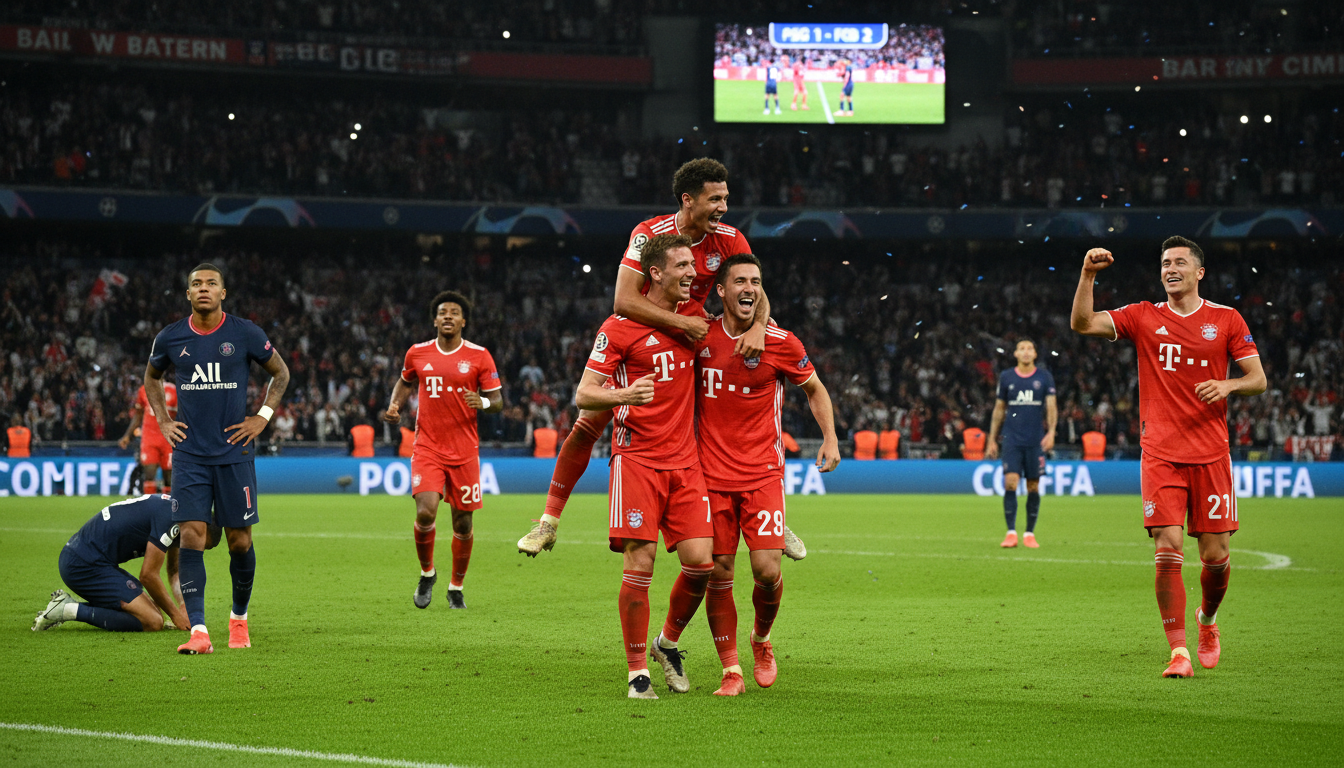
Bayern vs PSG rivalry remains one of Europe’s tightest and most consequential matchups
Bayern vs PSG rivalry endures as one of Europe’s tightest: a three-decade review of Champions League, Club World Cup clashes and pivotal decisive moments.


The Bayern vs PSG rivalry has developed into one of European football’s most consistently high-stakes pairings, stretching across the Champions League, the FIFA Club World Cup and seasons of domestic dominance. The fixture has produced narrow margins, decisive finals and a balance of results that leaves neither side able to claim sustained superiority. Recent meetings through 2025 have only reinforced the sense that tactical discipline and key moments determine outcomes between these elite clubs.
Historic head-to-head balance
Bayern Munich and Paris Saint-Germain have met more than a dozen times in competitive fixtures, and the overall ledger is remarkably even. Wins and losses have oscillated with eras and tournaments, producing a rivalry defined as much by its unpredictability as by the stature of the clubs involved.
Both clubs have enjoyed periods of ascendancy, and the aggregate results reflect that interchange. Whether in the group stages, knockout rounds or single-match finals, encounters between Bayern and PSG have often been settled by a single goal or a late decisive action.
Early meetings and momentum shifts
The rivalry’s early chapters in the 1990s showed PSG taking the initial upper hand in European group play. The French side recorded home and away victories in the mid-1990s, signaling that they could compete with elite German opposition on equal terms. Those results set the tone for intermittent dominance rather than continuous superiority by either side.
Bayern’s response arrived in force in later fixtures, including a period when the German club produced a large-margin home victory that underlined their firepower. The back-and-forth nature of results in that era established a pattern that still holds: single matches can swing momentum for a season, but neither club has been able to impose long-term control over the fixture.
Turning point: the 2020 Champions League final
The modern phase of the rivalry crystallized with high-profile Champions League ties and a final that affirmed Bayern’s capacity to win at the highest level. The 2020 final saw Bayern lift the European Cup courtesy of a lone goal, a result that carried the weight of a broader treble-winning campaign. That match remains the most consequential single meeting between the two clubs.
Subsequent Champions League seasons featured tactical chess matches and results that alternated between countries. Group-stage victories, away triumphs and narrow defeats have all played a role in preserving the rivalry’s tightness since that final weekend in 2020.
Knockout drama and the role of away goals
Knockout meetings between the teams have repeatedly produced tense, closely contested ties. One notable two-legged tie saw PSG advance after a dramatic away-goals resolution, demonstrating how fine margins and specific competition rules can be decisive. Such instances have amplified the rivalry’s narrative of narrow margins and high drama.
Bayern’s replies in knockout contests have often been methodical and efficiency-driven, aiming to minimize drama through strong defensive structure and clinical finishing. Conversely, PSG have tended to rely on moments of individual creativity to unsettle Bayern’s organization, making each tie a study in contrasting approaches.
Recent clashes and the Club World Cup chapter
The rivalry has remained active in the mid-2020s, with matches that continued to swing either way. Bayern claimed a narrow victory in the 2024/25 Champions League group phase, while PSG responded with a Club World Cup win in 2025, taking its own measure of global silverware against the German side. These results underline that important silverware has been on the line beyond European competitions.
Their November 2025 Champions League encounter in Paris exemplified the fixture’s razor-edge nature, with Bayern prevailing despite being reduced to ten men. Such outcomes underline that discipline, tactical adjustment and resilience under pressure are central themes when these teams meet.
Tactical patterns and decisive performers
Across three decades of meetings, several tactical constants have emerged. Bayern typically approach with a blend of structural discipline and incisive wing play, seeking to control rhythm and exploit transitions. PSG often counter with individual brilliance from attacking talents and a focus on creating high-quality chances in and around the penalty area.
Individual players have repeatedly influenced results, whether through a decisive finish in a final or a game-changing intervention in a two-legged tie. The ability of managers to adapt formations and personnel in response to the opponent’s strengths has frequently decided outcomes, highlighting coaching as a core component of the rivalry.
What the rivalry means for European competition
Matches between Bayern and PSG frequently act as a barometer for each club’s readiness to compete for continental honours. Strong showings in these fixtures have coincided with deeper runs in tournaments, while poor results have sometimes exposed tactical or personnel vulnerabilities. The pair’s meetings therefore carry implications beyond a single match, influencing momentum and expectations in successive rounds.
The rivalry also reflects broader shifts in European football, from PSG’s rise with heavy investment to Bayern’s sustained model of squad depth and tactical refinement. That tension between different club models gives added texture to each encounter and helps explain why the fixture captures attention across the continent.
The rivalry has produced memorable individual moments and critical team performances, and recent results through 2025 confirm the pattern of narrow margins and high stakes.
Bayern vs PSG fixtures continue to attract attention as tests of tactical planning, squad depth and mental resilience. Future meetings are likely to remain tightly contested, with the next encounter offering another opportunity for either club to tip the historical balance.