
Tanguy Nianzou transfer stalled as Lille studies medical reports
Tanguy Nianzou transfer stalled as Lille reviews medical reports; Sevilla needs wage relief to register new signings amid continued cautious negotiations.

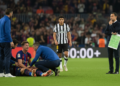
Tanguy Nianzou’s future remains unresolved after Lille completed the player’s medical examinations but held back from confirming his signing, leaving Sevilla’s summer planning in limbo. The Parisian centre-back’s move appeared on course once the tests were finished, but Lille’s president urged patience, saying the club is still in discussions and cannot disclose details. Sevilla is pressing for clarity because the departure of Nianzou would free salary space needed to register several new arrivals.
Lille signals caution after medicals
President Olivier Létang addressed the media during the presentation of the club’s new coach and described the situation as ongoing, noting that talks were continuing and no final statement could be made. The club has taken the uncommon step of pausing public confirmation while internal staff study medical documentation in detail. That posture reflects a deliberate approach to risk management when signing a player with a notable injury history.
Lille’s hesitancy follows an internal review process that extends beyond standard clearance, according to club sources; the aim is to quantify potential sporting and financial exposure. The club’s decision-makers have allowed several days to scrutinize reports and consult technical and medical directors before committing to a final course of action. This measured response has slowed the transaction timeline and heightened scrutiny from both supporters and outside observers.
Sevilla presses for a swift resolution
Sevilla’s sporting director, José Ignacio Navarro, underlined the club’s need for certainty while presenting other signings, reminding observers that transfers remain contingent on formal signatures and announcements. He warned that until paperwork is completed, nothing can be taken for granted, and Sevilla must weigh all scenarios, including a transfer or a contract termination. The club’s immediate priority is to clear sufficient mass salary to register incoming players ahead of the new season.
The Andalusian side has already moved in the market and is banking on outgoing movements to balance its roster, making the Nianzou case a linchpin of its summer planning. Any delay in confirming the defender’s exit narrows the window to finalize registrations before league deadlines. That pressure increases the stakes for Sevilla, which must manage squad compliance and financial rules while trying to maintain sporting competitiveness.
Medical findings and injury background under review
Lille’s extended assessment stems from concerns about the long-term implications of the medical reports rather than a single failed test, sources indicate, with the club focused on clarifying the extent and recurrence risk of past problems. The evaluation is reportedly being coordinated between Lille’s medical department and external specialists to build a complete picture of potential future availability. Such layered reviews are increasingly common when clubs evaluate younger players who carry significant talent but a complex fitness record.
For Sevilla, the technical staff and medical team are likewise attentive to the details, since any agreement to transfer or terminate will have consequences for squad depth and match-day planning. The club will seek contractual safeguards that reflect the medical realities, whether through performance clauses, structured payments or other protections. Both teams face a delicate balance between sporting ambition and financial prudence as they negotiate terms that reflect the medical assessments.
Possible outcomes and expected timeline
There are a limited set of realistic outcomes in the coming days: Lille could proceed with the transfer and announce terms, the clubs could agree on a mutual contract termination, or negotiations might be extended while conditional clauses are finalized. A loan arrangement is less likely given the financial triggers at stake, but cannot be categorically ruled out depending on how the two sides structure guarantees and risk-sharing. Industry insiders expect a resolution within the week, but an exact date remains uncertain while documentation is examined.
If Lille opts to sign Nianzou, the club will likely include protective measures — such as staged payments or medical contingent clauses — to mitigate the fiscal risk associated with recurring injuries. A mutual termination would free the player immediately but require Sevilla to negotiate severance details and adjust its wage structure rapidly. Conversely, a protracted delay would force Sevilla to reconsider its immediate registration strategy and could trigger alternative transfer moves to ensure squad compliance.
Sporting and financial stakes for both clubs
For Lille, signing Nianzou would be an investment in a promising defender whose upside is attractive but whose fitness record demands careful contract design. The club’s sporting project under its new coach carries expectations of immediate impact, making clarity on the player’s availability essential for season planning. From a financial perspective, Lille must weigh the transfer cost and potential insurance arrangements against the projected contribution on the pitch.
Sevilla faces a different calculation: the imperative to generate salary headroom to register newly acquired players is pressing, and the club cannot afford prolonged uncertainty. The club’s recruitment window is already active, and administrative deadlines for registration create a hard timeline. For sporting director Navarro and his staff, resolving Nianzou’s status quickly will determine how aggressively Sevilla can proceed with its summer rebuild and tactical preparations.
Sevilla’s wider recruitment strategy may also hinge on the outcome, as funds and roster spots freed by Nianzou’s departure would be redirected to reinforce areas identified by the coaching staff. If the move collapses or stalls, the club must pivot rapidly to alternative solutions to meet regulatory requirements and competitive ambitions. The transfer market’s ripple effects mean one delayed decision can change plans across multiple positions.
How the decision could affect Nianzou’s career
For Tanguy Nianzou himself, the coming days are pivotal: a completed transfer would bring a fresh start under new coaching leadership, while a stalled move could necessitate re-evaluating his short-term options. The player’s development hinges on regular playing time and a stable medical environment, factors that will weigh heavily in any final agreement. Agents and advisors will be aiming to secure terms that prioritize both rehabilitation pathways and clear sporting opportunities.
A mutual contract termination would present immediate freedom but also the challenge of finding a club willing to assume the medical risk and provide a platform for reintegration. Alternatively, a transfer with protective clauses could give Nianzou the best chance to rebuild his trajectory while offering both clubs contractual certainty. Regardless of the path chosen, the case underscores the modern interplay between medical science, contract law and sporting ambition in elite football.
Sevilla and Lille have signalled that they will proceed cautiously, but the broader transfer market will watch closely for a conclusion that sets a precedent on handling medically sensitive deals. The practical lessons from this negotiation may influence how clubs approach similar situations in the future, particularly when balancing youthful potential against documented injury concerns.
The timeline now depends on technical and medical committees finalizing their conclusions and on the two clubs agreeing a contractual framework that reflects those findings. Until signatures are exchanged and the governing authorities are notified, the status of Tanguy Nianzou’s move will remain provisional and at the center of both sporting and administrative focus.