Uganda U-17 shine in Morocco as Mukisa inspires 3-0 win over DR Congo
Uganda U-17 defeated DR Congo 3-0 in their Group B opener at the 2026 TotalEnergies U-17 Africa Cup of Nations, with Owen Mukisa starring in a commanding performance.

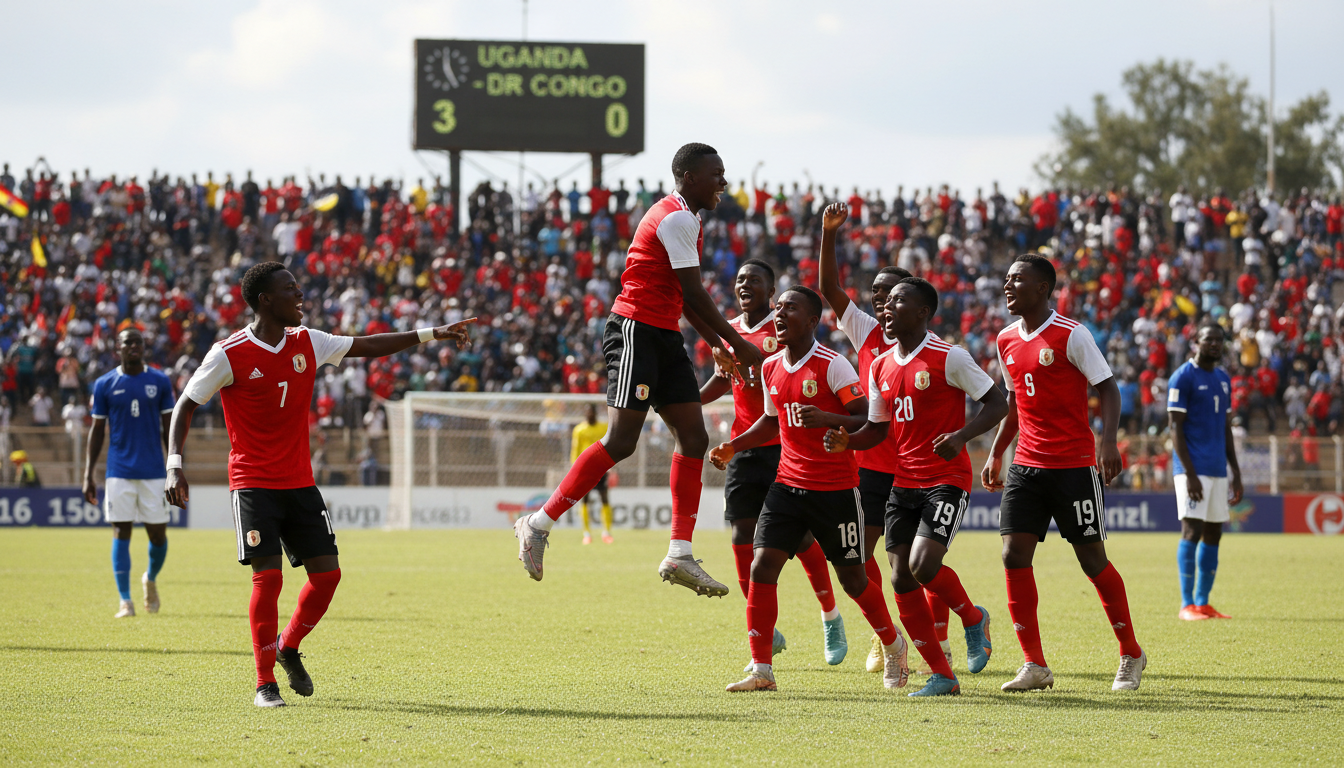
The Uganda U-17 side announced their arrival at the 2026 TotalEnergies U-17 Africa Cup of Nations with a confident 3-0 victory over DR Congo in Group B on Wednesday. The win, delivered at Stade Moulay Hassan, combined defensive organisation with incisive attacking transitions and set-piece proficiency. Uganda collected maximum points to start their tournament campaign on a high note ahead of their next match against Cameroon.
Match setting at Stade Moulay Hassan
The fixture took place under clear expectations for both teams, with Uganda aiming to build momentum early in Morocco. DR Congo sought to control the tempo but found it difficult to break down a disciplined Ugandan defensive structure. The stadium atmosphere reflected the stakes of a continental tournament opening game, adding pressure to both sides’ youth squads.
Uganda’s coaching staff emphasized organisation and quick transitions during the opening stages, and the players executed that plan with discipline. The early periods saw DR Congo attempt to force the play, but Uganda remained compact and focused on limiting central penetration.
As the match progressed, Uganda became more assertive in possession and started to create opportunities from wide deliveries and rapid counters. That shift allowed the East African side to exploit spaces and impose their rhythm on a winnable but important Group B fixture.
Mukisa header breaks the deadlock
The first goal arrived in the 37th minute when forward Owen Mukisa rose above the DR Congo defence to head home a precise cross from Trevor Mubiru. The move was the product of careful build-up and an exploitation of aerial strength in the penalty area. The goal rewarded Uganda’s measured approach and gave the side a deserved lead.
Mukisa’s movement in the box and ability to time his run effectively unsettled the Congolese backline throughout the half. Mubiru’s delivery stood out for its accuracy, finding Mukisa at the far post where his header required little adjustment. The scoreline reflected a period in which Uganda had grown into the game and begun to ask more questions of their opponents.
Following the opener, Uganda did not sit back; instead, they sought to increase the margin before halftime. That intent forced DR Congo to pass without penetration and opened up set-piece opportunities that Uganda converted before the break.
Late first-half corner doubles advantage
Deep into first-half stoppage time, Mukisa again played a decisive role by delivering a corner that was powerfully nodded in by Nicholas Kawooya to make it 2-0. The set-piece finish demonstrated Uganda’s preparation and execution in a tournament environment where dead-ball situations are often decisive. The timing of the goal also shifted momentum significantly heading into the interval.
The two-goal cushion allowed Uganda to approach the second half with the freedom to manage the game while remaining alert to counterattacking threats. DR Congo, by contrast, faced an uphill task and were required to alter their approach to find a way back into the match.
Kawooya’s header capped a productive spell for the Ugandan forwards, and the corner routines showcased a clear training emphasis on delivery and late runs to the near post. Those elements combined to give Uganda a tangible advantage at the break.
Second-half response and disallowed DR Congo goal
DR Congo returned after the interval with noticeably increased urgency and pressed higher up the pitch in search of a route back into contention. Their renewed intensity forced Uganda’s goalkeeper and defenders into several important interventions. Lukyamuzi, Uganda’s goalkeeper, remained composed and made timely saves to preserve the clean sheet.
Midway through the second half DR Congo believed they had reduced the deficit, only for the effort to be ruled out for offside after a VAR or linesman intervention. The decision deflated a fast-building period of pressure from the Central African side and restored a sense of control to Uganda’s rearguard.
Following the disallowed goal, DR Congo continued to probe but found it difficult to create clear-cut chances against a backline that stayed organized under strain. The match became more stretched as both teams chased opportunities, with Uganda showing an ability to absorb pressure and transition quickly.
Mubiru sent off but Uganda respond quickly
In the 80th minute Uganda suffered a blow when Trevor Mubiru received a second yellow card for a deliberate handball and was sent off, reducing the team to ten men. The dismissal threatened to swing momentum back to DR Congo and altered the tactical balance for the final phase of the match. Uganda’s players, however, adapted to the setback without retreating into defensive caution alone.
Remarkably, just one minute after the red card, AbdulShakur Babi found space to finish clinically and make it 3-0, effectively sealing the result. The quick response under pressure illustrated Uganda’s resilience and capacity to maintain attacking intent even while numerically disadvantaged. That rapid reply rendered the late sending-off less consequential to the final outcome.
After the third goal, Uganda focused on game management, using possession to blunt DR Congo’s advances and protect their clean sheet. The capacity to shift from offensive moments to controlled possession phases demonstrated a maturity beyond a single youth match.
Mukisa named Man of the Match and Group B implications
Owen Mukisa, who scored and assisted, was selected as Man of the Match for his pivotal role in Uganda’s attacking success. His influence extended beyond the statistical contributions, with intelligent movement and physical presence that consistently troubled the opposition. The accolade highlighted a standout performance in a fixture with continental significance for both teams.
With the 3-0 win Uganda sit level on three points with Ivory Coast, who posted a victory in the other Group B contest, leaving the group finely poised after the opening round. The result gives Uganda an advantageous platform to press for qualification from the group, but the campaign remains far from decided with matches to come.
Uganda will face Cameroon in their next group match as they continue their pursuit of a knockout-stage berth at the 2026 tournament. The upcoming fixture will offer another test of the team’s balance between defensive organisation and attacking creativity, and it will provide a clearer picture of Uganda’s prospects in the competition.
Final preparations and coach assessments have already shifted focus to recovery and refining set-piece routines, which proved decisive in the opening game. The coaching staff will also need to address the disciplinary lapse that led to Mubiru’s dismissal and ensure squad depth can cope with potential suspensions.
Uganda’s performance in Morocco combined tactical discipline, effective set-piece work and the decisive contributions of key individuals to produce one of their most convincing youth-level results in recent memory.