Bremen vs Dortmund lineups: Confirmed starting XIs for Matchday 34
Bremen vs Dortmund lineups confirmed for Matchday 34 at the Weserstadion. Full XIs, tactical analysis, key matchups, bench options and season implications.


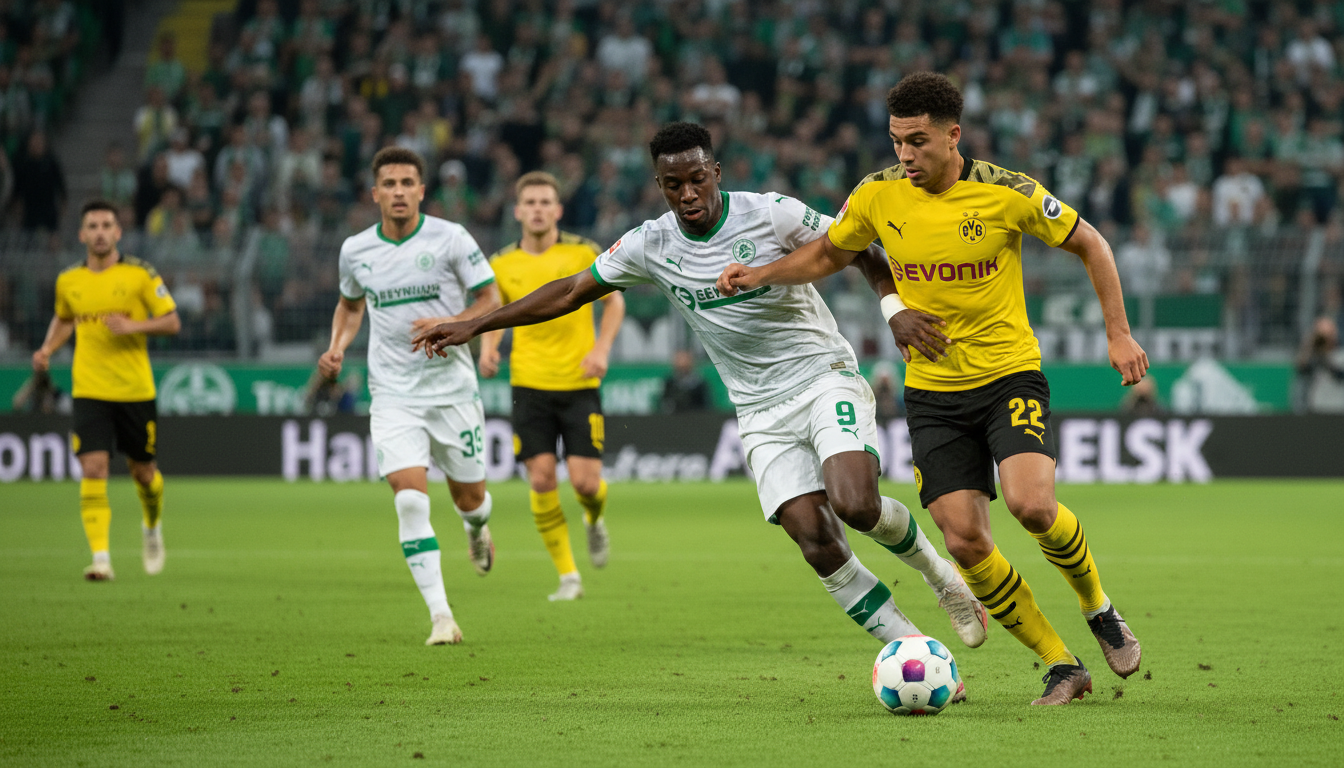
Borussia Dortmund and Werder Bremen have released their confirmed starting lineups ahead of this afternoon’s Matchday 34 fixture at the Weserstadion, with the Bremen vs Dortmund lineups headlining late team announcements. Dortmund arrive after a dramatic 3-2 victory last weekend and will field a 3-4-2-1 formation as they aim to close the season on a high. Werder Bremen name a 4-3-3 setup designed to press and exploit wide areas, setting up a contrast in style that should shape the contest from kickoff.
Confirmed lineups and formations
Werder Bremen set up in a 4-3-3 with Backhaus in goal behind a back four of Schmidt, Pieper, Coulibaly and Deman. The midfield trio of Stage, Lynen and Puertas will look to control possession and feed the front three. Up front Bremen start Njinmah and Schmid on the flanks with Musah in the central striker role tasked with linking play and stretching Dortmund’s defense.
Borussia Dortmund respond with a 3-4-2-1, Kobel between the posts and a back three of Reggiani, Anton and Schlotterbeck. Ryerson and Svensson occupy the wide wingback positions while Nmecha and Bellingham form a central midfield pairing. Beier and Inácio operate behind the lone striker Guirassy, offering support in the half-spaces and expecting to create overloads in attacking transitions.
Tactical implications at the Weserstadion
The chosen formations set up a classic confrontation between Bremen’s wide pressing and Dortmund’s central solidity. Bremen’s 4-3-3 prioritizes high intensity on the flanks; their wingers will be key to stretching the back three and creating 2v1 opportunities on the wings. Dortmund’s wingbacks will therefore be tasked with both aiding in possession and tracking back quickly to prevent overloads on the flanks.
Dortmund’s 3-4-2-1 is tailored to control the middle third and invite quick vertical passes through the channels. The two attacking midfielders tucked behind Guirassy are well placed to exploit spaces between Bremen’s midfield and defence when possession is regained. How each side manages transitional moments — particularly after turnovers — will likely determine control and the number of clear chances for either team.
Key player matchups to monitor
The duel between Dortmund’s Jadon Bellingham and Bremen’s midfield engine will be decisive for control of tempo. Bellingham’s ability to drive forward and link play will test Bremen’s compactness in midfield and could open lanes for Guirassy. Bremen’s Musah, leading the line, will be measured on how effectively he drags Dortmund defenders out of position and creates space for the wide forwards.
On the flanks, Bremen’s pace and directness against Dortmund’s wingbacks is another focal point. If Schmidt and Deman can combine with Stage and Lynen to deliver accurate crosses or cutbacks, Dortmund’s back three will face sustained aerial and wide threats. Conversely, Ryerson and Svensson’s forays forward will determine how often Dortmund can turn defensive solidity into rapid counter-attacks.
Dortmund’s selection signals and rotation choices
Dortmund’s decision to start with a back three signals a desire for structural control and an emphasis on central defensive stability. Reggiani, Anton and Schlotterbeck offer a mix of pace and aerial presence that suits dealing with Bremen’s striker and late runs from midfield. Deploying Beier and Inácio in supporting roles behind Guirassy suggests Dortmund want creativity in pockets rather than relying solely on wide overloads.
The midfield pairing of Nmecha and Bellingham highlights Dortmund’s blend of goal threat and ball progression. Nmecha’s movement into channels can occupy Bremen’s centre-backs, creating opportunities for Bellingham to influence the game between the lines. With Guirassy as the reference point up front, Dortmund gain a physical focal point capable of holding up play and bringing the supporting midfielders into attacking positions.
Bremen’s approach and selection choices
Werder Bremen’s 4-3-3 reflects an approach focused on pressing and pace in wide areas, with Njinmah and Schmid tasked to unsettle Dortmund’s defensive shape. The midfield trio of Stage, Lynen and Puertas is likely selected for balance: defensive cover, passing range and the ability to connect quickly with the front three. Backhaus in goal and the back four must combine concentration with quick distribution to initiate attacks under pressure.
Bremen’s selection suggests they expect to be proactive rather than purely defensive. By lining up two strong wingers and a central forward who can drop and link play, Bremen can generate quick combinations in the final third. Their full-backs will also be important; pushing higher would allow the team to overload wide areas, but it will leave spaces behind that Dortmund can exploit if transitions are poorly handled.
Bench options and in-game management
Both managers will have decisions to make once the game is underway, and bench options will matter as fatigue and tactical tweaks come into play. Dortmund’s potential substitutes could include additional creative presence or fresh legs to support Bellingham’s work rate, while Bremen’s options are likely to focus on injecting pace or a different attacking shape if they need a goal. Timing of substitutions will be critical given the high stakes and the limited margin for error late in the season.
Game management will also hinge on set-piece execution and responses to momentum swings. A single goal could force the trailing side to commit more players forward, opening the game up. Coaches may opt for pragmatic changes early if weather, match tempo or injuries alter the planned game rhythm. Expect both benches to be prepared with contingency plans tailored to exploiting the specific weaknesses shown in the opening 30 minutes.
Stakes and Bundesliga implications
With Matchday 34 coming at the tail end of the Bundesliga calendar, every point carries weight for both clubs’ objectives. Dortmund will aim to maintain momentum and end the season strongly after last weekend’s come-from-behind win, using this match as a platform for confidence heading into the close of the campaign. Bremen are motivated by home advantage and will seek to secure a positive result that reflects their end-of-season priorities.
Beyond immediate points, the fixtures at this stage can influence final league positions, European qualification, and morale going into the summer. Players chasing personal milestones or clubs evaluating squad options for next season will view this match as a final showcase. The competition intensity is likely to be high even if the league table is relatively settled, since pride and momentum matter in the closing weeks.
Match outlook and potential turning points
Expect an early probing period as both sides test each other’s defensive shape and reactive capacity. An early goal — particularly from a set piece or quick transition — could significantly alter tactical plans, forcing the other side to chase the game and leave gaps. Teams that manage to control the midfield exchanges and limit unforced errors in their defensive third will likely create the clearest scoring opportunities.
The influence of key individuals on each side may prove decisive in tight moments. Dortmund’s midfield drive and Bremen’s wide pace create contrasting threats that will be resolved in 1v1 duels and moments of creative interplay. Late-game fitness, concentration on set pieces, and the ability to convert chances will determine which side walks away with the three points this afternoon.
This match presents a final chance for both teams to affirm aspects of their season narrative, and the confirmed Bremen vs Dortmund lineups underline the tactical battle set to unfold at the Weserstadion.