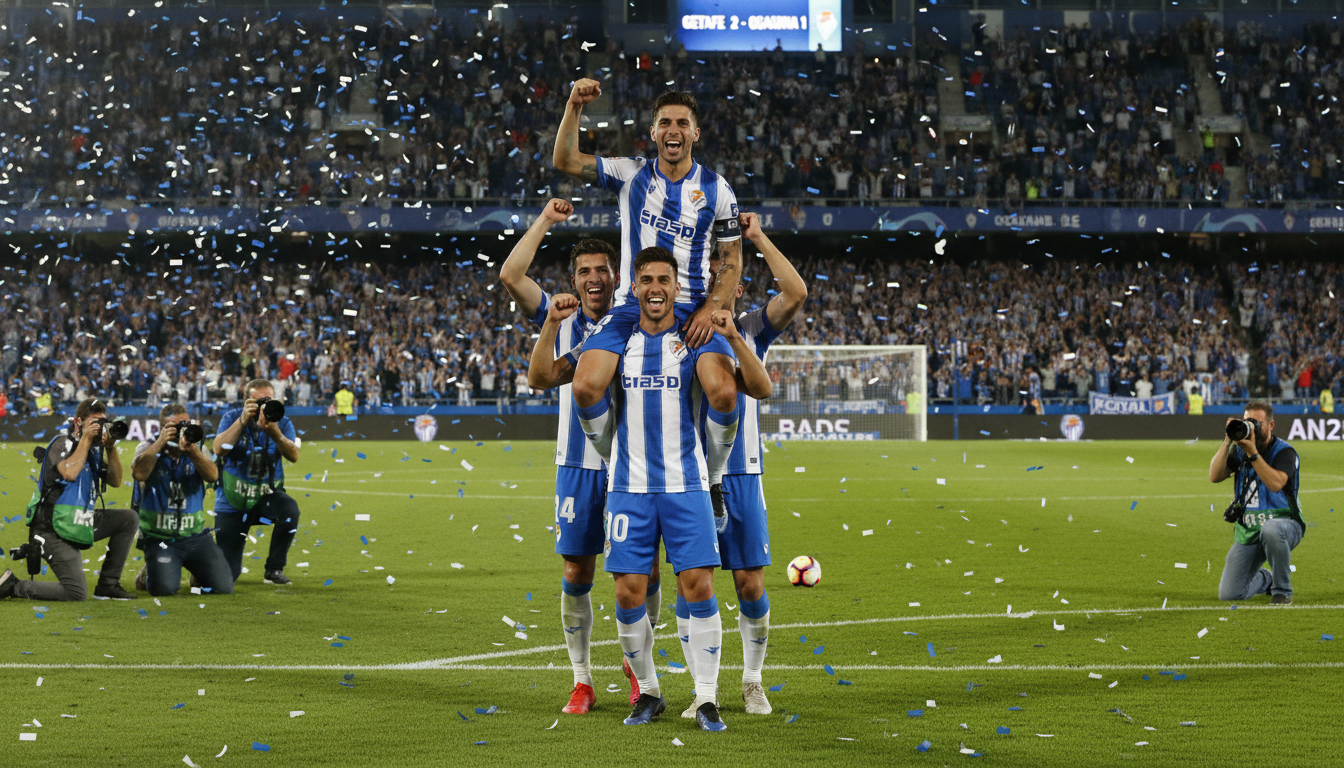
Getafe Seal Conference League Spot with Luis Milla’s Deflected Strike at the Coliseum
Getafe secure Conference League place after 1-0 win over Osasuna thanks to Luis Milla’s 59th-minute effort; Osasuna avoid relegation amid tense finish.

Getafe confirmed their return to European competition after six seasons by beating Osasuna 1-0 at the Coliseum this Saturday, sealing a place in next season’s Conference League. Luis Milla’s long-range effort in the 59th minute, which deflected off A. Catena and wrong-footed Sergio Herrera, proved decisive in a tight contest. The victory allowed Getafe to celebrate continental qualification while Osasuna, despite the defeat, escaped relegation due to results elsewhere and the narrow margins that defined the final rounds.
Getafe clinch Conference League berth at the Coliseum
Getafe’s win marked a significant milestone for the club, who will return to continental competition after a six-season absence. The Coliseum hosted 8,566 spectators who saw a disciplined display that prioritized defensive solidity and game management. Manager José Bordalás’s side achieved the primary objective for the campaign with a performance that mixed caution and tactical pragmatism. The dressing-room scenes at full-time reflected relief and measured joy as supporters spilled onto the pitch in celebration.
Getafe’s starting XI featured David Soria in goal, a backline anchored by Abqar and Duarte, and a midfield led by Mario Martín, Luis Milla and Mauro Arambarri. Luis Vázquez and Adrián Liso started up front as Bordalás opted for balance rather than expansive risk, a choice that ultimately paid off. The result gives Getafe a platform to prepare for European fixtures while rewarding a season of resilience and timely form. The club will now turn attention to offseason planning with continental matches on the horizon.
Milla’s strike deflects winner past Herrera
The match’s only goal arrived early in the second half when Luis Milla picked up a cleared ball outside the box and unleashed a low, driven shot. A. Catena’s intervention redirected the strike, changing its trajectory and leaving Sergio Herrera stranded as the ball hit the net in the 59th minute. The goal was credited to Milla and proved enough to separate two sides that struggled to create clear-cut chances. It was a fine example of how set-piece chaos and quick reactions can decide tightly contested fixtures.
Milla’s contribution underlined his importance in key moments; the midfielder combined timing and technique to make the decisive impact. Herrera was otherwise alert and rarely at fault, having dealt with several aerial threats earlier in the game. The deflection was a cruel twist for Osasuna defenders who had competed earnestly but were unable to prevent the decisive touch. From that point, Getafe sought to protect their lead through organization and timely substitutions.
Osasuna pressure but struggle to convert chances
Osasuna began the match with intent, taking the initiative and pressing high in search of an early breakthrough. Lucas Torró came close on several occasions with headed attempts at the far post, while Raúl García had a one-on-one that was centrally placed and comfortably saved by David Soria. Despite territorial advantage and sustained possession spells, Osasuna failed to turn control into clear scoring opportunities. The inability to finish in the final third ultimately proved costly for the visitors.
Alessio Lisci’s side showed moments of cohesion and willingness to attack, but the final ball and chance execution were lacking throughout significant stretches of the game. Substitutions were used to refresh the attack, but an untimely injury compounded difficulties in progressing play. Osasuna’s attacking metrics told a story of volume without penetration, and that imbalance left them vulnerable to a single decisive moment from their opponents.
Substitutions and an injury blow for Osasuna
Osasuna introduced Rubén García in the 68th minute in an effort to inject creativity and pace down the flanks, but the winger was forced off with injury only minutes after coming on. The early departure disrupted Lisci’s planned adjustments and limited the coach’s options in the wide areas. Further changes included Lucas Torró and Aimar Oroz being replaced as the team chased an equalizer, but the alterations lacked the desired impact on the scoreboard. The injury to Rubén García was particularly ill-timed given the high-stakes context of the match.
Getafe also made late changes to shore up the result, bringing on Davinchi and Damián Cáceres among others to add defensive cover and fresh legs. Mario Martín, who completed the ninety plus minutes, was replaced late in the match in a bid to steward the midfield and protect the narrow lead. Both managers showed cautious use of the bench, prioritizing game management in a fixture that carried broader implications for both clubs. Ultimately, the substitutions influenced tempo rather than producing dramatic swings in momentum.
Tactical chess: Bordalás and Lisci opt for caution
Both coaches approached the fixture with an eye on avoiding catastrophic errors, resulting in a tactical match characterized by compact structures and conservative risk-taking. José Bordalás set Getafe up to minimize space between lines, encouraging quick transitions and defensive discipline. Alessio Lisci’s Osasuna sought to build possession and exploit wing play, but recurring failures in the final third meant they could not consistently challenge Soria’s goal. The tactical setup of both sides produced a match with few clear chances and occasional aerial duels.
Defensive headers, blocked shots and intercepted passes dominated many phases of play as each team tried to control the most dangerous moments. The midfield battle featured confrontations between Arambarri, Milla and Moncayola, where intensity often trumped creativity. Referee Alejandro Quintero González issued yellow cards to Enzo Boyomo and Mauro Arambarri, reflecting the physical edge that accompanied the contest. In the end, strategic caution outweighed adventurous tactics, with the narrow margin preserved until the final whistle.
Consequences: Europe for Getafe, survival for Osasuna
For Getafe, qualification to the Conference League represents both sporting progress and financial upside, with European competition offering increased exposure and match experience. The club can now plan for continental fixtures and the necessary squad adjustments that come with balancing domestic and European demands. Fans at the Coliseum celebrated a season objective realized, while the coaching staff will assess where reinforcements are needed to compete on multiple fronts. The return to Europe also enhances Getafe’s profile in the transfer market and among potential sponsors.
Osasuna left the Coliseum with mixed emotions: a defeat that stung but an ultimate reprieve from relegation that keeps the club in LaLiga. Results elsewhere in the final rounds favored the Navarrese outfit and spared them the drop, allowing Lisci and his squad to regroup for the next season in Spain’s top division. The injury to Rubén García and some unanswered tactical questions will require attention during the break. Despite the day’s disappointment, survival secures the financial stability and sporting continuity Osasuna need to rebuild.
Getafe fans invaded the pitch after the final whistle, celebrating a return to continental competition and the achievement of a primary season objective. The Coliseum’s atmosphere shifted from tense to jubilant as players acknowledged the supporters who had followed them through a campaign defined by defensive resolve. Both clubs will now turn to immediate recovery and planning, with Getafe preparing for the logistical and sporting demands of European fixtures and Osasuna assessing squad fitness and recruitment needs ahead of the new domestic season.