Germany arrive in Chicago for final World Cup warm-up against USMNT
Germany arrive in Chicago for a final World Cup warm-up against the USMNT at Soldier Field, with closed-door sessions, autographs and logistical delays reported. (154 characters)


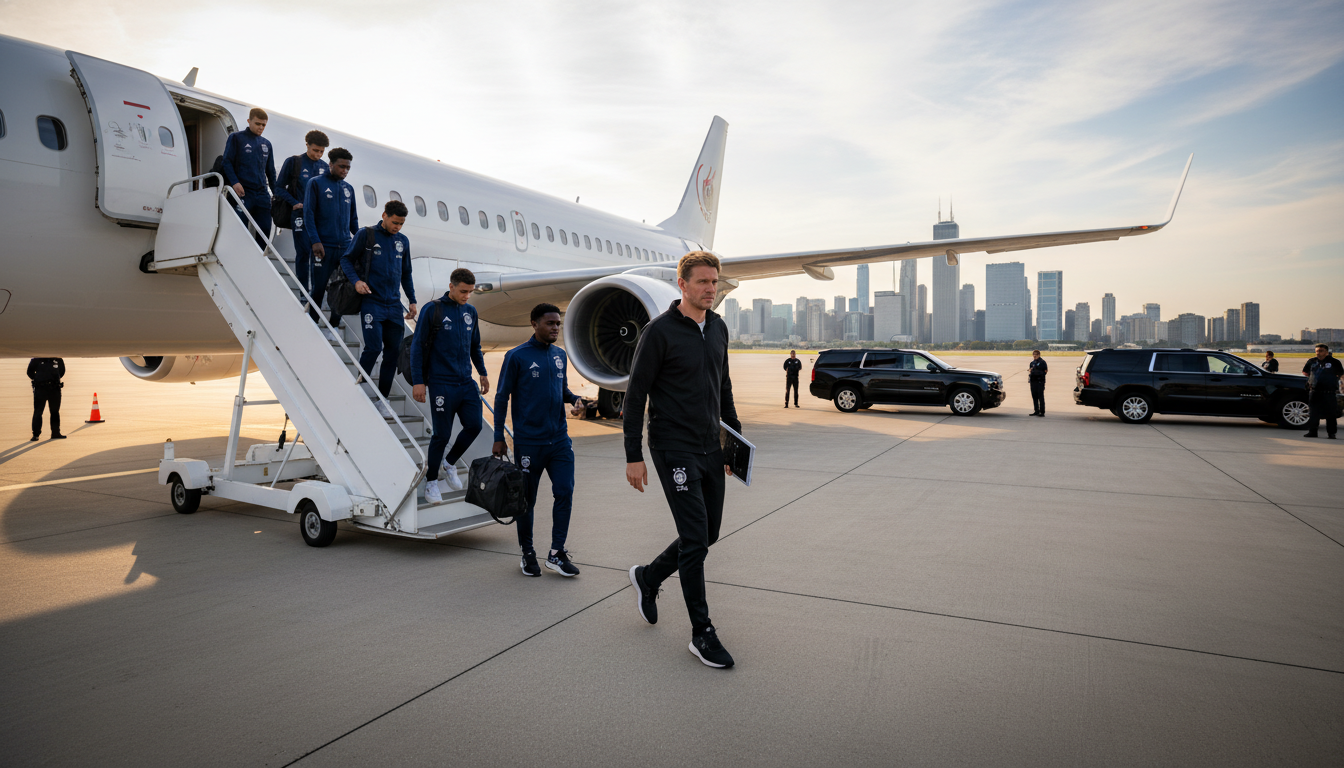
Germany arrive in Chicago on the eve of their last friendly before the 2026 World Cup, touching down ahead of Saturday’s match against the United States. The arrival marked the start of a brief but intensive preparation block that will include closed training sessions and a final tune-up at Soldier Field. The team’s presence in the city set the tone for a week of focused work under head coach Julian Nagelsmann.
Arrival at the Waldorf Astoria and fan moments
Germany’s delegation reached the Waldorf Astoria hotel late on Tuesday afternoon and were met by a small group of supporters. According to reports, the squad bus pulled up around 5:50 p.m. local time, and a handful of players stopped to sign autographs for fans gathered outside. Nico Schlotterbeck and Alexander Nübel were among those who took time to acknowledge supporters before the team moved inside to begin its preparations.
Security and staff maintained a low-key arrival, limiting the crowd to a respectful distance while allowing brief interactions. That approach reflected the federation’s intent to balance public access with a controlled environment ahead of the match. The understated reception contrasts with the larger spectacles expected during the World Cup, but provided a welcome moment for local fans and media.
Check-in delay underlines tournament logistics
Media coverage noted that it took roughly two-and-a-half hours from landing to the team’s hotel check-in, drawing attention to the scale of logistical planning required. Kicker reported the delay and highlighted that simplified entry procedures for teams do not eliminate operational complexities. Transportation coordination, equipment handling and security clearances are all factors that can extend processing times even on routine arrival days.
The delay is illustrative of broader organizational challenges host cities will face during the World Cup, when multiple teams, staff and media converge on venues simultaneously. Officials from federations and local organizers will be watching how these early movements unfold, seeing them as a rehearsal for the heavier demands of tournament logistics. For the German delegation, the priority remains maintaining player routines and minimising disruption ahead of training.
Nagelsmann’s closed-door sessions shape preparations
Head coach Julian Nagelsmann has opted for closed training sessions on Wednesday and Thursday, indicating a focus on tactical work and squad cohesion away from public view. Reports from team sources say these sessions will be tightly managed to control information flow and to protect setup patterns ahead of the competitive tournament. Closed-door work is common at this stage, as coaches finalize personnel and game plans without revealing strategic details to opponents.
The coaching staff’s approach suggests Nagelsmann wants to refine structure and set-piece routines while preserving an element of surprise. Such training blocks also help assimilate players returning from club commitments and allow the medical team to monitor fitness under controlled intensity. With the World Cup now in sight, the balance between exposure and secrecy becomes a deliberate part of the preparation.
Kai Havertz included after Champions League final
Arsenal midfielder Kai Havertz is part of the training group despite his involvement in the Champions League final just days earlier, underscoring the compressed calendar top players face. Club commitments mean some internationals arrive later in camp and require tailored training to reach match readiness. Nagelsmann’s decision to integrate Havertz quickly points to the player’s perceived importance in midfield roles and attacking transitions.
Managing match fitness for recently committed players is a central challenge for national teams during the summer window. The German coaching and medical teams will likely monitor workload closely, using controlled sessions to rehabilitate stamina and sharpness. Havertz’s participation, even in limited form, offers Nagelsmann additional options as he finalises his World Cup roster and tactical setup.
Squad composition and fitness watch
In addition to Havertz, the squad contains a mix of established internationals and younger players vying for tournament roles, with fitness checks a priority over the next few days. Players such as Nico Schlotterbeck and Alexander Nübel showed early engagement with fans, signalling morale within the camp. The staff will focus on individualised plans to ensure readiness, while also preserving energy for the friendly against the USMNT.
Goalkeeping and defensive configurations remain areas of emphasis during this brief preparation phase. The friendly provides an opportunity to test combinations under match conditions and to observe player responses to high-intensity moments. For those on the fringe of selection, the next fixtures and closed sessions are the final auditions before squad selections solidify.
Saturday’s friendly at Soldier Field and tactical objectives
Saturday’s match against the United States at Soldier Field will serve as Germany’s final warm-up before the World Cup and is expected to be a competitive test for both sides. Mauricio Pochettino’s USMNT has used friendlies to gauge tactical options and integrate talent ahead of major tournaments, making the game a useful measuring stick for Germany’s immediate readiness. The encounter offers a chance to trial formations, set-piece patterns and transitional play in a stadium likely to provide a lively atmosphere.
Nagelsmann may use the match to assess balance between possession control and direct attacking phases while giving varying minutes to his squad. The coaching staff will also be attentive to player recovery and substitution timing given the short turnaround to the tournament. Both teams have reasons to seek rhythm and confidence, so the fixture promises meaningful competitive minutes with clear preparatory value.
Context for World Cup hosting and local stakeholders
Chicago’s role as a World Cup host city adds significance to the presence of high-profile teams like Germany, and local organisers are using the friendly to test operational readiness. The movement of delegations, coordination with venue staff at Soldier Field, and engagement with local authorities are all part of a rehearsal that will scale up in 2026. The lessons learned during this period are valuable for smoothing venue operations and transport logistics when the World Cup begins.
Local fan engagement, hospitality networks and media operations are also under scrutiny as organisers refine procedures. The friendly doubles as a promotional opportunity for the tournament and a practical exercise for stakeholders. For the city, hosting international teams creates both sporting excitement and logistical demands that require careful management across agencies.
Final preparations will include tactical reviews, medical assessments and media obligations, all coordinated to protect player focus. The German squad’s short stay in Chicago is designed to maximise training quality while limiting non-essential activity. As the match approaches, staff will fine-tune selections and ensure athletes are physically and mentally primed for both the friendly and the tournament that follows.
Germany’s arrival in Chicago represents the closing chapter of their pre-World Cup build-up on U.S. soil, with a clear emphasis on preparation, controlled training and final evaluations before the tournament begins. The coming days will reveal how the squad balances secrecy and exposure, integrates players coming off club finals, and manages the operational realities of a major international event in a host city preparing for 2026.