Celta transfer window: Aspas renewal, Febas signing and a June 30 financial test
Celta transfer window update: Aspas extends, Aleix Febas arrives and club weighs multiple loan returns, departures and a must-do major sale before June 30.


Celta Vigo enters a decisive off-season phase after securing Iago Aspas for one final year and completing the free signing of midfielder Aleix Febas, but the club’s transfer window remains largely inactive as crucial squad and financial decisions loom. The Celta transfer window has been shaped so far by continuity at the top and one targeted addition, while a series of loan returns and contract exits will determine further moves. With a domestic deadline and the World Cup pause compressing activity, the next weeks will test directorate strategy and sporting planning.
Aspas commits to one final season and a technical role
The club formally extended Iago Aspas’s contract for one more season as a player and announced a subsequent two-year commitment to the sporting department after he retires. The decision preserves continuity on the pitch and secures the forward’s experience within the club’s technical structure, signalling a planned transition from locker-room leader to institutional figure. That dual arrangement is the most high-profile piece of early business in Celta’s summer planning and underlines the club’s preference for internal stability.
Aspas’s continued presence as a player carries immediate on-field benefits while his planned move into the secretariat promises longer-term institutional memory for recruitment and talent management. The club has presented the deal as part of a broader sporting project, intending to combine veteran leadership with a clearer pathway for technical staff. For supporters and staff alike, the signing functions both as a playing decision and an investment in club identity.
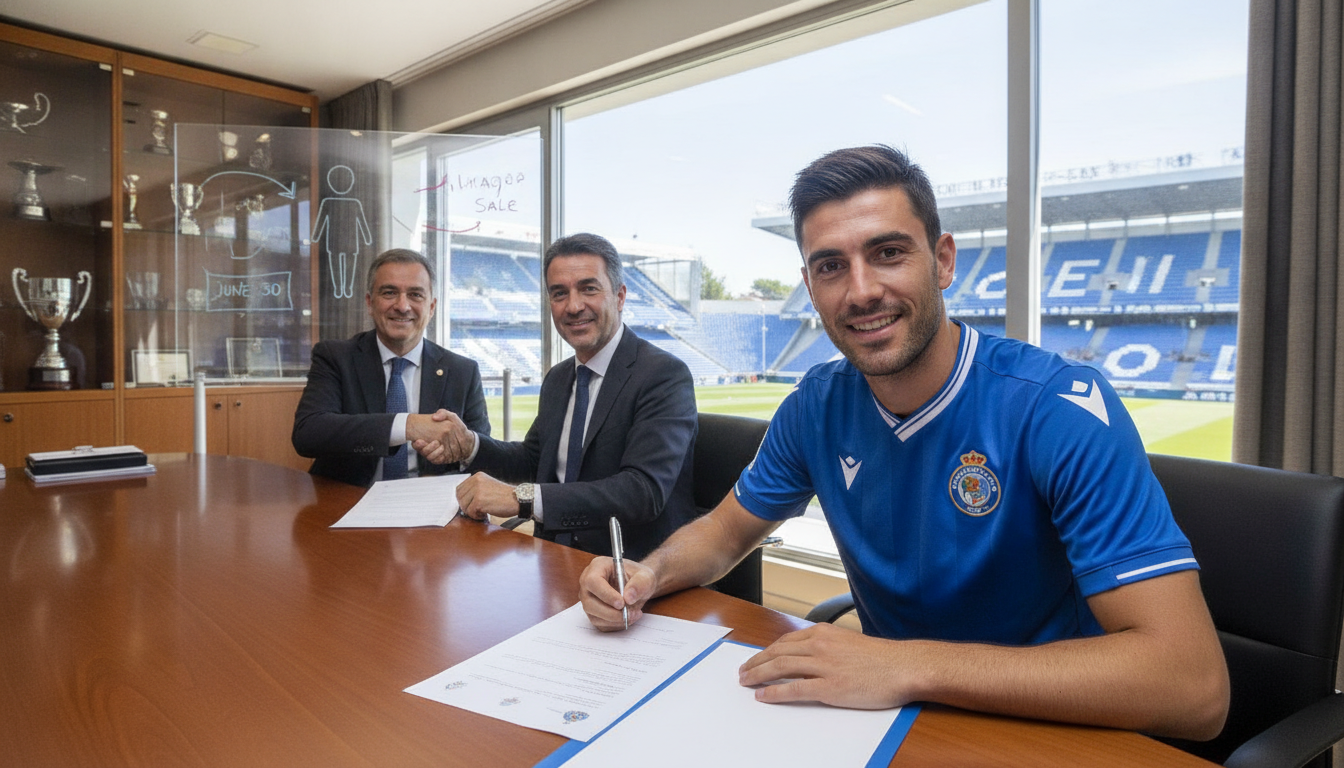
Aleix Febas completes first incoming transfer on a free
Celta’s second official move this window was the acquisition of Aleix Febas from Elche on a free transfer, with the midfielder signing a three-year contract. Febas arrives with LaLiga experience and versatile midfield attributes that the coaching staff expect to integrate into the squad rotation. The deal represents a pragmatic addition — low-cost, multi-year, and aimed at strengthening depth across the central midfield positions.
Club representatives framed Febas’s arrival as a measured reinforcement rather than a marquee investment, reflecting the club’s current financial posture. The signing also highlights Celta’s approach of blending youth and experience while avoiding speculative, high-fee transactions during an unusually elongated market. Febas will immediately join preseason planning and compete for minutes as the squad prepares for the new campaign.
Five loanees return and roster assessments intensify
One pressing area for the sporting department is the group of players returning from loan — namely Manu Sánchez, Dotor, Damián, Unai Núñez and Carles Pérez — whose futures must be decided ahead of preseason. Each returning player will be evaluated for fit, form and potential contribution under the coaching team, with opportunities for reintegration or moves away both plausible. Those assessments are central to determining whether Celta pursues further signings or focuses on trimming the squad.
Beyond performance, the club must weigh contractual situations, wage implications and market interest for each loanee. Some may be better served by another temporary move to gain minutes, while others could compete for spots depending on tactical plans. The direction taken with the returning quintet will shape squad balance and the club’s ability to invest in targeted positions.
Cervi, Aidoo and Ristić expected to move on
Celta has signalled a likely non-continuation for players such as Cervi, Joseph Aidoo and Ristić, moves that would free wages and open spaces in the roster ahead of the new season. The management has described those cases as part of a broader cull designed to reduce surplus numbers and improve competitive balance across the squad. Official confirmations have not been publicized for every departure, but the club’s statements indicate an intention to conclude those paths this summer.
Managing departures will require negotiation on contract terminations, transfers or mutual agreements, particularly where second-year wages and agent commitments complicate negotiations. The club will also consider loan alternatives if outright sales are infeasible within current market conditions. The outcome of these cases will be pivotal to the club’s capacity to pursue incoming targets and to present a streamlined group to the coaching staff.
Financial pressure: sell a player before June 30
One clear directive from the board is the need to complete a significant sale before June 30, a deadline tied to budgeting and regulatory calendars that will determine Celta’s summer flexibility. That requirement exerts immediate pressure on the sporting and commercial teams to identify marketable assets and execute a suitable transaction. Achieving that sale would release funds for reinforcements and reduce short-term fiscal risk, while failure to do so would constrain the club’s options.
The requirement to deliver a major transfer applies against the backdrop of a World Cup-influenced market slowdown, which has reduced buyer activity and complicated negotiations. Celta will therefore need to balance the urgency of meeting the June deadline with the realism of attracting an offer that satisfies valuation expectations. The next fortnight is likely to see intensified discussions with interested clubs and brokers as the club chases a deal that aligns sporting and financial objectives.
Sporting blueprint under Claudio Giráldez to raise competitiveness
Coaches and sporting directors have stated that the broader aim is to present Claudio Giráldez with a more competitive roster than the one used in the past season, prioritizing tactical balance and depth. The incoming and outgoing moves will be judged through that prism, with the emphasis on players who can deliver immediate impact and those with resale or developmental upside. Giráldez’s tactical demands and training evaluations will shape final decisions on whether to retain, loan or sell specific individuals.
Recruitment will therefore prioritize profiles that match the coach’s system while also remaining affordable and sustainable for the club’s financial model. Celta’s recruitment team appears poised to favor practical, position-specific additions and to use loan markets where possible to bridge short-term needs. The sporting blueprint also envisages integrating homegrown or academy talent where pathways exist, combining fiscal prudence with competitive ambition.
The club’s planning staff have stressed that negotiations and decisions will be paced by market realities and regulatory timelines, while also aiming to minimize mid-season disruption. Coordination between the technical secretariat, the first-team coaching staff and the board will be decisive in the coming weeks.
Celta’s summer will therefore be defined by a mixture of continuity, with Aspas’s renewed role, and consequential decisions on departures and finances that must be handled swiftly. The coming days are likely to produce clearer signals about the club’s ability to balance sporting ambition and fiscal responsibility as it prepares for the next campaign.