U.S. U-19 WNT and U-18 WNT Begin Joint Training Camps in Fayetteville
U.S. U-19 WNT and U-18 WNT gather 48 prospects in Fayetteville as coaches Carrie Kveton and Toni Pressley run development camps June 25 through July 3.

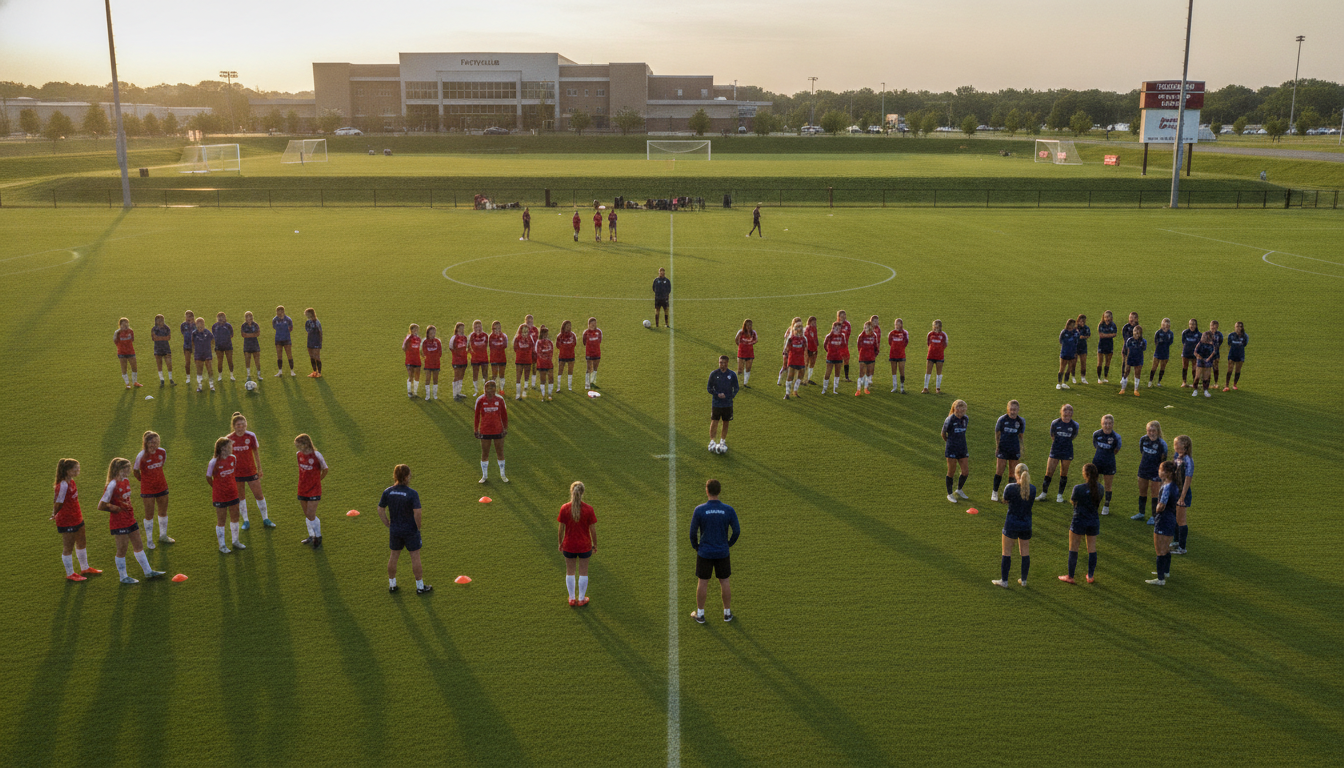
The U.S. U-19 WNT and U-18 WNT opened simultaneous domestic training camps at the Arthur M. Blank U.S. Soccer National Training Center in Fayetteville, Georgia on June 25.
Twenty four players born in 2007 were invited to the U-19 camp under head coach Carrie Kveton while head coach Toni Pressley assembled a 24 player U-18 group made up of athletes born in 2008.
Camp Schedule and Location
The joint camps will run through July 3 and will bring both age groups together at the national training center for an intensive nine day period.
Training will focus on technical work, tactical sessions and match simulations designed to accelerate player readiness for international competition.
Both staffs have emphasized that the camps are part of a broader development pathway rather than stand alone events.
Coaches will use the week to evaluate positional depth and to observe how players perform under increased training loads and in mixed sessions against their peers.
Eligibility and 2026 World Cup Context
All players in attendance remain age eligible to compete for the United States at the 2026 FIFA Women World Cup in Poland with the eligibility cutoff set for players born on or after January 1, 2006.
That eligibility window means the 48 players in Fayetteville are still part of the long term pool being monitored for senior tournament consideration.
U.S. Soccer officials framed the camps as both talent development and evaluation opportunities tied to the federation roadmap toward major tournaments.
The presence of college and youth club players together allows coaches to assess how emerging prospects translate youth international experience into college and high performance environments.
U-19 Roster Composition and Collegiate Presence
The U-19 WNT roster is composed entirely of collegiate players representing a broad cross section of Division I programs.
Three players from UCLA lead the list in terms of representation with two players each from Duke, Penn State, Georgia, Virginia and Wake Forest.
Goalkeepers on the U-19 roster include Daphne Nakfoor, Nyamma Nelson and Elizabeth Thornton while the defensive corps features Edra Bello, Bella Devey, Kiara Gilmore, Jordyn Hardeman, Maddy Herniter, Hannah Jordan, Daya King and Leena Powell.
The midfield and attacking contingent is anchored by Riley Cross, Noe Johnson, Mia Lopez, Kennedy Ring, Grace Shank and Paige Thompson with forwards Eres Freifeld, Carrie Helfrich, Ayva Jordan, Rylee McLanahan, Olivia Stafford, Mya Townes and Grace White rounding out the squad.
Coaches will be watching how the collegiate players adapt to the intensity of national team training cycles during the summer prior to resuming their college seasons.
The concentration of players from specific programs offers continuity in training ideas and tactical familiarity, while also giving Kveton a chance to test players in new roles.
U-18 Roster Mix and Club Level Representation
The U-18 WNT roster combines 11 college players with 13 youth club athletes, reflecting a developmental bridge between academy soccer and the collegiate game.
North Carolina places three players on the list while SMU contributes two, and Tophat SC from the Atlanta area is the only club represented by two players.
Among the defensive group are Brynna Burrus, Natalie Chudowsky, Izzy Dalke, Maya Engel, Cali ONeill, Olivia Robinson, Abigail Spalla, Vienna Whipple and London Young.
The midfield features Scottie Antonucci, Brooke Bunton, Riley Kennedy, Emerson Moore, Chloe Sadler and Anastasia Showler Little while the attack includes Kamiya Beck, Addison Feldman, McKenzie Godfrey, Lily Jeakle, Ellie Kocher and Emmy ODonnell.
The blended roster gives Pressley options to evaluate players who are already competing in college alongside youth talents who are still finishing high school or playing in elite development circuits.
This structure allows staff to compare technical development, tactical understanding and adaptability to national team coaching methods across different developmental environments.
U-17 World Cup Alumni and Continuity of Experience
A notable element of the two rosters is the number of players with prior FIFA U-17 Women World Cup experience, which provides a continuity of international exposure.
On the U-19 side four players have U-17 World Cup backgrounds and on the U-18 side seven players last year represented the United States at the 2025 U-17 World Cup.
Defenders Natalia Chudowsky, Cali ONeill and Olivia Robinson, midfielders Scottie Antonucci, Riley Kennedy and Anastasia Showler Little and forward Elayna Kocher are among those on the U-18 roster carrying recent youth World Cup experience.
Scottie Antonucci also has the added distinction of featuring at the 2024 U-17 World Cup which gives her repeated exposure to the demands of FIFA tournament play.
Coaches will pay close attention to how these alumni guide less experienced teammates in camp settings and whether their tournament experiences translate into leadership on the training field.
That competitive seasoning can be a differentiator when staff are deciding which young players can step up to higher age groups and eventually challenge for senior national team consideration.
Development Objectives and Positional Competition
Both coaching staffs have made development goals explicit as part of the camp agenda with an emphasis on positional clarity and tactical versatility.
Training sessions are expected to include specific drills for goalkeepers, defensive shape work, midfield transition patterns and finishing under pressure for forwards.
Kveton and Pressley will evaluate players in multiple roles to test adaptability while also creating intra camp scrimmages to simulate match conditions.
These positional battles are likely to shape future call ups as staff identify players who can fill multiple tactical needs for youth and senior level competitions.
The camp also serves as a data gathering exercise for the technical staff as they compile video, GPS tracking and performance metrics to support selection decisions.
Those metrics will be used alongside coaching observation to inform the developmental pathway for each player over the next 12 to 24 months.
Immediate Takeaways and Future Monitoring
The dual camps underscore U.S. Soccers continued investment in the youth pipeline as the federation prepares players for the demands of senior international tournaments.
For observers, the most tangible takeaway is the depth of talent spread across college programs and elite youth clubs, and the federations effort to integrate those streams.
Key names to monitor include collegiate standouts who have already shown consistency at high level programs and youth players with recent U-17 World Cup experience who are beginning to assert themselves at higher age groups.
How those players progress through the national team pathway over the next year will be closely watched by clubs, college coaches and national team staff alike.
As the camps conclude on July 3, U.S. Soccer will depart Fayetteville with a reinforced picture of the current youth talent pool and a set of players to follow as the federation moves toward the 2026 World Cup cycle.
The coaches will next decide which players receive further national team opportunities and which will return to their college or club environments to continue development.
The camps in Fayetteville represent a concentrated evaluation window for both the U-19 WNT and U-18 WNT and a meaningful step in the ongoing process of building depth for the senior national team.
Officials emphasized that while the week is important, it is one of many touchpoints in a long term program designed to prepare players for the physical and tactical demands of senior international competition.
The players invited to these sessions now carry the immediate challenge of translating camp impressions into consistent performances with their college teams or clubs, and the technical staffs will continue to monitor progress through scouting and additional training opportunities.
For fans and talent evaluators the week will offer a first look at the next wave of U.S. prospects and a clearer sense of positional trajectories as the federation prepares for future international competitions.