Deportivo, Racing and Málaga Reinforce LaLiga All-Time Table as Historic Clubs Return to Top Flight
Three promoted clubs—Deportivo, Racing and Málaga—boost the LaLiga all-time table, bringing traditional weight back into Spain’s top division and tightening historic standings.


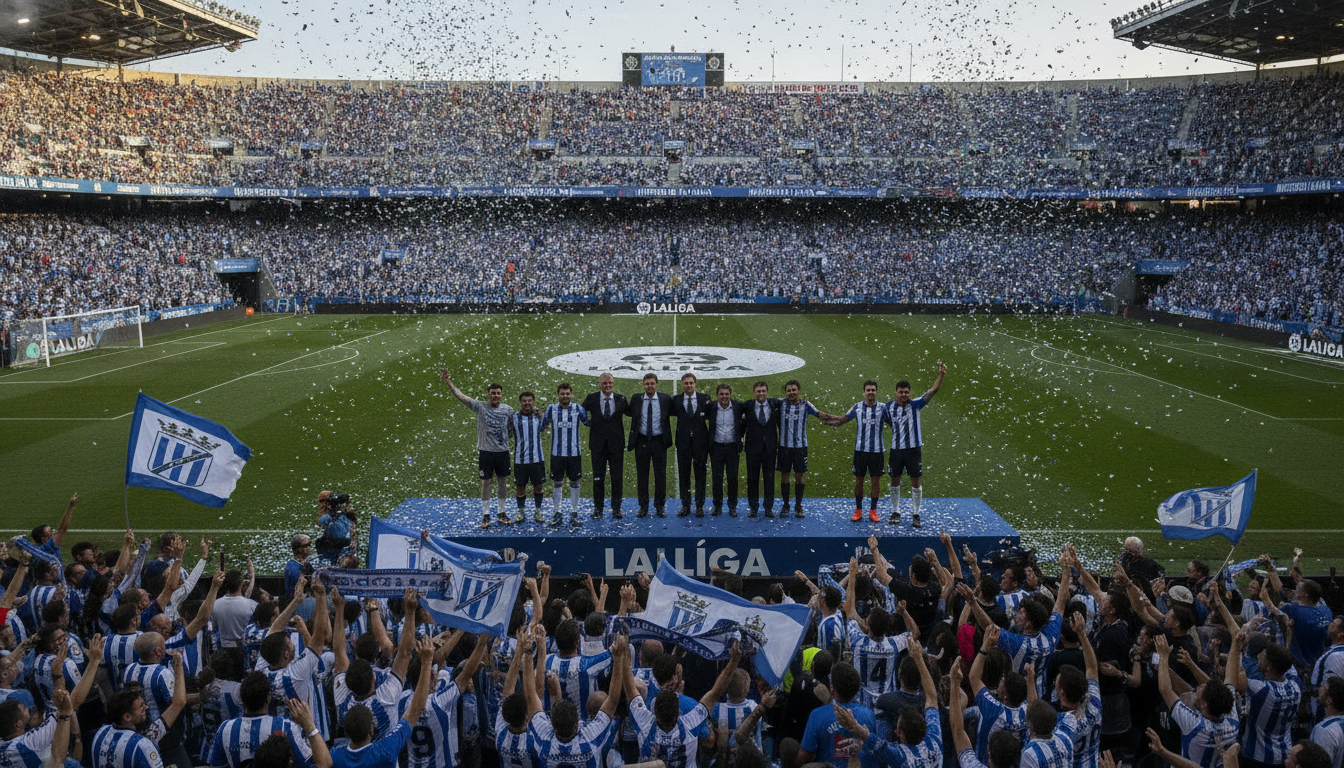
The return of Deportivo, Racing and Málaga to the top tier has shifted the LaLiga all-time table and reintroduced established clubs into the elite mix. The promotion of these three sides — Deportivo de La Coruña (12th historically), Racing de Santander (16th) and Málaga CF (24th) — is already being seen as one of the most consequential reshuffles in recent memory. Their arrival brings added experience, fan interest and historical heft to the next Primera campaign while altering long-term rankings that measure success across generations.
Historic Promotions Reshape LaLiga All-Time Table
The combined effect of the three promotions is measurable: together they account for 107 seasons spent in Spain’s top division. That aggregate reflects decades of top-flight participation, with clubs like Deportivo and Racing having deep roots in LaLiga’s history. Málaga’s presence adds further historical texture, given the club’s lineage that traces back through multiple iterations in Andalusian football.
Those decades add not just seasons but points and prestige to the all-time standings, where a handful of clubs have traditionally dominated the narrative. The returns emphasize that LaLiga’s composition remains fluid, and that promotion can rapidly alter perceptions of which clubs constitute the league’s traditional powers.
Three Clubs Restore Traditional Balance to Next Primera Season
With these promotions, 20 of the 27 clubs that hold the highest point totals in the LaLiga all-time table will be represented in the next top-flight campaign. That concentration of historical contenders promises a season where established rivalries and legacy narratives play out alongside contemporary competition. The near-complete presence of historically successful clubs underlines how promotion and relegation continue to restore older names to the national stage.
Notable absences from that top-27 group include Zaragoza (11th), Valladolid (14th), Mallorca (17th), Sporting Gijón (18th), Oviedo (19th), Las Palmas (20th) and Granada (23rd). Their absence helps explain why the recent promotions carry outsized weight: bringing back clubs that historically contributed to LaLiga’s identity revives fixtures and storylines that have been missing at the top level.
Real Madrid and Barcelona Tighten Their Historic Points Race
At the summit of the LaLiga all-time table, Real Madrid and Barcelona remain the dominant entries, but the gap has narrowed. The all-time points tally stands roughly at 5,129 for Real Madrid and 5,031 for Barcelona, a margin that highlights how recent decades of competition have seen the two giants trade ground. That closer margin fuels a longstanding rivalry that is not limited to single seasons but extends across the league’s entire history.
Behind the duopoly, Atlético Madrid sits comfortably in third with about 4,122 points, while Valencia and Athletic Club share fourth place with roughly 3,850 points each. Those clustered totals indicate a competitive group chasing the leaders and underscore how historical accumulation of points maps onto eras of dominance, investment and sustained success.
Midtable Veterans and Modern Ascendants Alter Rankings
Beyond the traditional top five, clubs such as Sevilla, Espanyol and Real Sociedad occupy the next tier of the all-time standings, with Sevilla around 3,327 points and Espanyol and Real Sociedad close behind with approximately 3,086 and 3,075 points respectively. These totals reflect both long-term presence in LaLiga and periods of fluctuating form that have alternately lifted and lowered their historical trajectories.
Further down the list, Betis and Celta de Vigo each have recorded roughly 60 seasons in the top flight, but Betis leads the two in points (about 2,399 to Celta’s 2,208). Such contrasts illustrate how identical longevity can yield different historical legacies when measured by points and relative success across eras.
Villarreal and Getafe Exemplify Rapid Modern Growth
A striking example of rapid ascent within the LaLiga all-time table is Villarreal, which made its top-flight debut in 1998 and has, since then, accumulated roughly 1,511 points to reach around 15th in the historical standings. The club’s rise under sustained backing and progressive sporting strategy serves as a template for how newer entrants can convert recent decades of investment into historical standing.
Getafe offers another modern case study: after its first promotion to Primera in 2004, the club has spent 21 of the last 22 seasons in the top division, entrenching itself as a 21st-century regular. By contrast, clubs that debuted much earlier—Levante (1963), Alavés (1930) and Málaga CF (2000 in its current guise)—display a wider spectrum of historical timing and continuity.
Zaragoza’s Standing and the Stability of the Top 10
Real Zaragoza remains a notable benchmark in the all-time table despite its current absence from the top flight, holding the 11th position with roughly 58 seasons and around 2,109 points. The club’s sliding fortunes since its 2013 relegation have not erased its accumulated status, and it retains a healthy cushion over pursuers in the historical rankings. That durability points to how historical placement can persist even while competitive circumstances fluctuate.
The LaLiga top ten has shown relative stability in recent years, with the most significant reshuffles coming through the promotion and relegation cycles that affect the middle and lower portions of the all-time list. This stability makes the recent returns of Deportivo, Racing and Málaga more impactful, because they modify a long-standing equilibrium rather than merely swapping marginal occupants.
Implications for Competition, Fans and Broadcast Appeal
The reintegration of these historic clubs has implications beyond record-keeping: fan engagement, regional broadcasting markets and commercial appeal all stand to benefit from more familiar, storied names in the top division. Matches against traditional teams bring established rivalries back to the calendar and often command larger attendances and broader media interest. Those effects can change not only the narrative arc of a given season but also revenue dynamics and sponsorship conversations.
Sporting directors and analysts will watch how these clubs convert historical pedigree into present competitiveness, particularly as the demands of modern LaLiga—squad depth, financial management and tactical innovation—remain high. For clubs like Deportivo and Málaga, returning to Primera is a restoration of status, but long-term consolidation will require planning and investment aligned with current top-flight standards.
LaLiga’s all-time table is a living record, shaped by decades of promotion, relegation and shifting fortunes, and this latest set of promotions has reinforced the league’s historical texture while tightening the margins at the top.