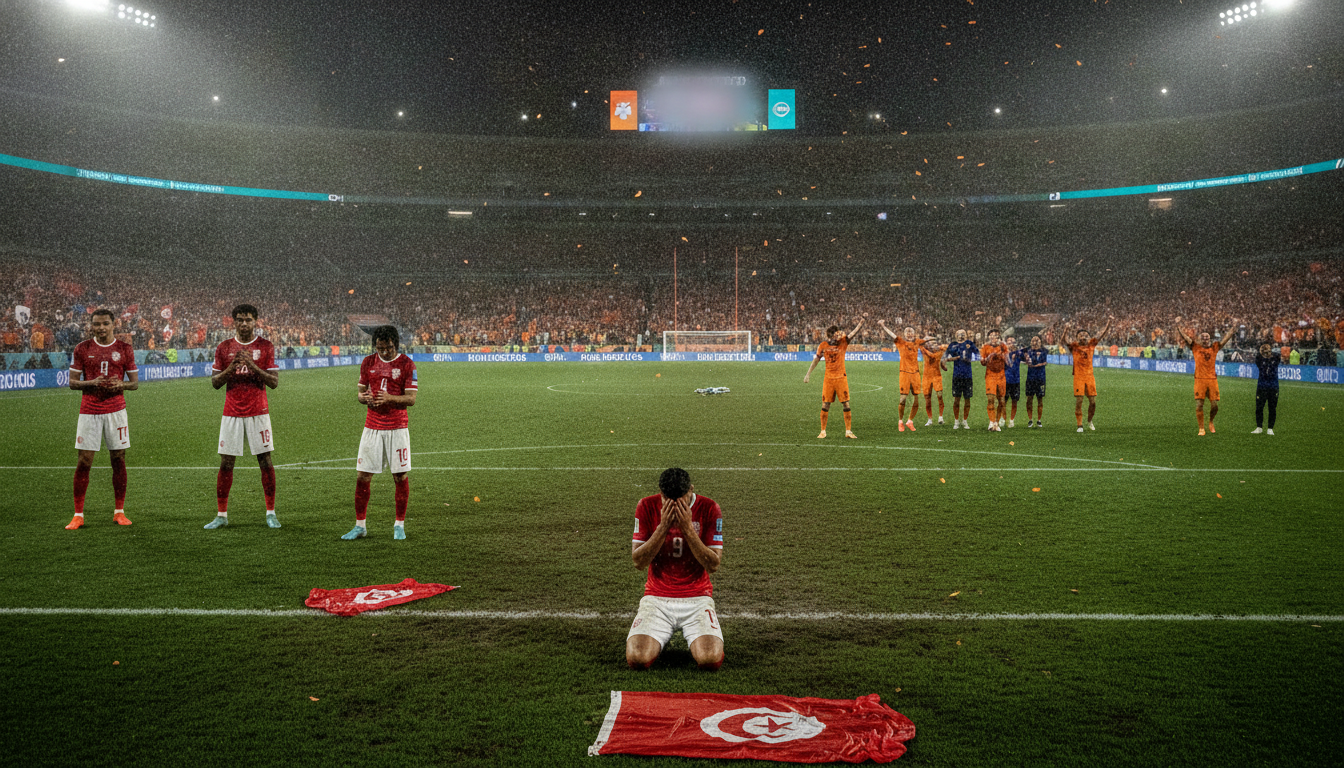
Tunisia World Cup 2026: Netherlands clinch 3-1 win as Carthage Eagles exit in Kansas City
Tunisia World Cup 2026 campaign ended in Kansas City as the Netherlands defeated the Carthage Eagles 3-1, securing Dutch progression while Tunisia left the group stage without a point.


Match at a glance — Netherlands advance, Tunisia eliminated
Tunisia opened the match brightly but were undone by an early own goal that put the Netherlands ahead within minutes. Brian Brobbey then extended the lead with a close-range finish from a set-piece knockdown, leaving Tunisia under immediate pressure.
Despite notable saves from goalkeeper Aymen Dahmen, the North Africans could not overturn the deficit and ultimately fell 3-1, sealing their elimination from World Cup 2026 group play. The Dutch victory confirmed their place in the knockout rounds and ended Tunisia’s tournament without a point.
Early turning point: Skhiri own goal changes momentum
Tunisia produced the first attacking stir in the opening stages, a fast break down the left creating an early opportunity for Ismaël Gharbi. The encouraging start was short-lived when Ellyes Skhiri diverted the ball into his own net, handing the Netherlands an unexpected lead.
The own goal shifted momentum decisively, forcing the Tunisian game plan to become more reactive as the visitors began to dictate play. That early setback proved costly, as it unsettled Tunisia’s shape and opened the door for further Dutch pressure.
Brobbey capitalises from set-piece fall and Dutch press intensifies
Only minutes after the own goal, the Netherlands doubled their advantage when Brian Brobbey powered home from close range. The second goal came from a set-piece sequence in which Virgil van Dijk’s headed flick created the opportunity for Brobbey to convert.
The quick double left Tunisia chasing the match and reduced the margin for error in the remaining minutes of the first half. From that point on, the Dutch were able to manage phases of possession and probe Tunisia’s back line for further openings.
Dahmen keeps Tunisia competitive with a string of saves
Tunisia’s goalkeeper Aymen Dahmen produced a series of important stops as the first half progressed, denying high-quality chances from Cody Gakpo and Denzel Dumfries. His interventions prevented the scoreline from becoming more punitive before the break.
Those saves offered Tunisia a lifeline and kept their supporters hopeful that a comeback was possible after the interval. Dahmen’s performance underlined the goalkeeping resources Tunisia can rely on even when the team is under sustained pressure.
Mastouri header sparks brief resurgence after the interval
The second half began with renewed urgency from Tunisia, and they were rewarded in the 54th minute when Hazem Mastouri rose to meet a Hannibal Mejbri corner with a powerful header. That finish produced Tunisia’s first goal of the tournament and briefly re-energised the travelling fans.
The strike forced the Netherlands to re-engage defensively and raised questions about whether Tunisia could stage a fuller recovery. For a short spell the match felt open again, with Tunisia pressing to exploit the momentum created by the goal.
Van Hecke header restores Dutch two-goal cushion and settles the contest
The Dutch response was decisive. In the 62nd minute Jan Paul van Hecke met a Tijjani Reijnders corner and directed a thunderous header past Dahmen to re-establish a two-goal margin. The goal effectively quelled Tunisia’s momentum and shifted control back to the Netherlands.
Following the third goal, the Dutch managed tempo and created further chances while Tunisia continued to probe for openings. Dahmen remained active, producing additional saves to deny attempts from Virgil van Dijk and Noa Lang late in the match.
Implications for Tunisia and immediate outlook
The defeat leaves Tunisia with three defeats from three group matches and no points, concluding their World Cup 2026 group stage in disappointing fashion. The Carthage Eagles will now turn their focus to post-tournament analysis and rebuilding ahead of upcoming international fixtures.
Coaching staff and federation officials are likely to examine defensive lapses on set pieces and the psychological impact of early setbacks, while also recognising individual positives such as Dahmen’s shot-stopping. Tunisia’s supporters will expect a clear plan to enhance defensive coordination and attacking consistency moving forward.
Dutch advancement and group-stage consequences
For the Netherlands, the victory secures progression to the knockout rounds and provides momentum as they prepare for the next phase of the tournament. The Dutch display of set-piece effectiveness and clinical finishing underlined the strengths that can be decisive in the knockout stages.
Group F’s final standings will reflect the Netherlands’ progress and Tunisia’s early exit, shaping opponents and preparations for the matches to come. The Dutch now shift focus to recovery and tactical adjustments for their next opponent in the elimination rounds.
Tunisia depart the tournament having shown moments of promise but ultimately undone by critical errors and an inability to sustain attacking pressure for long enough to change outcomes. The team will head into the international calendar looking to consolidate lessons learned and rebuild confidence.