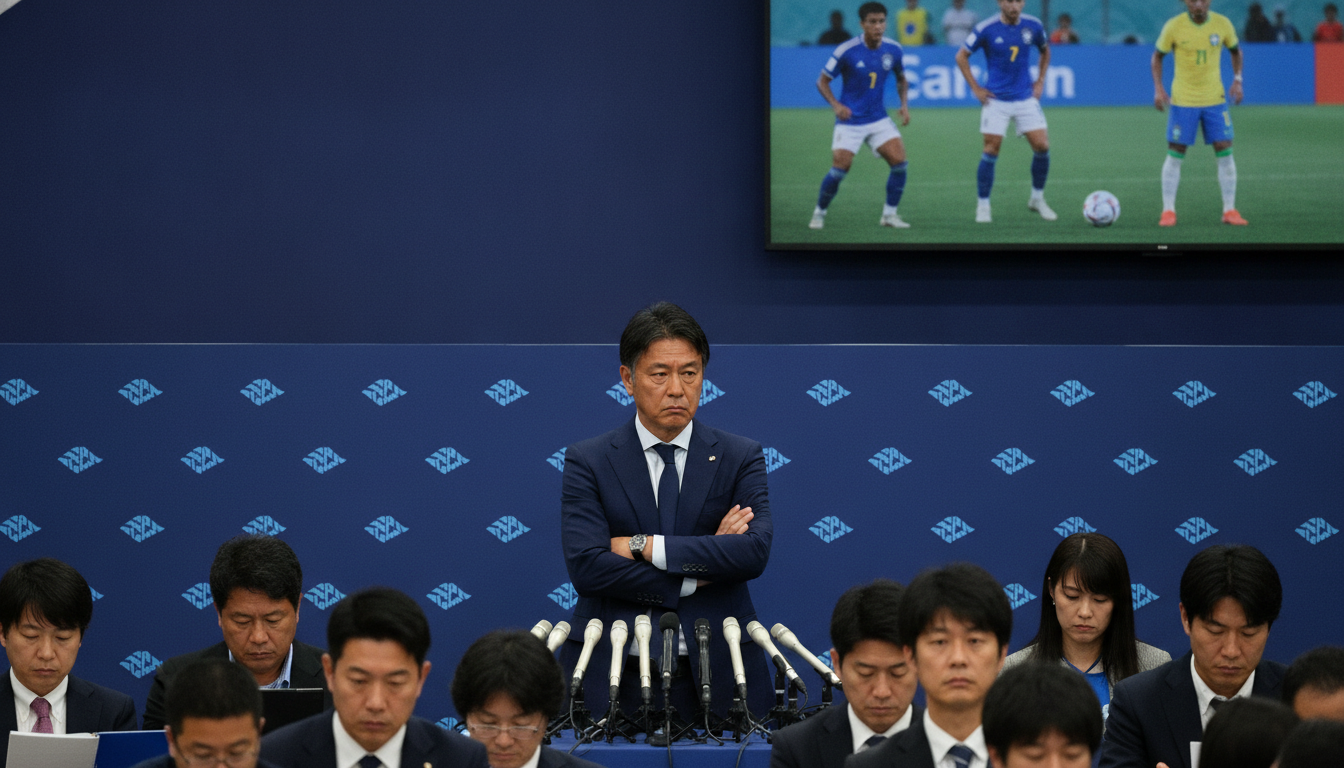
Japan vs Brazil: Moriyasu says Japan will not be a pushover ahead of World Cup last-32 in Houston
Japan vs Brazil: Hajime Moriyasu warns Japan will not be a pushover when they face five-time champions Brazil in the World Cup last-32 in Houston on June 29.

Strong warning from Moriyasu ahead of Japan vs Brazil
Japan head coach Hajime Moriyasu insisted his side will be more than a contesting opponent as they prepare to meet Brazil in the World Cup last-32 in Houston on Monday, June 29, 2026.
The remark followed Japan’s qualification as runners-up in Group F and grew from a recent, notable victory over Brazil in Tokyo last October that Moriyasu said proved his team’s progress.
“Last time we proved to Brazil that we aren’t a pushover,” Moriyasu said, underlining Japan’s belief going into a one-off knockout tie against a five-times world champion.
The coach balanced respect for Brazil’s quality with a clear message that Japan will aim to win, not simply defend honorably.
Group F finale and the draw with Sweden in Dallas
Japan secured second place in Group F after a 1-1 draw with Sweden in Dallas on Thursday, June 25, 2026.
Daizen Maeda put Japan ahead but the lead was erased within minutes, a pattern that left the manager disappointed to concede yet satisfied with the overall group outcome.
The draw ensured Japan finished behind the Netherlands and avoided a further slip in the standings that might have altered their knockout path.
Moriyasu emphasised the importance of gaining the point that confirmed their place in the last 32 and the opportunity to meet Brazil on U.S. soil.
Tactical choices: protecting a place in the knockouts
After Sweden levelled, Moriyasu opted to bring defensive players on to preserve the draw and secure second spot in the group.
That decision reflected a pragmatic approach: calculate the risks, protect qualification, and use the remaining time in the tournament to prepare tactically for Brazil.
Japan’s midfield balance and willingness to shut down transitions will be central to how they attempt to neutralise Brazil’s attacking threats.
Those substitutions also signalled a broader tournament plan to pivot between proactive and reactive setups depending on the opponent and match situation.
Tokyo victory provides confidence but not complacency
Japan’s 3-2 comeback win over Brazil in Tokyo last October remains a landmark result for the national side and a psychological benchmark ahead of the Houston meeting.
Moriyasu cited that victory as evidence Japan can compete at the highest level, but he was careful to frame it as a single reference point rather than a promise of repeat success.
Brazil enter the tie with a deep squad, world-class attackers and an established pedigree at the World Cup, which commands respect regardless of past head-to-head results.
Japan’s coaching staff will therefore aim to convert confidence from Tokyo into a clear, repeatable game plan tailored to the specific demands of a knockout match.
Match particulars: Houston venue, timing and stakes
The last-32 tie between Japan and Brazil is scheduled for Monday, June 29, 2026, at a Houston venue that will present familiar American heat and a demanding pitch schedule.
Single-elimination knockout football introduces distinct tactical pressures: mistakes are magnified and moments of quality can determine advancement or elimination.
For Japan, the stakes extend beyond national pride; a positive result would mark a major statement of progress for a team that has steadily climbed world rankings and tournament expectations.
For Brazil, defeat would be a shock given their five World Cup titles, but knockout football has frequently overturned reputations when preparation and form diverge.
Key players and matchups to watch
Daizen Maeda’s goal against Sweden underscored his ability to affect the scoreboard and will put him in the conversation as a key attacking outlet for Japan in Houston.
Japan’s defence, often organised and disciplined under Moriyasu, will be tested by Brazil’s pace, individual skill and creative midfield movements.
Set-piece organisation, transitional defending and the management of physical duels will be decisive in a match where marginal gains often decide outcomes.
Both teams also face the tactical puzzle of managing substitutions: a late attacking change or a conservative defensive switch could swing a tightly contested knockout tie.
Psychological and tournament context for both squads
Japan arrive in the last 32 with confidence from a prestigious win against Brazil and the relief of achieving their objective in Group F.
Moriyasu’s public message aims to instil belief while avoiding overconfidence, and the coaching staff will likely focus on match-specific drills and scenario planning.
Brazil’s mentality, built on a history of success and a squad accustomed to pressure, will push Japan to maintain intensity for the full 90 minutes and beyond if necessary.
Knockout games also present emotional variables—crowd influence, travel fatigue and the weight of expectation—that both camps must manage ahead of kickoff.
What a Japan win or Brazil win would mean for the tournament
A Japan victory over Brazil would represent a major upset with significant implications: it would eliminate a traditional powerhouse and amplify Japan’s status as a genuine contender.
That result would also reshape the tournament bracket, altering the pathway for other contenders and creating new narratives about emerging national teams.
Conversely, a Brazil win would reaffirm the favourites’ depth and pedigree while handing Japan lessons to carry forward for future competitions.
Either outcome is likely to generate debate about tactical approaches, player performances and the margins that determine success at World Cups.
Japan heads into the match with pragmatic optimism, grounded in a notable past victory and recent group-stage resilience, while Brazil will bring pedigree and attacking menace.
The encounter in Houston on June 29 will be decided by how well Japan converts belief into a structured game plan and how Brazil copes with an opponent determined to upset the form book.
As both teams prepare, the strategic adjustments, player matchups and management of knockout-game emotions will define who advances from this high-profile last-32 showdown.