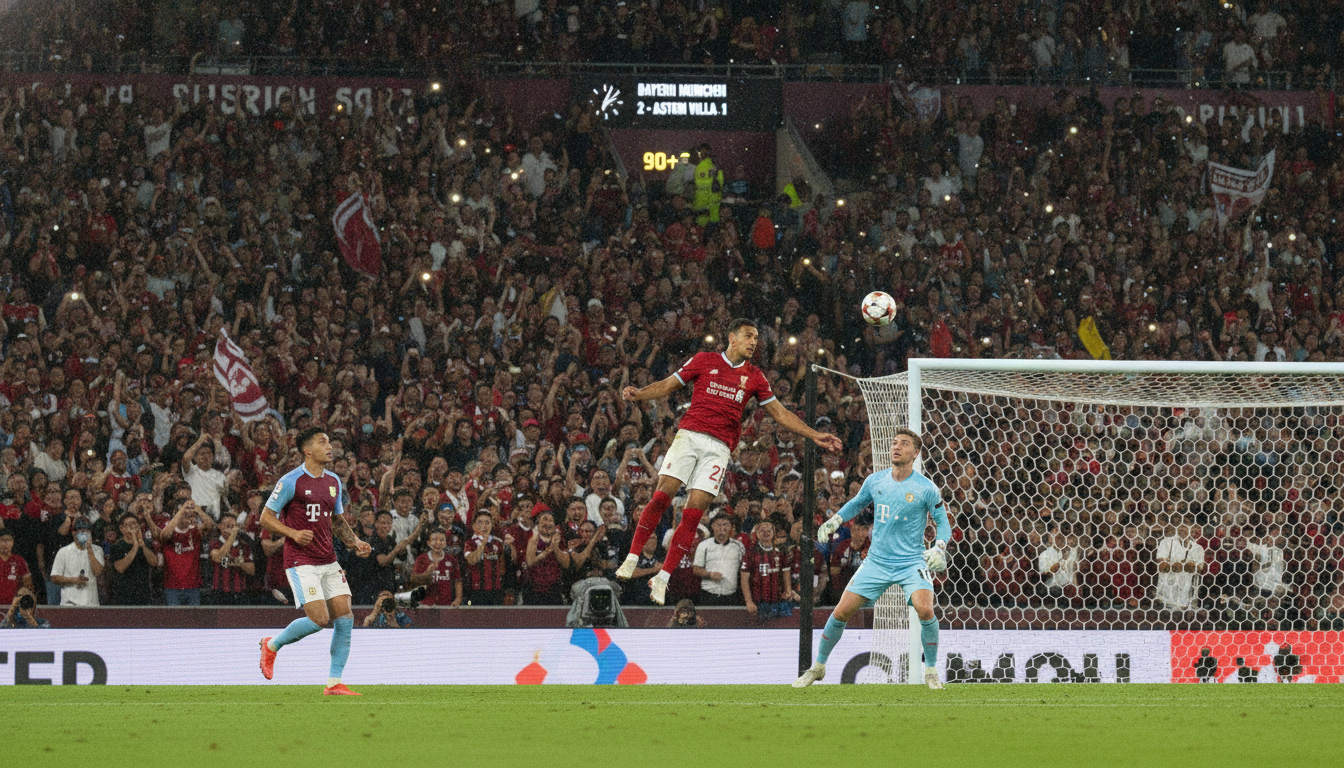
Aston Villa fall 2-1 to Bayern Munich in final Asian tour match at Kai Tak Stadium
Aston Villa were beaten 2-1 by Bayern Munich at Kai Tak Stadium in their final Asian tour match, as Luis Díaz scored and Unai Emery assessed squad balance and financial constraints.


Aston Villa’s Asian tour ended with a 2-1 defeat to Bayern Munich at Hong Kong’s Kai Tak Stadium, with Luis Díaz entering as a second-half substitute to make the decisive impact.
The result brought an end to Villa’s short preseason run of form after two earlier victories, and provided a tougher measure of the squad against top‑level opposition.
Manager Unai Emery kept a measured tone after the game, emphasising preparation and perspective as his side head back to pre‑season work.
Díaz decisive off the bench for Bayern
Bayern Munich overturned the contest in the second half thanks to the winger’s introduction, with Díaz supplying the goal that ultimately settled the match.
The substitute’s contribution underlined Bayern’s depth and the difference that game-changing players can make late in preparation fixtures.
For Villa, the result was a reminder of the gap they face when matched against elite European squads, even when taking positives from the game’s competitive moments.
Surface at Kai Tak complicated preparations
Players and coaches from both teams flagged the Kai Tak surface as a complicating factor in the match, with Bayern coach Vincent Kompany describing the pitch as “challenging.”
The playing surface influenced tempo, passing patterns and the willingness of both sides to play through the lines in the early exchanges.
Such conditions matter in a brief tour where coaching staffs try to trial systems and build match sharpness, and both sets of players had to adapt on the fly.
Emery frames defeat within long‑term aims
Unai Emery played down any immediate alarm from the loss, stressing that a single friendly — even against elite opposition — does not define the season.
He remains focused on reproducing the successes of last season, when Villa ended a long trophy drought by winning the Europa League and returned to the Champions League.
Emery’s task, he acknowledged, is balancing short‑term fitness and longer‑term squad architecture as the club prepares for more demanding competitive fixtures.
Midfield departures expose financial balancing act
Off the field, Aston Villa’s summer has been shaped by financial regulations that forced the club to sell key midfield figures, with Morgan Rogers and Youri Tielemans among those moved to comply with UEFA and Premier League rules.
Those departures underline the tightrope Villa must walk as they seek to remain competitive in Europe while meeting governance requirements.
The club’s ownership retains significant resources, with co‑owners Nassef Sawiris and Wes Edens widely reported as having large combined wealth, but regulatory limits have still steered transfer activity.
Possible defensive exit would deepen summer review
There are lingering questions over further potential departures, with reports linking the club’s young England defender to interest from other Premier League sides.
Should that sale materialise, Emery and his recruitment team will face additional choices about how to replace personnel and retain balance across the squad.
Preseason tours often double as extended auditions for players on the fringes, and decisions made now will ripple into league preparations and Champions League planning.
Kompany acknowledges sympathetic perspective on spending
Bayern’s coach offered a sympathetic take on Villa’s regulations‑driven activity, noting that financial constraints are an issue managers can understand from experience.
He suggested that running a club within tight budgetary frameworks shapes recruitment approaches and the tactical options available to a coaching staff.
Those comments gave context to the discussions around Villa’s summer transactions and the broader environment managers face in elite football.
Tactical takeaways and next steps for Villa
On the pitch, Villa showed glimpses of the pressing structure and build‑up play Emery has emphasised, but also revealed areas — notably in defensive transitions and midfield continuity — where the departures are already noticeable.
Preseason fixtures are inherently experimental, with rotating lineups and fitness work priority, yet matches of this calibre expose the specific demands the squad must meet.
In returning from Asia, Villa’s coaching staff will likely prioritise integrating new arrivals, clarifying roles in midfield, and fine‑tuning defensive cohesion before competitive fixtures commence.
Villa’s preseason defeat to Bayern provides both a benchmark and a checklist: it confirms the club’s progress onto a larger stage while reminding decision‑makers of the structural and personnel adjustments still required.
The final weeks before the domestic season will be crucial for Emery to balance tactical clarity with the inevitable commercial and regulatory realities that influence squad construction.
Supporters will expect competitive progress, and the club’s leadership face the twin task of satisfying those expectations while navigating the financial framework that governs modern football.
The tour’s blend of elite opposition, challenging conditions and transfer pressures has given Villa clear themes to address as they prepare for a demanding campaign ahead.