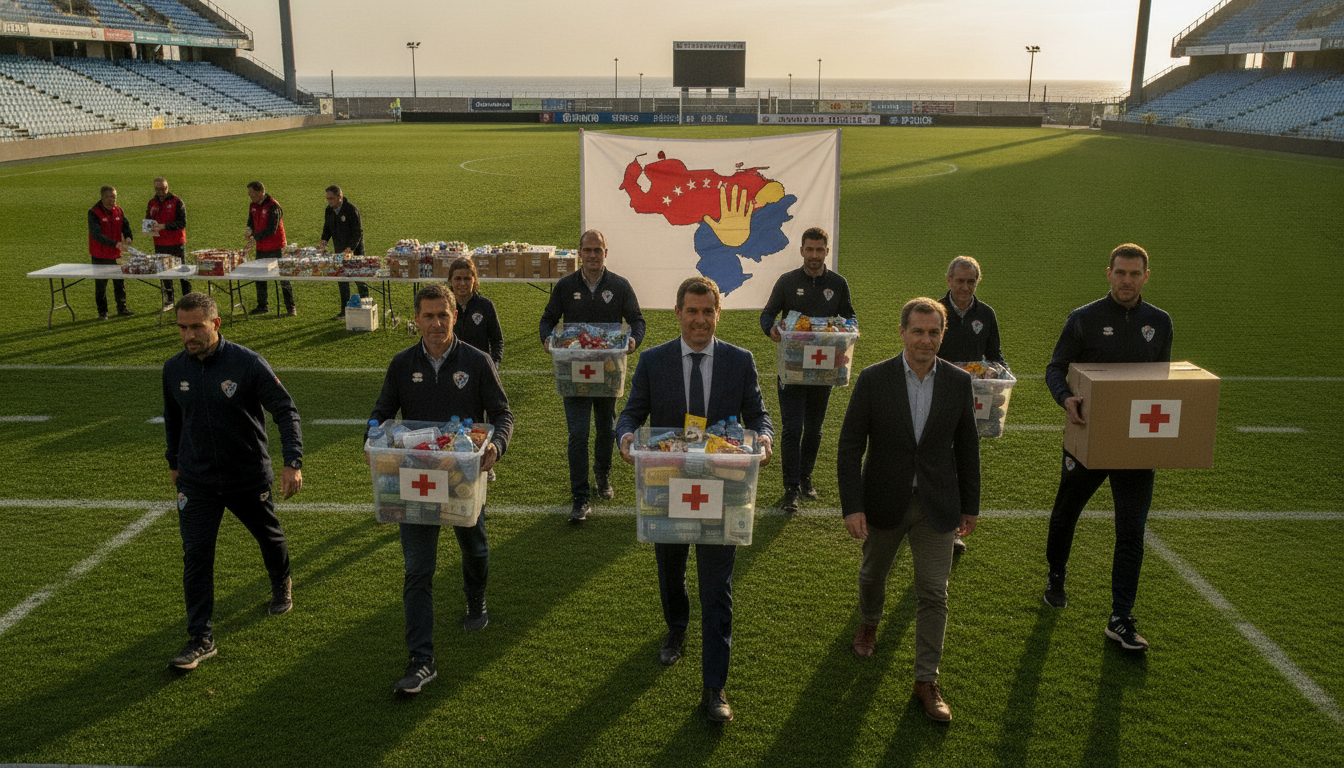
RC Deportivo launches humanitarian collection for Venezuela at Riazor
RC Deportivo humanitarian collection for Venezuela opens at Estadio ABANCA-RIAZOR this weekend; donations of clothing, medication, diapers and non-perishable food accepted. (150 characters)


RC Deportivo Fundación has initiated a humanitarian collection for Venezuela at Estadio ABANCA-RIAZOR, inviting fans and local residents to donate essential supplies. The RC Deportivo humanitarian collection for Venezuela begins Saturday, June 27, 2026, with set drop-off hours and an organized delivery plan overseen in partnership with the Hermandad Gallega. The campaign aims to send clothing, medical supplies, diapers and non-perishable food to communities in Venezuela based on needs communicated by authorities on the ground.
RC Deportivo Fundación and Hermandad Gallega coordinate relief effort
The RC Deportivo Fundación announced the drive in collaboration with the Hermandad Gallega, which will coordinate the shipment and distribution of collected items. The Hermandad Gallega will prioritize resources according to assessments provided by local contacts and authorities in Venezuela. This partnership combines the club’s local outreach capacity with the Hermandad’s experience in international humanitarian logistics.
The foundation framed the initiative as a targeted relief response rather than an open-ended collection, emphasizing that donations will be routed to areas identified as having the greatest need. Organizers said they will verify and consolidate contributions at Riazor before arranging transport. The stated objective is to ensure that materials reach recipients quickly and in usable condition.
Collection schedule and drop-off details
Donations will be accepted at Estadio ABANCA-RIAZOR on Saturday, June 27, 2026, from 10:00 to 18:00 and on Sunday, June 28, 2026, from 10:00 to 15:00. If demand exceeds capacity, the collection will continue on Monday, June 29, 2026, from 09:00 to 14:00, organizers added. The schedule is intended to accommodate matchday traffic, local volunteers and community contributors.
The designated drop-off point is the Pabellón gate adjacent to the Déportienda, with vehicles exiting via the ticket gate at the Palacio de los Deportes. Staff and volunteers will be on site to receive, sort and register donations, and signage will indicate where items should be placed for inspection and packing. Contributors are asked to follow directions at arrival to maintain flow and safety.
Inventory priorities: clothing, medicines, diapers and food
The Hermandad Gallega identified the campaign’s priority items as clothing in good condition—especially children’s garments—medicines and basic first-aid supplies, diapers for infants and adults, and non-perishable food. First-aid items specified include gloves, ibuprofen, gauze, adhesive bandages and antiseptic solutions. Organizers stressed that donated medications should be unopened and within expiration dates.
Donors are asked to focus on usable, clean clothing rather than items needing extensive repair, and to avoid sending damaged or heavily soiled textiles. For food, preferred contributions are canned goods, pasta, rice, and other shelf-stable items that do not require refrigeration. Clear labeling of contents and expiration dates will facilitate faster processing and reduce the risk of rejected shipments.
Packaging, safety and acceptance guidelines
To expedite handling and shipment, contributors are encouraged to pack donations in sturdy boxes or sealed bags and to label contents clearly. Medicines should remain in original packaging when possible, with expiration dates visible and no partial or repackaged doses. Organizers have requested that liquids and other fragile goods be wrapped and cushioned to prevent damage in transit.
Donations that pose safety or customs issues, such as controlled substances, perishable items requiring refrigeration, or damaged goods, will not be accepted. Volunteers at the reception area will inspect donations and provide guidance on acceptable items. The foundation asked donors to check labels and to avoid sending loose or unmarked medications.
Logistics, transport and delivery commitments
Collected supplies will be consolidated at Riazor and prepared for shipment in coordination with the Hermandad Gallega, which will handle customs, freight and on-the-ground coordination in Venezuela. The organizations said shipments will be organized according to urgency and the priority lists provided by local partners. Efficient routing and packing are intended to reduce transit time and maximize the volume that can be delivered.
Organizers noted that international transport and customs clearance require documentation and time, so they urged donors to contribute promptly to allow for proper processing. Details on shipping timelines and receiving points in Venezuela will be provided as shipments are finalized and as local partners confirm delivery arrangements. The aim is to match donor contributions with verified needs.
Community appeal and mobilization of fans
RC Deportivo Fundación called on the club’s supporters and the broader community to take part, stressing that even small contributions will have practical impact. The campaign is positioned as a civic effort that leverages the stadium as a community hub, enabling fans to translate local solidarity into tangible assistance. Club staff and volunteers will wear identifying credentials to help donors and to coordinate the collection.
Local groups, neighborhood associations and supporters’ clubs are being invited to mobilize collection points and transport donations to Riazor during the specified hours. The foundation emphasized that a coordinated community response will improve efficiency and ensure that items arrive in a condition suitable for immediate use. Organizers encouraged businesses and institutions to consider group donations or corporate drives.
Accountability and how needs are being assessed
Both organizations said they will follow the guidance of authorities and established contacts in Venezuela to define which materials are prioritized for shipment. The Hermandad Gallega’s coordination role will include needs assessment, documentation of shipments and confirmation of receipt where possible. Organizers committed to transparency in how contributions are allocated, while noting that logistical constraints and customs procedures can affect timing.
The campaign will maintain records of donated goods and will attempt to provide updates on shipments and deliveries as information becomes available from receiving partners. Donors seeking confirmation about where a particular consignment is destined or when it will arrive are advised to contact the foundation’s designated communication channels after the collection period ends.
Donations made to address humanitarian needs often require sorting and verification before transport, and these preparatory steps are part of the organizers’ plan to ensure aid reaches intended recipients without delay.
Small contributions, packaged responsibly, can be consolidated into larger, more impactful consignments that meet documented needs. The combined efforts of the RC Deportivo Fundación, Hermandad Gallega and local volunteers are intended to maximize the effectiveness of each donated item.
The campaign underscores the role that sports clubs and community organizations can play in humanitarian relief, using stadium facilities and fan networks to marshal resources. By centralizing drop-off at Riazor, organizers aim to streamline collection and provide a clear, accessible point for citizens to help.
Donors are reminded to respect the stated list of acceptable items and the collection schedule to avoid bottlenecks and to facilitate rapid shipment. Organizers said that following the guidance on packaging and labeling will help reduce the likelihood of items being excluded at customs or discarded during pre-shipment checks.
The RC Deportivo humanitarian collection for Venezuela provides a practical avenue for supporters and residents to contribute to relief efforts. The campaign combines local organization with international coordination to respond to needs identified in Venezuela, and it relies on clear procedures to ensure donations are usable, compliant and effective.