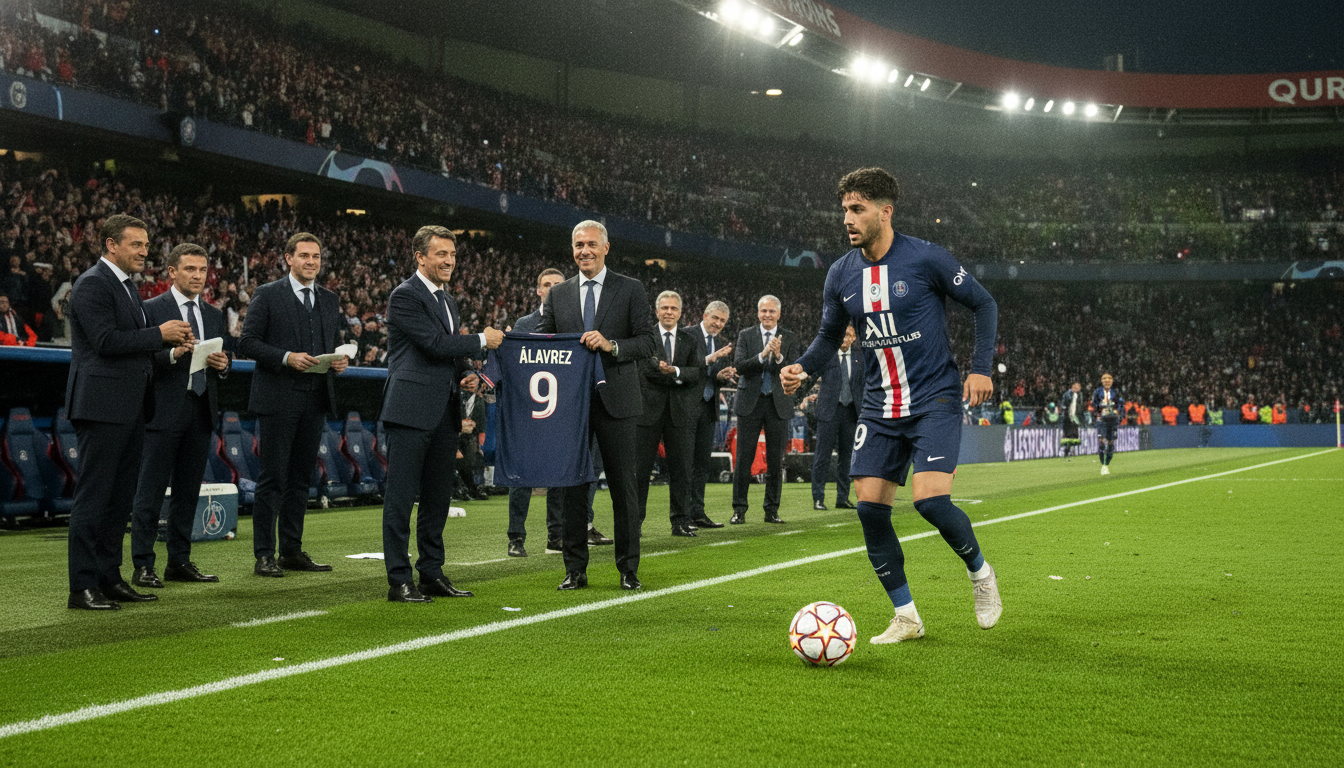
PSG open fresh talks with Atlético over Julián Álvarez transfer amid Barcelona interest
PSG have opened dialogue with Atlético Madrid over the Julián Álvarez transfer, introducing a wealthy alternative that strengthens Atlético’s bargaining position and complicates Barcelona’s pursuit.


Atlético Madrid has engaged in talks with Paris Saint-Germain about the potential transfer of Julián Álvarez, sources indicate, adding a new layer to a running saga dominated by Barcelona’s stated interest. The Julián Álvarez transfer now looks less like a two-way negotiation and more like a multilateral bargaining process in which Atlético controls the timetable and valuation. PSG’s re-emergence, even if conditional, gives Atlético leverage as it seeks a fee and structure that match its demands.
PSG open talks with Atlético over Julián Álvarez
Paris Saint-Germain have reportedly entered active dialogue with Atlético Madrid about acquiring Julián Álvarez, according to reporting on the transfer market. Those conversations coincide with broader summer negotiations between the clubs that also touch on other targets, meaning the Álvarez file is being discussed in a wider commercial and sporting context.
While Álvarez has publicly expressed a preference for Barcelona, PSG are now seen as a credible alternative buyer who could satisfy Atlético’s financial expectations if terms are met. The presence of PSG changes the dynamic of the market and gives Atlético a club with the fiscal capacity to match or exceed other suitors.
PSG’s interest: primary option or strategic lever?
Industry observers stress a distinction between PSG being a full-scale, urgent suitor and PSG functioning as a structural convenience in the negotiations. Luis Enrique’s side reportedly have other attacking priorities, and the club’s public transfer energy this window has been focused elsewhere, suggesting Álvarez has not been a top internal target.
Nonetheless, PSG’s financial clout makes them a meaningful participant in a negotiation where money matters. Even as a secondary suitor, their involvement signals to Barcelona and other interested parties that Atlético is not forced to accept an inadequate offer from a domestic rival.
Atlético’s negotiating position and valuation
Atlético Madrid remains firmly in control of proceedings, prioritizing a sale on its terms rather than yielding to player preference or external pressure. The striker’s contract running to 2030 gives the club time and leverage, enabling sporting directors to hold out for a fee that reflects Atlético’s valuation rather than a buyer’s ceiling.
Reported figures have placed Atlético’s valuation well above what some suitors are prepared to pay in cash, creating a structural gap between offers and expectations. That discrepancy has allowed Atlético’s director of football to reference credible alternatives, including PSG, when negotiating with Barcelona and others.
How PSG’s entry affects Barcelona’s pursuit
For Barcelona, the arrival of PSG as a potential buyer complicates a transfer pursuit that has relied on the player’s preference and a combination of creative finance. Barcelona’s fiscal constraints mean they may struggle to match the pure cash capacity of a PSG offer, even if the club presents a persuasive sporting case to the player.
The Blaugrana’s best route to closing a deal likely involves a tailored payment plan, add-ons linked to performance, or inclusion of assets that Atlético values. Without that ingenuity, Barcelona risks losing out to rivals with deeper immediate resources or to an Atlético decision to wait for the best available package.
Player preference versus club control: Álvarez’s stance
Julián Álvarez has taken the uncommon step of publicly naming Barcelona as his preferred destination and explicitly dismissing PSG as his favoured option. That clarity reflects a modern player’s capacity to attempt to shape outcomes, but contractual realities mean personal preference does not override a selling club’s rights and objectives.
By narrowing his public choices, Álvarez has also narrowed Atlético’s pool of readily acceptable buyers from the player’s point of view, although the club itself appears content to entertain alternatives that meet its valuation. The tension between the player’s wishes and the club’s commercial strategy is central to how the saga may resolve.
Deal architecture and potential trade-offs
Any transfer that satisfies all parties will likely require creative structuring rather than a single upfront payment. Atlético’s demand level and Barcelona’s cash limits point to instalments, performance-related add-ons, or conditional bonuses as the most viable mechanisms to bridge the gap between buyer and seller.
PSG’s presence introduces a potential shortcut for Atlético: a straightforward financial package from a club with fewer immediate liquidity constraints. That option gives Atlético bargaining room, but also raises the possibility of hard choices for the player if his preferred move looks increasingly difficult to achieve.
Wider market context and connected negotiations
The Álvarez discussions are interconnected with other negotiations taking place between the clubs this summer, most notably the dialogue over a separate target that PSG and Atlético have been exploring. Those parallel conversations create the opportunity for deal-making that links multiple transfers or swaps in ways that alter valuations and incentives.
Clubs often use the momentum from related talks to extract better terms, and Atlético has the negotiating muscle to pursue such strategies. The presence of English and Italian clubs on certain targets further tightens the market for Atlético’s assets and may accelerate decisions if competing bids materialize.
Timing, next moves and what to watch
The immediate indicators to monitor are whether Barcelona tables a materially improved or creatively structured proposal and whether PSG chooses to follow up with a private, player-facing approach. Atlético’s sporting director will be pivotal in deciding which offers merit detailed negotiation and which are politely rebuffed.
A resolution could come via a direct agreement that satisfies Atlético’s valuation, a financial package that bridges both sides, or, less likely given current posture, a retention of the player for another season. Observers should watch for formal bids, the filing of any revised transfer request, and direct contact between clubs as the market unfolds.
Final paragraph
The Julián Álvarez transfer story is now a complex negotiation in which player preference, club valuation and third-party capacity intersect; with PSG back in play as a credible alternative, Atlético is managing the saga from a position of strength while Barcelona contemplates inventive financing to keep its pursuit alive.