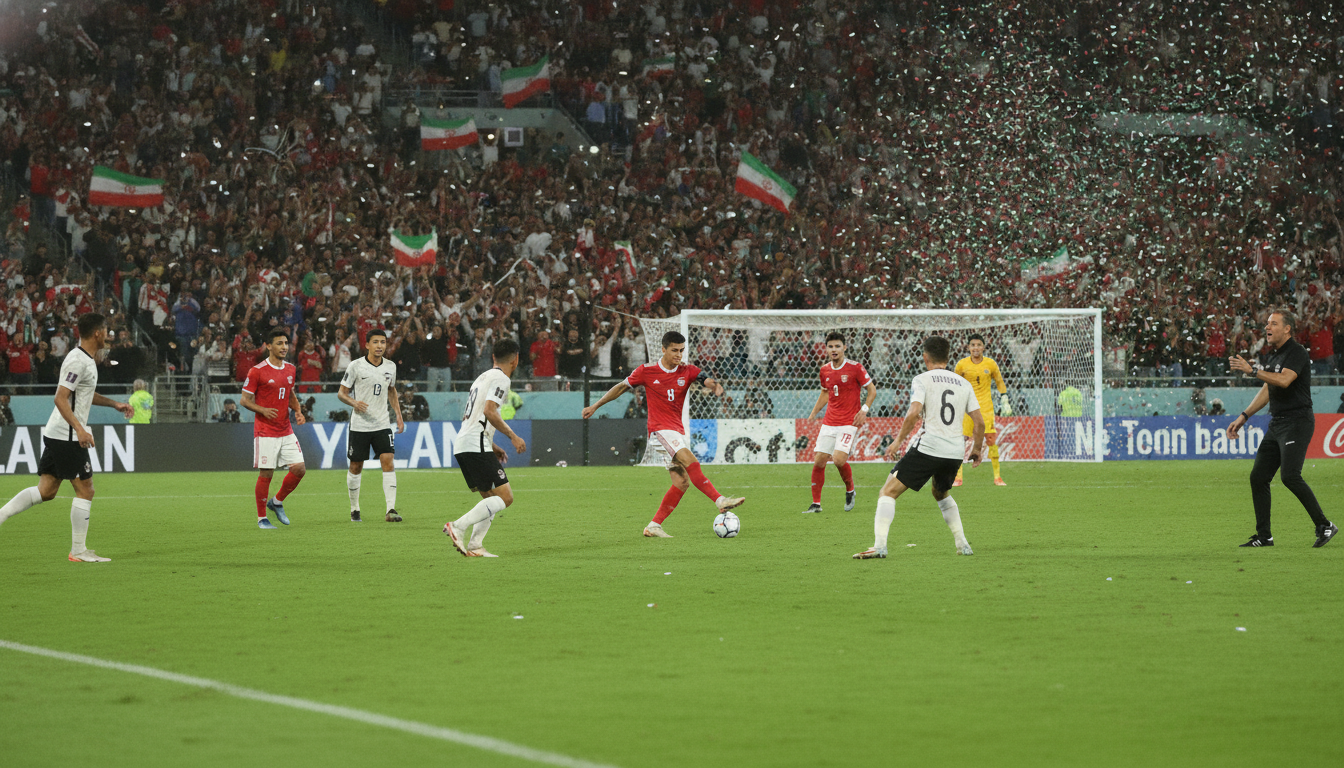
Iran hold New Zealand to 2-2 draw in charged World Cup clash at SoFi Stadium
Iran and New Zealand drew 2-2 at SoFi Stadium in Los Angeles as over 70,000 attended a charged World Cup clash marked by protests, boos and two comebacks.

Iran twice came from behind to earn a 2-2 draw with New Zealand in a World Cup match at SoFi Stadium that unfolded amid protests, flag displays and political tensions. Elijah Just put the All Whites ahead early after a precise setup from captain Chris Wood, and he restored New Zealand’s lead early in the second half. Iran responded through Ramin Rezaeian and later Mohammad Mohebbi to level, with a largely partisan crowd and reports of a tentative diplomatic development creating a volatile backdrop.
Early opener from New Zealand sets tone
Elijah Just opened the scoring for New Zealand in the opening phase, volleying home from close range after Chris Wood created the opportunity with a measured pass. The strike rewarded a sharp counter and left Iran chasing the game in the opening quarter of an intense contest. That early lead injected energy into the All Whites and briefly silenced parts of the energetic Los Angeles crowd.
The goal also sparked a visible political reaction among some spectators, with a contingent of fans waving Iran’s pre-revolutionary Lion and Sun flags and expressing discontent toward Tehran. A number of those supporters booed Iran’s national anthem prior to kick-off, moments that underlined the match’s charged atmosphere. Still, the stadium atmosphere would repeatedly shift as the game progressed and supporters vocally backed both teams at different points.
New Zealand’s early success came from a disciplined attacking sequence that exploited space on the flanks, showing the All Whites’ intent to press and create openings. Wood’s role as creator and target man was evident from the outset, as he repeatedly linked play between midfield and the front line. The early goal validated New Zealand’s tactical plan and forced Iran to adapt their approach to regain control.
Rezaeian response sparks Iranian revival
Iran levelled just past the half-hour mark when Ramin Rezaeian reacted quickest to a blocked effort and poked the rebound past the advancing goalkeeper. The equaliser changed the match’s momentum, bringing renewed belief to Team Melli and drawing loud cheers from large sections of the crowd. Rezaeian’s finish was a demonstration of alertness and clinical opportunism at a crucial moment.
That goal came against a backdrop of disrupted club routines for several Iranian internationals, who had not played competitive club football since February after the domestic league was suspended amid military strikes and security concerns. The lack of regular match action added a layer of uncertainty about fitness and sharpness, yet Iran’s players produced a composed response under pressure. The equaliser offered a brief respite from the off-field noise and allowed Iran to regroup tactically.
The remainder of the first half saw Iran pressing higher and probing New Zealand’s defensive shape, seeking to exploit moments of transition. Subtle changes in positioning and more direct play into the box indicated coach and players were determined to seize the initiative. While opportunities were created by both sides, neither could convert again before the interval.
Second-half swing as Just restores New Zealand lead
New Zealand struck again early in the second half when Wood and Just combined to devastating effect, the captain sliding a precise pass into Just’s path and the forward hammering home. The strike reinvigorated the All Whites and briefly swung control back in their favour as they sought to protect the lead. It underlined New Zealand’s capacity to punish lapses in concentration and to finish chances clinically.
The goal forced Iran to break up play more aggressively as they hunted a second equaliser, prompting a tactical reshuffle and increased urgency in the attacking third. New Zealand responded by consolidating defensively and probing on the break, but Iran’s persistence began to create openings. The match settled into a tense pattern of attack and counterattack, with both sets of players feeling the weight of the moment.
Coaches from both sides made adjustments to influence the tempo, bringing on fresh legs and tweaking formations to gain an edge. Substitutions and strategic shifts reflected the high stakes and the physical toll of a match played under exceptional external circumstances. Play became stretched at times, but the contest retained a competitive edge through to the closing stages.
Mohammad Mohebbi seals dramatic leveller for Iran
Iran drew level once more when Mohammad Mohebbi converted to make it 2-2, a goal that sent large portions of the stadium into rapturous celebration. Mohebbi’s finish capped a sustained spell of Iranian pressure and underlined the team’s resilience in the face of adversity. The leveller ensured both sides left with a point in a match that had swung repeatedly in momentum.
The equaliser was significant beyond its immediate impact on the scoreboard, providing a morale boost to a squad that had faced interruptions to their domestic season. It also vindicated a tactical commitment to keep pushing for openings rather than settling for a defensive stance. For New Zealand, conceding the second goal was a setback after they had twice held leads and had looked capable of closing out the result.
In the final phase, both teams traded chances as fatigue and emotion influenced decision-making in the final third. Goalkeepers on both sides made important saves to deny late winners, and refereeing decisions around stoppage time proved pivotal in shaping the closing minutes. Ultimately the match finished honours even, leaving coaches and players to reflect on fine margins.
Atmosphere, protests and a politically charged backdrop
The match was staged against an unusually charged political atmosphere, with some fans openly protesting Iran’s government and others singing in support of Team Melli. The presence of the Lion and Sun flags, the booing of the national anthem by a section of the crowd, and the chants of “Ir-ran! Ir-ran!” from opposing pockets produced a complex and fractious environment. Organisers had to manage both security and the sensitivities of a global tournament stage.
Reports that a tentative agreement to end hostilities between the United States and Iran had emerged in the days surrounding the match added an additional layer of tension and attention. That diplomatic context framed the encounter for many observers and ensured that the fixture carried significance beyond the sporting contest. Players and officials largely kept focus on the game, but the wider geopolitical narrative remained an ever-present backdrop.
Despite the political overtones, the vast majority of the reported attendance of more than 70,000 appeared to back Iran vocally at several junctures, creating a partisan atmosphere that lifted the team at key moments. The alternating waves of support and protest mirrored the ebb and flow of the on-field action, turning SoFi Stadium into a vivid microcosm of competing sentiments. For tournament organisers, the match offered lessons about staging fixtures where political passions run high.
What the result means for both teams moving forward
The 2-2 draw leaves both Iran and New Zealand with tangible positives and clear work to do as they prepare for the rest of the tournament. Iran demonstrated mental resilience and the ability to respond to setbacks, while New Zealand showed attacking intent and clinical finishing in open play. Coaches will take encouragement from different aspects but will also identify areas in need of tactical refinement and defensive organisation.
Fitness and match sharpness will be key considerations for Iran given the earlier suspension of domestic football, with staff monitoring players’ recovery and readiness for forthcoming fixtures. New Zealand’s coaching staff will likely focus on consolidating defensive transitions and maintaining concentration when holding narrow leads. Both teams can view the result as a platform to build momentum if they address the shortcomings exposed during the match.
For supporters and neutral observers, the game will be remembered as much for its emotional and political backdrop as for the on-field drama. The shared point reflects a contest of near-equal measures and sets the stage for tense group dynamics in the days ahead. Each side now turns attention to preparation, recovery and tactical planning ahead of their next assignments on football’s biggest stage.
The draw at SoFi Stadium combined sporting drama with significant off-field resonance, creating a match that will be debated long after the final whistle.