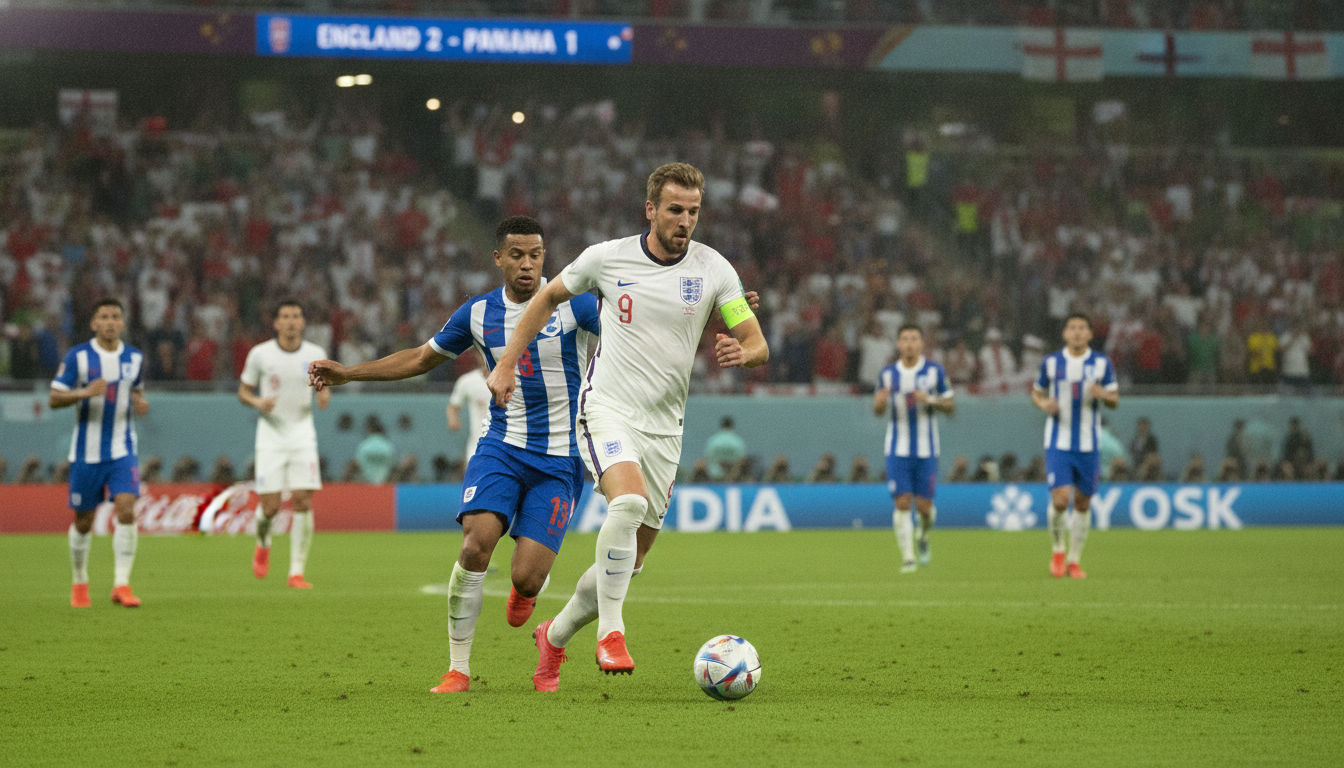
Harry Kane’s strike and late England rally keep England World Cup hopes alive after nervy Panama win
England’s late comeback against Panama, capped by a Harry Kane goal that made him England’s leading World Cup scorer, kept England World Cup hopes on track and secured a place in the tournament’s last 32.

England were threatened with a path that would have pitched them against Portugal in the last 32 and possibly Spain in the last 16, but two goals in a five-minute burst turned a precarious position into progression. The result reshapes the knockout landscape and leaves England likely to meet an African nation next, with Senegal or the Democratic Republic of Congo now the probable opponents.
Kane strike caps dramatic turnaround
England looked increasingly vulnerable as their group stage finale unfolded, but the team produced a sharp late response to silence growing alarm among supporters. A quick double lifted the side from a nervy posture and gave manager and players breathing room heading into the knockout rounds.
One of those goals came from Harry Kane, a strike that elevated his status in England’s World Cup record books and underscored his importance to the team. The goal was both a personal milestone and a timely reminder of where England’s attacking threat remains most potent.
Group permutations shift with Panama result
Saturday’s outcome had immediate consequences for the wider draw, removing an earlier scenario that would have placed England on a collision course with Portugal and a potential last-16 meeting with Spain. That path would have represented the most hazardous route through the early knockout phase, so the reversal has strategic significance.
Portugal’s final group match against Colombia will now carry amplified meaning for several teams, including those hoping to avoid or face Argentina later in the draw. If Portugal win in the fixture that kicks off at 7.30am Hong Kong Time on Sunday, they could find themselves on the same half of the bracket as Argentina, rearranging quarter-final possibilities for multiple nations.
Potential opponents: Senegal or DR Congo loom
With England’s place in the last 32 secured, attention quickly turned to whom they might meet in the next round, and the most likely candidates are the African entrants emerging from other groups. Senegal and the Democratic Republic of Congo are the projected opponents, depending on final group results and ranking among qualifying teams.
Both teams represent distinct challenges: Senegal bring experience and a mixture of Premier League-calibre talent, while DR Congo offer pace and physicality that can unsettle established sides. England will need to prepare for contrasting styles and avoid underestimating the tactical and athletic demands either opponent would present.
Croatia and Ghana advance; Scotland eliminated and Clarke exits
Elsewhere in the group phase, Croatia and Ghana also secured progression, a sequence that had immediate consequences for Scotland and its manager. Scotland’s narrow hopes of advancing were extinguished, a result that prompted the end of Steve Clarke’s seven-year tenure in charge of the national side.
The Scottish exit marks the close of a significant chapter and will trigger a period of transition for the national team as they assess the next steps. For Croatia and Ghana, progression offers continuity and sets up knockout fixtures that test their depth and tournament management.
Tactical takeaways and areas for improvement
England’s response against Panama delivered the result but did not erase questions about consistency and defensive organisation that have surfaced in the early matches. There were moments when cohesion broke down and the team appeared slow to adjust to opposition pressure, issues that could be exposed in a knockout setting against a well-drilled side.
Attackingly, England remain heavily reliant on Kane’s finishing and the supply lines that feed him, which is both a strength and a potential vulnerability if opponents successfully neutralise that focal point. The coaching staff will need to refine ball circulation, pressing triggers, and set-piece defending to avoid repeating lapses that allowed Scotland and other rivals to find openings in earlier fixtures.
What the draw means for marquee matchups
The shifting permutations across groups have revived speculation about high-profile potential clashes later in the tournament, including the perennial marquee conversation of Lionel Messi versus Cristiano Ronaldo. While such hypotheticals capture public imagination, they remain contingent on a long list of results falling into place over the coming rounds.
For England, the immediate priority will be managing resources and injuries through the end of the group stage and into the first knockout fixture. The draw’s outcome will determine travel, preparation time and the tactical profile of their opponent, all of which matter more than headline-grabbing dream fixtures for the squad’s short-term planning.
England leave New Jersey having dodged the worst-case bracket scenario but carrying fresh responsibilities to tidy tactical concerns and sharpen match management ahead of the knockout phase.
England’s late performance showed resilience and preserved their route in the tournament, but they will face sterner tests and must convert the relief of progression into focused preparation for what comes next.