Canada vs South Africa: Lineups Confirmed as Both Nations Make World Cup Round of 32 Debuts
Canada vs South Africa preview: lineups, Davies status and key tactical battles for the World Cup Round of 32 opener at SoFi Stadium.


Opening summary
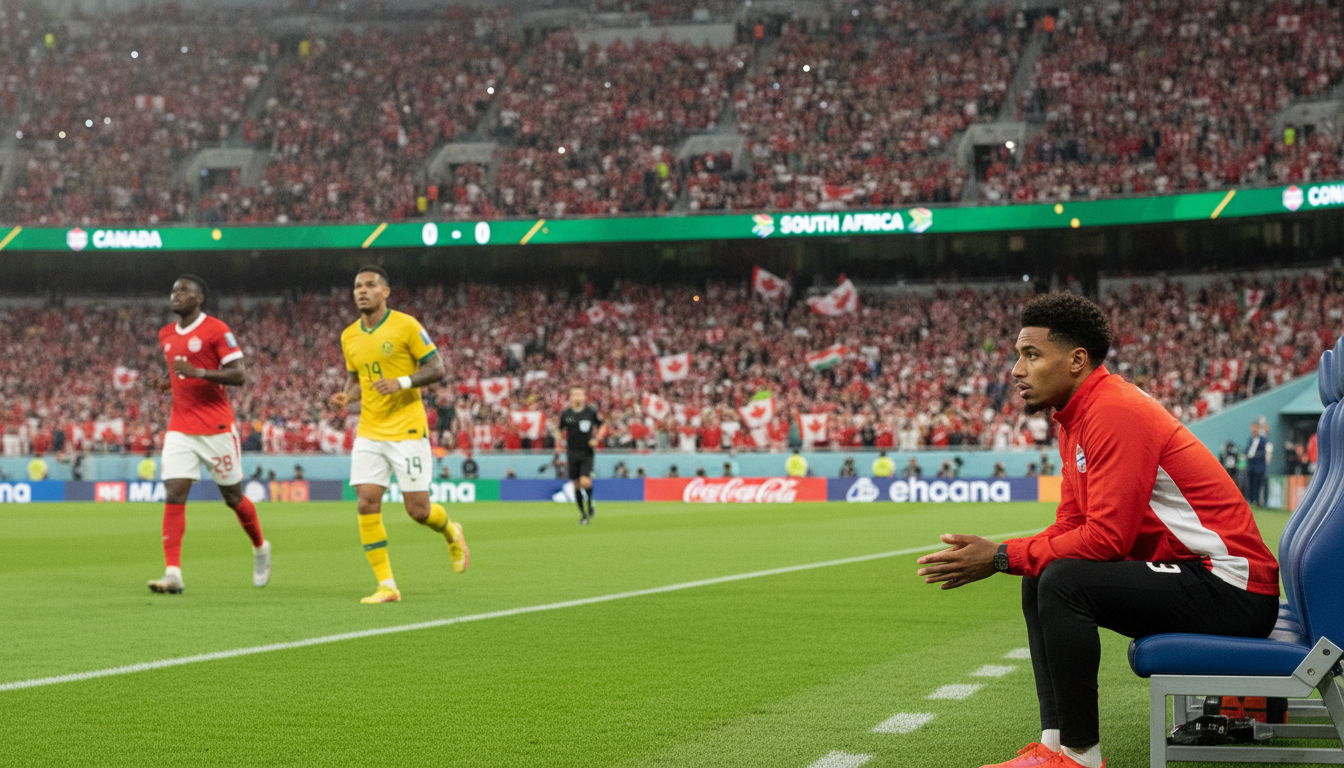
Canada and South Africa meet in the opening match of the FIFA World Cup 2026 Round of 32, a historic knockout debut for both nations that will be played at SoFi Stadium in Inglewood, California on June 28, 2026. The fixture will be the first knockout test for co-host Canada after they finished second in Group B, while South Africa advanced from Group A following a decisive win over South Korea. (fifa.com)
Lineups confirmed for the Round of 32 opener
Canada will start with Maxime Crépeau in goal and a back four of Alistair Johnston, Moïse Bombito, Derek Cornelius and Richie Laryea. The midfield features Tajon Buchanan, Nathan-Dylan Saliba, Stephen Estaquio (captain) and Liam Millar, with Jonathan David and Tani Oluwaseyi leading the attack. South Africa line up with Ronwen Williams as captain in goal; Khuliso Mudau, Ime Okon, Mbekezeli Mbokazi and Aubrey Modiba across the back; midfielders Thalente Mbatha and Teboho Mokoena; Oswin Appollis, Relebohile Mofokeng and Thapelo Maseko behind Evidence Makgopa up front. (covers.com)
Those selections reflect managers prioritizing balance and match readiness over wholesale changes, with both coaches opting for structures they have used through pool play. The lineups underline Canada’s preference for a regimental defensive shape and quick vertical transitions, while South Africa set up to press and exploit space in wide and half‑spaces. (rotowire.com)
Davies cleared but begins on the bench
Bayern Munich full-back Alphonso Davies has been declared fit to play in the Round of 32 after a hamstring issue sidelined him through the group stage, but Canada manager Jesse Marsch has elected to start him among the substitutes. Davies’s availability gives Canada a tactical option to shift tempo and width late in the match, but his initial role on the bench indicates a cautious approach to his reintroduction. (statsniper.com)
Marsch’s decision balances the lure of Davies’s pace and attacking instincts against the need to protect a recently recovered player on football’s biggest stage. Expect Davies to be considered as an early second‑half impact option, particularly if Canada require an infusion of width or a left‑side attacking outlet. (statsniper.com)
How Canada reached the knockout stage
Canada finished second in Group B with four points after producing a memorable 6-0 win over Qatar and falling to Switzerland in their final group match. The hosts’ tournament so far has been defined by sporadic brilliance in the final third, defensive organization at key moments, and the management of several injury absences that have tested squad depth. (fifa.com)
Jesse Marsch’s selection choices reflect those realities: the coach has had to adapt without fully fit names such as Alphonso Davies for large portions of the group stage and has leaned on a combination of domestic league standouts and emerging overseas talent. Canada’s approach in the knockout stage will likely emphasize control of transitions and quick exploitation of turnovers to make the most of Jonathan David’s finishing and Tani Oluwaseyi’s directness. (fifaworldcup-news.org)
South Africa’s route and confidence boost
South Africa reached the Round of 32 for the first time in their history after a 1-0 victory over South Korea that secured the necessary points to finish second in Group A. The win, sealed by Thapelo Maseko’s goal, capped a campaign in which Bafana Bafana recovered from an early setback and grew into a compact, resilient unit under coach Hugo Broos. (fifa.com)
That group-stage finish has injected belief into the squad and national support back home, and Broos has rewarded consistency by keeping a core starting XI that emphasizes defensive discipline and fast, direct attacking transitions. South Africa’s lineup for the match against Canada is set to challenge the hosts with athletic wing play and an emphasis on quick overloads in the attacking third. (fifa.com)
Tactical matchups to decide the game
Canada’s left flank will be a focal point whether Davies enters from the bench or is used sparingly, as his recovery alters how opponents must allocate defensive cover. If Davies is introduced, South Africa will need to decide between doubling down on his side or accepting isolated duels that could create space elsewhere. The contest between Davies (or Laryea if Davies stays sparingly used) and Makgopa and Maseko on South Africa’s right will be decisive. (statsniper.com)
In midfield, the battle for control and tempo is critical. Canada’s Estaquio and Saliba must neutralize South Africa’s engine room—Teboho Mokoena and Thalente Mbatha—who are adept at breaking lines and shifting play quickly. Whoever secures second‑ball dominance and dictates passing rhythm will tilt the game toward their team’s strengths. Set pieces and transitional counters are likely to be key sources of opportunity given the athletic profiles of both sides. (rotowire.com)
Bench options and in‑game adjustments
Both managers possess distinct bench profiles that signal how the match could evolve. Canada’s bench features pacey attackers capable of exploiting tired defenses, and bringing Davies on would allow Marsch to change the team’s width and defensive posture simultaneously. South Africa’s substitutes include fresh attacking runners and midfield reinforcements who can press immediately and alter the match’s physical dynamic. (statsniper.com)
Game management will be crucial: tactical substitutions in the 60–75 minute window could produce the decisive shift. Given the knockout format, neither coach can afford to be overly conservative; both will have to balance risk and control, and their choices in the technical area are likely to be amplified by how early chances are (or are not) created. (rotowire.com)
Both teams also must consider disciplinary control. Yellow cards in the knockout stage carry weight for squad availability, and players in key positions must avoid needless fouls that could force tactical reshuffles or suspensions in later rounds. The psychological management of pressure situations will be as important as the physical and tactical elements on display. (fifa.com)
Canada vs South Africa is the opening knockout match of the tournament, and although neither side has a deep pedigree in World Cup knockout play, both have demonstrated the capacity to alter games through quick transitions and physical commitment. Expect a disciplined, closely contested affair in which one moment of invention or a lapse in concentration could separate the teams. (fifa.com)
The final scoreline will likely rest on which side adapts more successfully to a high‑stakes, single‑elimination environment and which coaching staff manages substitutions and tactical tweaks with the greater precision. The match offers a rare, high-profile platform for emerging players such as Tani Oluwaseyi and Evidence Makgopa to stake claims on the global stage. (rotowire.com)
Canada vs South Africa will set the tone for the rest of the Round of 32 block and give a clearer sense of how both governments’ investments in player development and coaching are translating to results on the world stage. The winner moves on to face an opponent from the adjacent bracket and will carry either the weight of host expectations or the momentum of a historic first knockout victory. The match kicks off at SoFi Stadium on June 28, 2026. (fifa.com)
Both sides arrive with different narratives but the same objective: a place in the Round of 16. The tactical details, personnel choices and in‑game management outlined above will determine whether Canada advances on home‑soil momentum or whether South Africa writes a new chapter in its World Cup history by pulling off a breakthrough result.