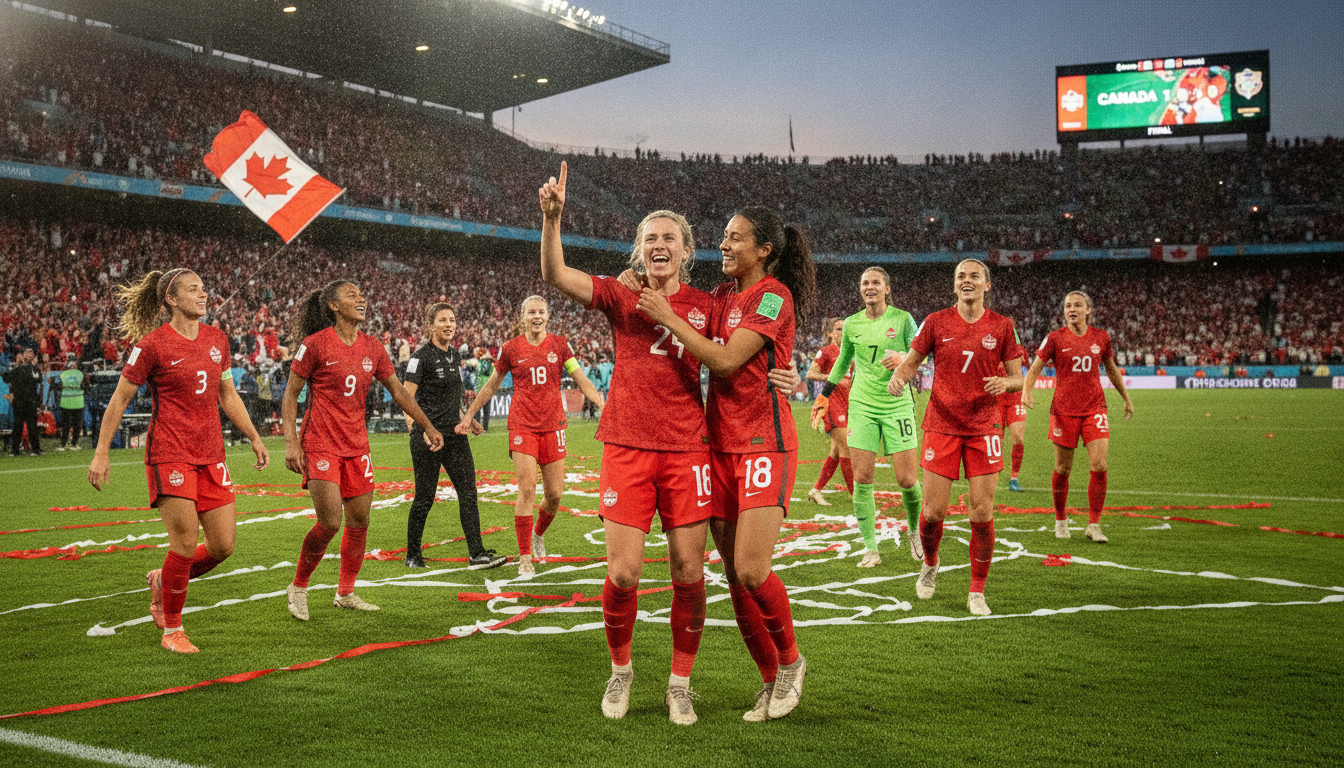
Canada vs South Africa: Eustaquio’s stoppage-time strike sends hosts through
Eustaquio’s stoppage-time strike gave Canada a 1-0 victory over South Africa, lifting the hosts into the next round and reigniting debate around the expanded World Cup format. The late goal ended a match that offered little sustained quality, sparing fans the drama of extra time and penalties. Canada’s win keeps the co-hosts alive but leaves questions about performance and fixture value as the tournament progresses.


Eustaquio’s stoppage-time strike secures Canada win
Stephen Eustaquio broke the deadlock two minutes into stoppage time to deliver a long-awaited breakthrough for Canada and send the home crowd into relief. The goal arrived after a largely uneventful 90 minutes in which clear-cut chances were scarce and neither side could force decisive control of the match. That single, late action decided a game that otherwise offered little to suggest a deep run for either team.
Eustaquio’s finish was clinical in the moment and decisive in outcome, but it also underlined how marginal victories can be in knockout football. For Canada, the goal buys time and optimism; for South Africa, it is a narrow exit that masks defensive resilience and a lack of end product at the other end. The late strike ensured there was no need for the lottery of penalties and avoided an extra 30 minutes of football that might have told a different story.
Match offered little entertainment and revived expansion critique
For neutrals, Canada vs South Africa was an example critics cite when questioning the merits of a 48-team World Cup, with long periods of low tempo and limited attacking invention. The tournament’s expanded format has delivered wider representation, but matches like this fuel a debate about whether quantity has diluted overall competitive quality. Observers pointed to the game as evidence that more teams can mean more conservative, cautious matches in the early knockout rounds.
That critique does not erase the significance of global representation for smaller footballing nations, nor does it discount the value of the experience such tournaments provide those teams. Still, the spectacle argument will resurface whenever matches end with single late goals after long stretches of tactical containment. Organizers and national associations may need to weigh those trade-offs as the football world assesses the expanded format beyond its inaugural delivery.
Marsch praises result while acknowledging performance flaws
Canada coach Jesse Marsch accepted the victory with characteristic restraint, highlighting the importance of progression over style in a knockout setting. He emphasized the value of resilience and patience, even as he acknowledged his side did not produce their most fluent football on the day. Marsch’s comments suggested a pragmatic approach: advance now, refine later — particularly ahead of a far tougher opponent in the next round.
The coach’s measured response also reflected the reality of tournament football, where results matter more than aesthetics and momentum can hinge on single moments. Marsch will have to balance the immediate boost from the win with the need to correct tactical shortcomings and sharpen attacking instincts before facing a team higher on the international pedigree.
Tactical patterns and areas of concern for Canada
Across the ninety minutes, Canada displayed organizational discipline but struggled to consistently threaten South Africa’s goal, settling into periods of possession without penetration. The midfield tussle often lacked spark, with transitions slow and final balls rarely testing the opposition goalkeeper. Defensively the hosts were compact and difficult to break down, but that caution came at the expense of ambition in the attacking third.
Going forward, the Canadians will need to find sharper combinations in tight spaces and rely less on late set-piece or opportunistic moments to decide matches. If Canada is to move beyond the round they must convert territorial advantage into sustained pressure and diversify their attacking patterns to unsettle higher-calibre defenders.
Fan and media reaction focused on result and format
Reactions from supporters were split between celebration for the victory and frustration at the overall quality of the tie, reflecting a wider conversation about expectation management for host nations. Local fans celebrated the win and the boost it grants to the team’s campaign, while commentators and pundits highlighted the small margins that defined the match. The broader media narrative also returned to the tournament’s expansion and whether such fixtures enhance the spectacle for global audiences.
Social media mirrored those dual sentiments, with praise for Eustaquio and the team’s perseverance counterbalanced by criticism about conservative tactics and limited attacking initiative. For stakeholders in the game, the headlines will focus both on the immediate benefit of advancing and on the structural questions that matches of this type raise about competitive balance and viewer engagement.
Next test looms as Canada prepare for elite opposition
With progression secured, Canada now awaits either Morocco or the Netherlands in a tie that promises a much sterner examination of their credentials. The prospective opponents represent contrasting threats: Morocco’s compact, counter-attacking discipline and the Netherlands’ technical and positional fluency will each demand specific tactical responses. Canada’s margin for error will narrow considerably, making short-term tactical adjustments and mental preparation critical in the days before the next kickoff.
The coaching staff will have limited time to rehabilitate players, sharpen attacking schemes and devise plans to disrupt elite opponents’ strengths. The team’s preparation will need to prioritize urgent improvements in creating high-quality chances while maintaining the defensive stability that prevented South Africa from scoring.
Canada’s win over South Africa is a simple scoreboard truth that masks a more complex set of takeaways about performance, tournament design and the path ahead for the hosts. The victory keeps the co-hosts in the World Cup, but it also sets up a rapid escalation in challenge that will reveal whether this result was a momentary reprieve or the start of a deeper campaign.