Spanish football calendar 2026/27 revealed: LaLiga starts Aug 15–16, season ends May 30
LaLiga and Segunda open the Spanish football calendar 2026/27 on Aug 15–16. Copa del Rey final is Apr 24, Supercopa set for Feb 2–7 and promotion playoffs run in June.

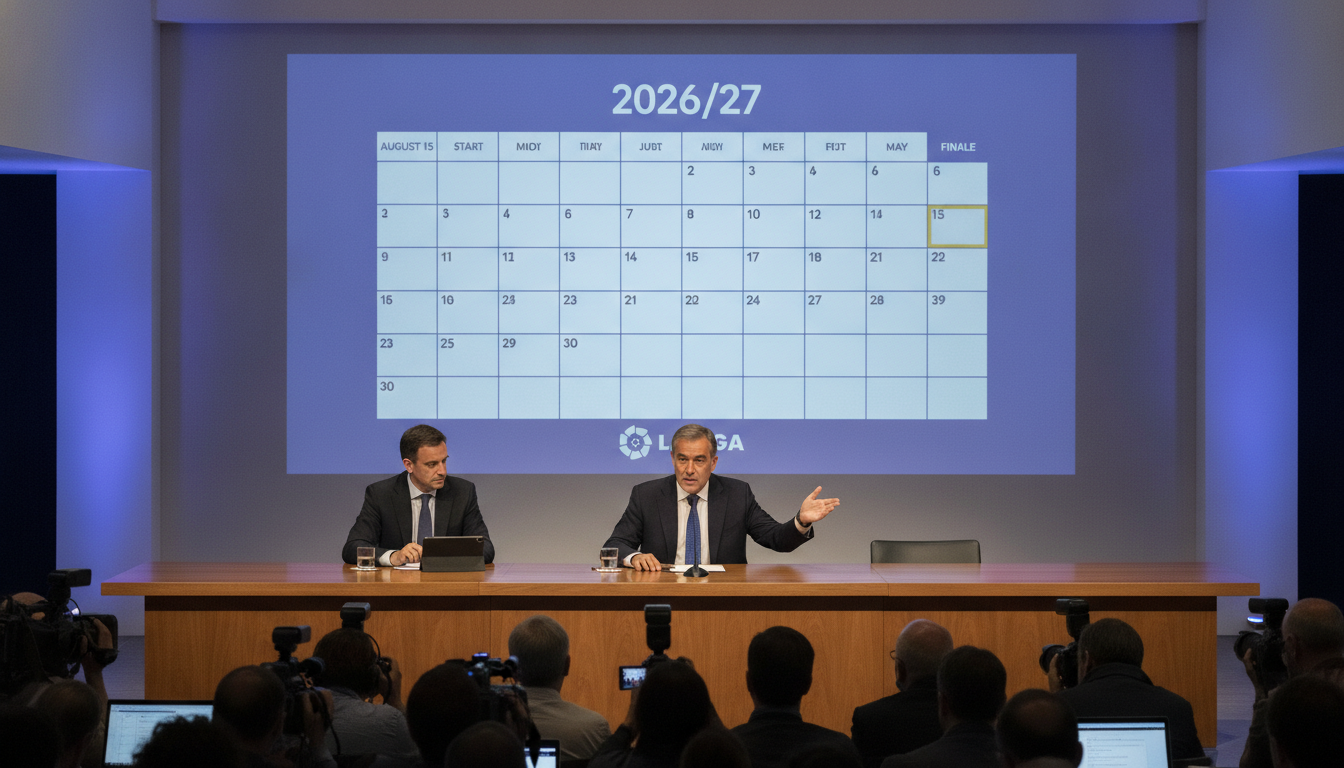
The Spanish football calendar 2026/27 has been published, confirming that LaLiga will kick off on the weekend of August 15–16 and conclude on May 30 in the top tier. The announcement sets the Copa del Rey final for April 24 and moves the Supercopa de España into an early February window, reshaping domestic priorities across the season. Clubs and federations now face a dense international and European timetable with the Champions League concluding on June 5, forcing careful squad planning.
Season Dates Confirmed
The 2026/27 Primera División campaign will begin on the weekend of August 15–16, providing clubs a defined timeline for preseason preparation and final transfer dealings. LaLiga confirmed that the domestic league will run through to May 30, giving top-flight teams a clear endpoint before European finals are played. This schedule aligns the domestic season with major continental fixtures while keeping the traditional late-May finish for the league.
Segunda División will mirror the elite’s start date, ensuring the Spanish professional calendar begins uniformly across the top two tiers. Sharing the kickoff weekend helps coordinate television and logistical planning for clubs, stadiums, and supporters. The unified start also stabilizes the season rhythm for promotions and relegations between divisions.
Copa del Rey Final Set for April 24
The Copa del Rey Mapfre final is scheduled for April 24, placing the domestic cup’s climax before the final phase of the league season. This timing offers finalists a marquee domestic showpiece in late April, which could influence squad rotation and tactical priorities in the weeks that follow. Clubs still competing in European tournaments will need to balance cup ambitions with continental commitments during a congested spring schedule.
Holding the final in April also provides a clearer separation between cup and league objectives ahead of the decisive weeks of May. For clubs aiming for promotion or title pushes, the fixed date helps managers plan recovery and training cycles. Supporters and organizers will benefit from advanced notice to arrange travel and logistics for the cup final.
Supercopa Moves to February
In a notable change, the Supercopa de España will take place from February 2 to February 7, breaking from the calendar positions it has occupied in recent seasons. Moving the competition to early February creates a winter window for a short, high-profile mini-tournament that could involve clubs juggling league matches and European duties. The February slot may reduce end-of-season congestion but intensifies the mid-season fixture list for semifinalists and finalists.
The shift also reflects broader scheduling adjustments intended to streamline domestic competitions alongside UEFA and FIFA commitments. Clubs involved in the Supercopa will confront quick turnarounds and travel, particularly if the matches are staged at a neutral venue. Federations and broadcasters have signaled the move is designed to maximize visibility while fitting within the packed international calendar.
Segunda Division and Promotion Playoffs Scheduled
Second-tier competition will begin alongside LaLiga, with the promotion playoff series set between June 9 and June 20, extending the Segunda calendar well into June. The later playoff window acknowledges the need for a conclusive promotion mechanism while accommodating teams that finish the regular season at different times. For clubs chasing promotion, the mid-June playoff dates will require sustained fitness and form beyond the regular schedule.
The extended timeline for playoffs could affect player contracts, preseason planning for promoted clubs, and transfer negotiations that typically begin in June and July. Clubs that secure promotion late may face compressed preparation for the following LaLiga season. The clear playoff window does, however, provide certainty for stakeholders about when promotion outcomes will be decided.
European Calendar and Fixture Congestion
UEFA club competitions are set to run through the same cycle, with the Champions League commencing in September and ending on June 5, creating an overlap with domestic playoff windows and extended cup schedules. The proximity between domestic finals and continental showpieces increases the likelihood of fixture congestion, particularly for clubs competing on multiple fronts. Squad depth and rotation strategies will be more critical than ever as teams manage the demands of league, cup, and European matches.
National team breaks and FIFA international windows will continue to punctuate the season, adding further travel and recovery considerations for players. Clubs must synchronize national call-ups with domestic commitments to minimize the impact on key fixtures. The interplay of those calendars will influence coaching decisions and could prompt clubs to accelerate summer reinforcement plans.
Implications for Clubs, Players and Transfer Strategy
The published calendar creates a framework that will influence transfer market behavior, preseason scheduling, and sports-science planning across Spain’s professional clubs. Teams with European ambitions will likely seek deeper squads to navigate the congested periods around February and late May, while Segunda clubs must prepare for the possibility of extended seasons into June. Sporting directors and medical staff will prioritize load management and targeted recruitment to mitigate injury risk.
Agent negotiations and contract expiries will also be colored by the fixed playoff dates and the June conclusion of continental competitions. Clubs may opt to finalize permanent deals earlier or structure short-term contracts knowing the timeline for promotion and relegation decisions. For players, the calendar offers clarity on key dates but demands greater attention to recovery, travel, and peak performance windows.
Spanish football administrators have provided clubs and broadcasters with the certainty needed to plan the season’s commercial and sporting operations. The calendar’s publication marks a decisive step toward alignment between domestic competitions and international obligations. Those affected now face the operational task of translating the announced dates into coherent season plans.
The clear timetable for the 2026/27 season gives clubs, players and supporters a firm schedule to prepare for, while also highlighting the challenges of a densely packed European and domestic football landscape.