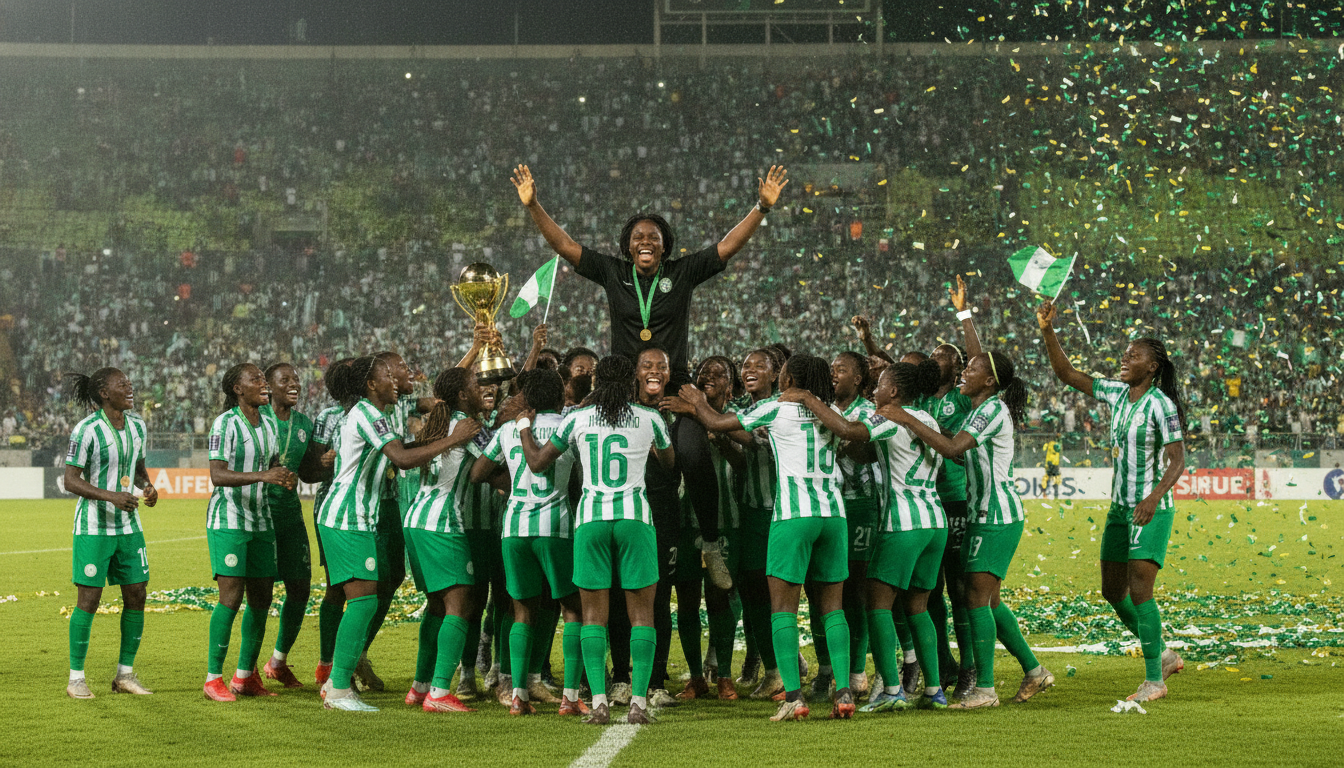
Justine Madugu on WAFCON 2024 Triumph: How the Super Falcons Overcame Adversity to Win Africa’s Crown
Justine Madugu reflects on WAFCON 2024 glory, the Super Falcons’ resilience, logistical hurdles in Morocco, and his plan to defend the title while targeting World Cup qualification.

Justine Madugu’s elevation from long-serving assistant to title-winning head coach culminated in the Super Falcons reclaiming the Women’s Africa Cup of Nations in 2024. The coach described the victory as the product of sustained commitment, collective discipline and an environment engineered to keep players focused despite distractions. At 62, Madugu’s CAF A licence, academic pursuit and extensive tournament experience informed a campaign that reasserted Nigeria’s place at the top of African women’s football.
Madugu said the triumph afforded wider recognition for indigenous coaches and brought renewed expectation for the national team. He stressed that the title was not an endpoint but a platform for further development and accountability for everyone involved. The coach also confirmed his contract runs through October 2027 and outlined priorities that link WAFCON 2026 to qualification for the 2027 FIFA Women’s World Cup.
Madugu’s Path from Assistant to Head Coach
Madugu’s involvement with Nigeria across multiple WAFCON cycles provided the institutional knowledge he drew on in 2024. He served as an assistant in Equatorial Guinea (2012), Namibia (2014) — a campaign that produced a landmark all-indigenous coaching triumph — and later under foreign head coaches in subsequent tournaments.
That progression gave him a rare longitudinal view of player development, scouting and preparation, which he credited with helping to manage expectations and maintain continuity. Winning as a head coach, he said, carried a different weight: ultimate responsibility for tactics, selection and the team’s public image rested squarely with him.
Recognition, Responsibility and the Indigenous Coaching Narrative
The WAFCON 2024 title brought public accolades and fresh scrutiny in equal measure, Madugu said, and it altered how some stakeholders view homegrown coaching talent. He described awards and institutional appreciation as welcome validation that indigenous coaches can lead at the highest level on the continent.
With that recognition came heightened responsibility, he added, not only to sustain results but to act as a role model for younger coaches and players. Madugu emphasized that success should be consolidated through continued investment in coaching education and pathways for local coaches to progress.
Team Culture: Creating a ‘Family’ Behind the Scenes
A consistent theme of Madugu’s account was the deliberate creation of a family atmosphere within the squad and technical staff. He said off-field care — counselling, personal support and an inclusive environment — was integral to maintaining players’ focus and mental readiness throughout a tense tournament.
According to the coach, fostering belonging helped the team absorb pressure and respond to setbacks collectively rather than fracturing under external criticism or distraction. That cultural approach, he argued, translated into on-field cohesion and a willingness among players to execute tactical plans under stress.
Logistical and Political Distractions in Morocco
Madugu acknowledged that the 2024 campaign encountered logistical difficulties and distractions that could have derailed preparation. Accommodation challenges and financial issues were among the problems he described, yet he said the technical team worked to shield players from off-field noise.
Rather than allowing those issues to determine outcomes, the squad prioritized discipline and a single-minded pursuit of their objectives. The coach credited the players’ professionalism and the harmony among staff for preventing operational setbacks from becoming performance problems.
Tactical Adjustments and Areas for Improvement
While celebrating the title, Madugu was candid that the Super Falcons remain a work in progress and that technical refinement is necessary. He said the coaching staff identified specific tactical areas from pre-tournament friendlies and matches that require further work, though he declined to detail those elements publicly.
Emphasis on continuous analysis and targeted training formed part of his plan to keep Nigeria competitive, he added, with iterative improvements aimed at preserving the team’s strengths while shoring up vulnerabilities exposed during the tournament.
WAFCON 2026, World Cup Ambitions and the Road Ahead
Looking ahead, the coach framed WAFCON 2026 as both a title defense and the qualification pathway for the 2027 FIFA Women’s World Cup. He made clear that the immediate priorities are to secure a World Cup berth and to defend the continental crown.
Madugu warned that life as champions will attract increased attention from opponents and stakeholders, and he said the staff will respond by remaining resolute and intensifying preparation. Expansion of the tournament to 16 teams also presents a broader competitive landscape, he noted, requiring strategic depth and broader talent identification.
The coach described the tournament expansion as a net positive for women’s football in Africa, providing more opportunities for nations and players to showcase progress and attract investment. He suggested that wider participation will raise standards over time and create stronger development incentives across federations.
The Super Falcons’ WAFCON 2024 success resonated widely at home, Madugu said, uniting fans and underscoring the social impact of sport in Nigeria. He urged continued collective support for the team and called on players and officials to treat national duty as a responsibility beyond individual careers.
His stated legacy is to be remembered for contributing positively to the growth of women’s football in Nigeria and across the continent, driven by sustained development, disciplined leadership and a commitment to leave the game in a stronger state than he found it.
The immediate task for Madugu and his staff is practical: prepare a program that balances preparation for WAFCON 2026 with targeted scouting and player welfare, while ensuring that the momentum from 2024 translates into consistent performances on the continental and global stage.